AP Biology Unit 2 · Sprint Review · Free
AP Biology Unit 2 — The Cell
One-page sprint review
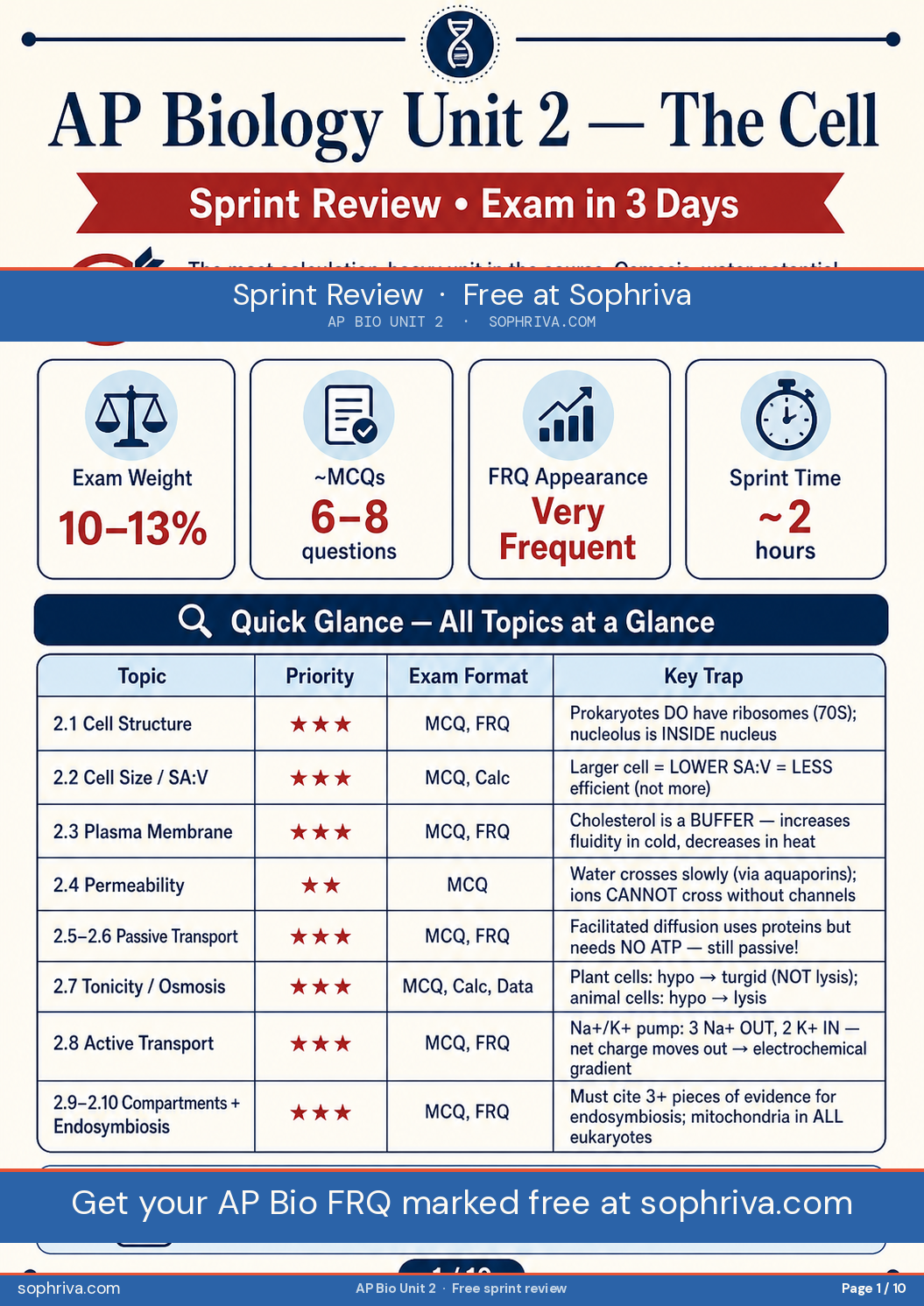
Ten pages on cell structure, surface-area-to-volume calculations, membrane transport, tonicity, and endosymbiosis — the most calculation-heavy unit on the course.
Exam Weight
10–13%
MCQs
6–8
FRQ Appearance
Very Frequent
Sprint Time
~2 hours
Quick Glance — all topics in this unit
Priority, exam format, and the trap that most often costs the point. Transcribed from page 1 so this content is searchable.
| Topic | Priority | Format | Key trap / must-know |
|---|---|---|---|
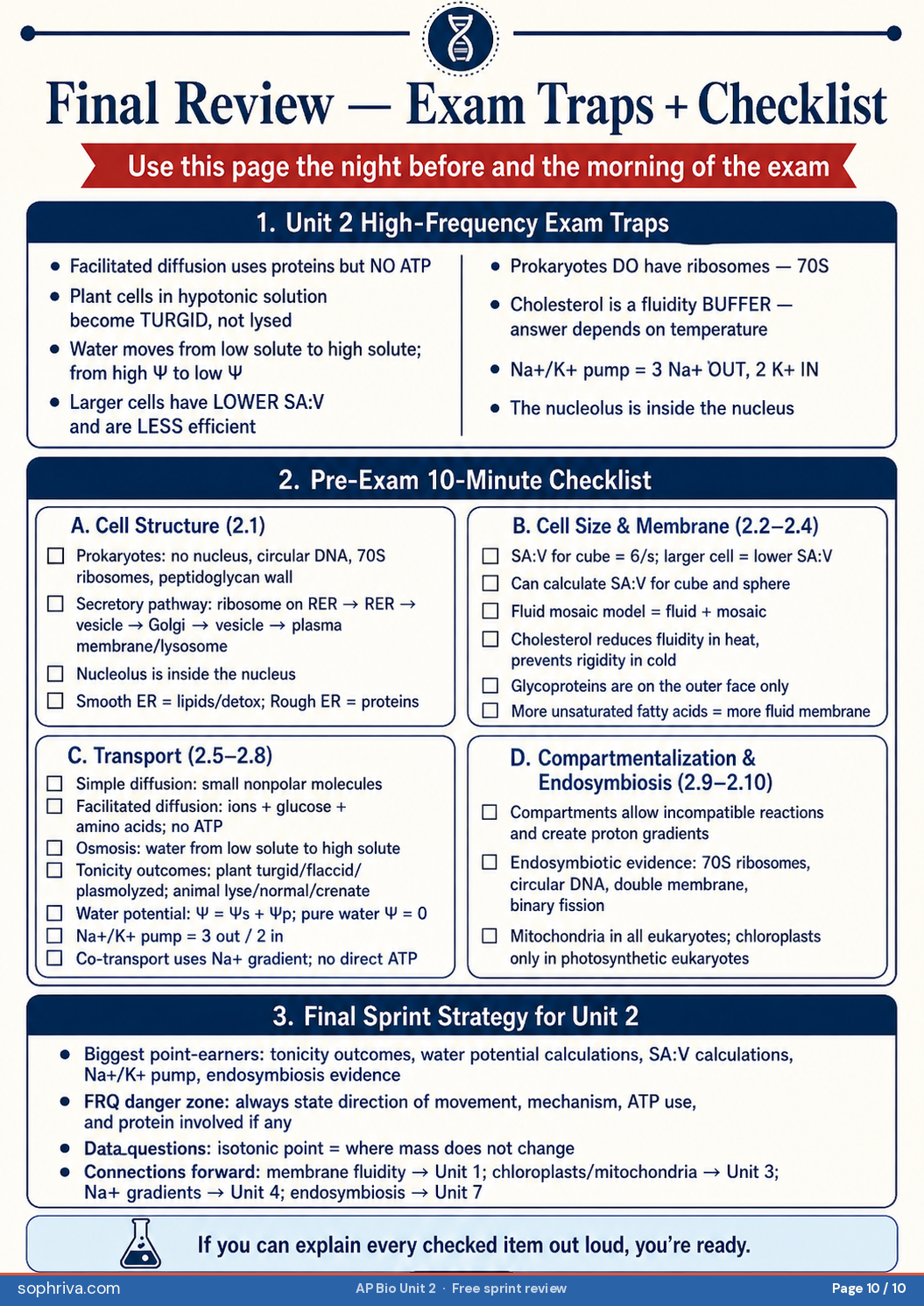
| 2.1 Cell Structure | ★★★ | MCQ, FRQ | Prokaryotes DO have ribosomes (70S); nucleus is INSIDE the nucleus. |
| 2.2 Cell Size & SA:V | ★★★ | MCQ, Calc | Larger cell = LOWER SA:V = LESS efficient (not more). |
| 2.3 Plasma Membrane | ★★★ | MCQ, FRQ | Cholesterol is a BUFFER — increases fluidity in cold, decreases it in heat. |
| 2.4 Permeability | ★★ | MCQ | Water crosses slowly via aquaporins; ions CANNOT cross without channels. |
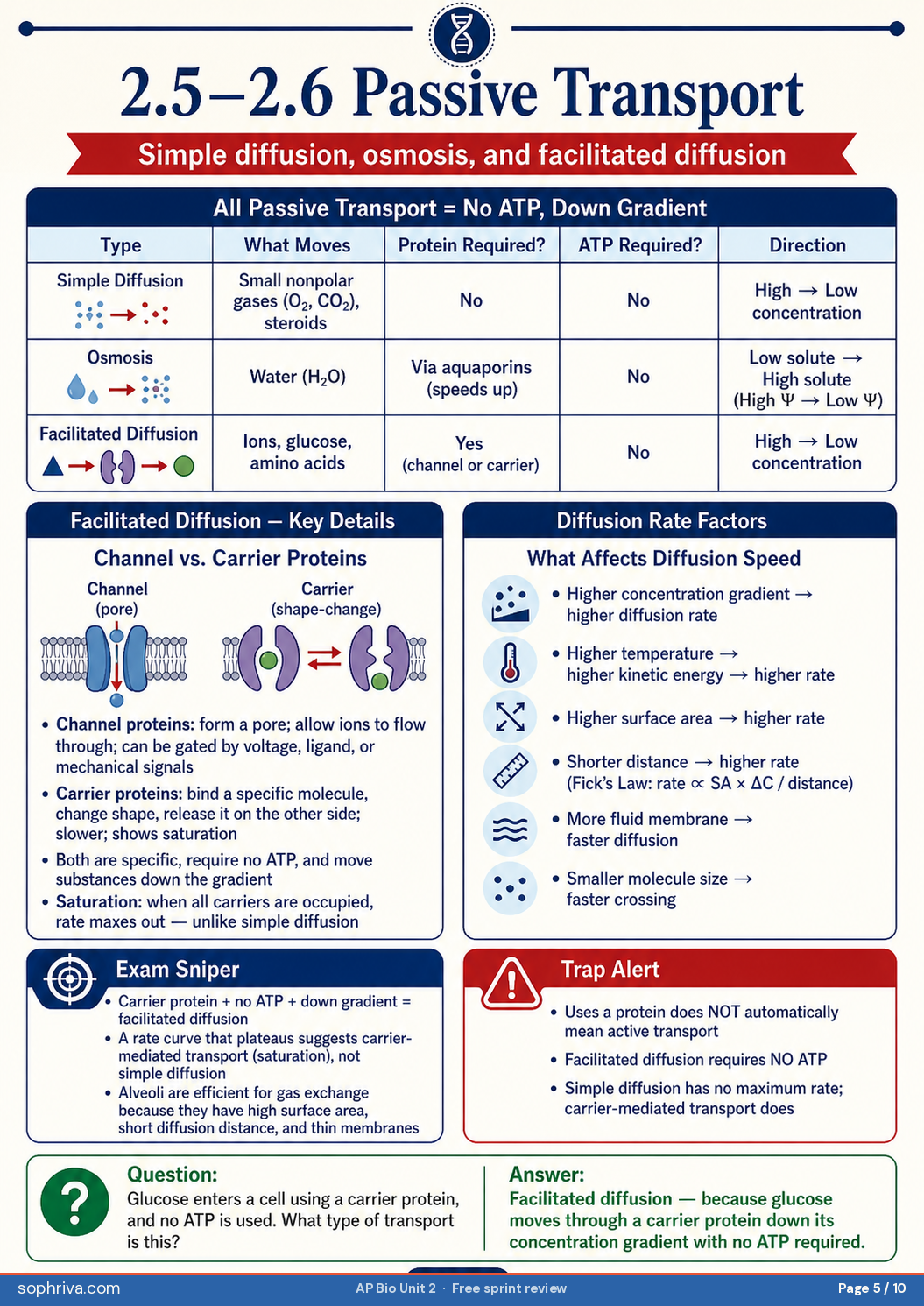
| 2.5–2.6 Passive Transport | ★★★ | MCQ, FRQ | Facilitated diffusion uses proteins but needs NO ATP — still passive. |
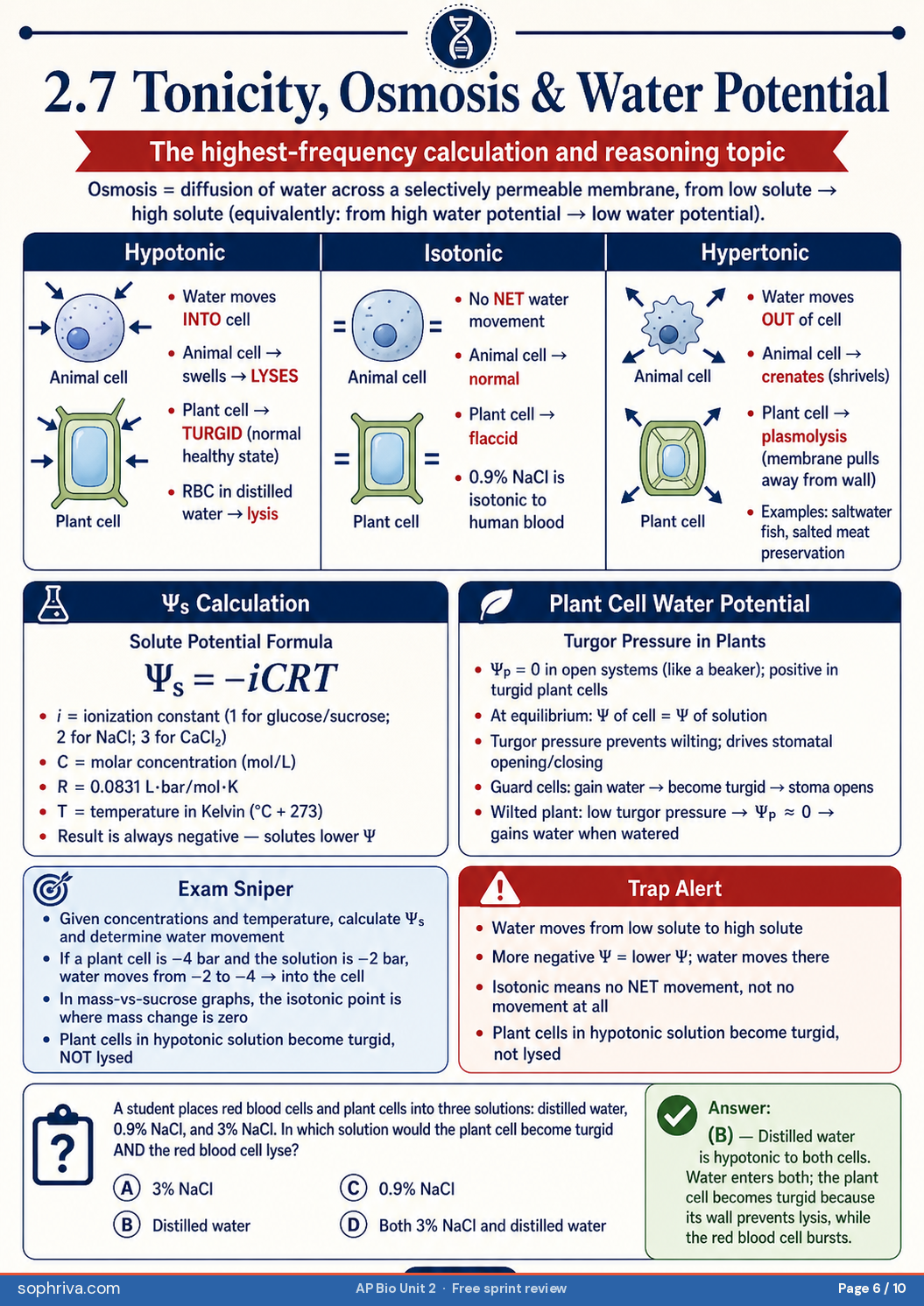
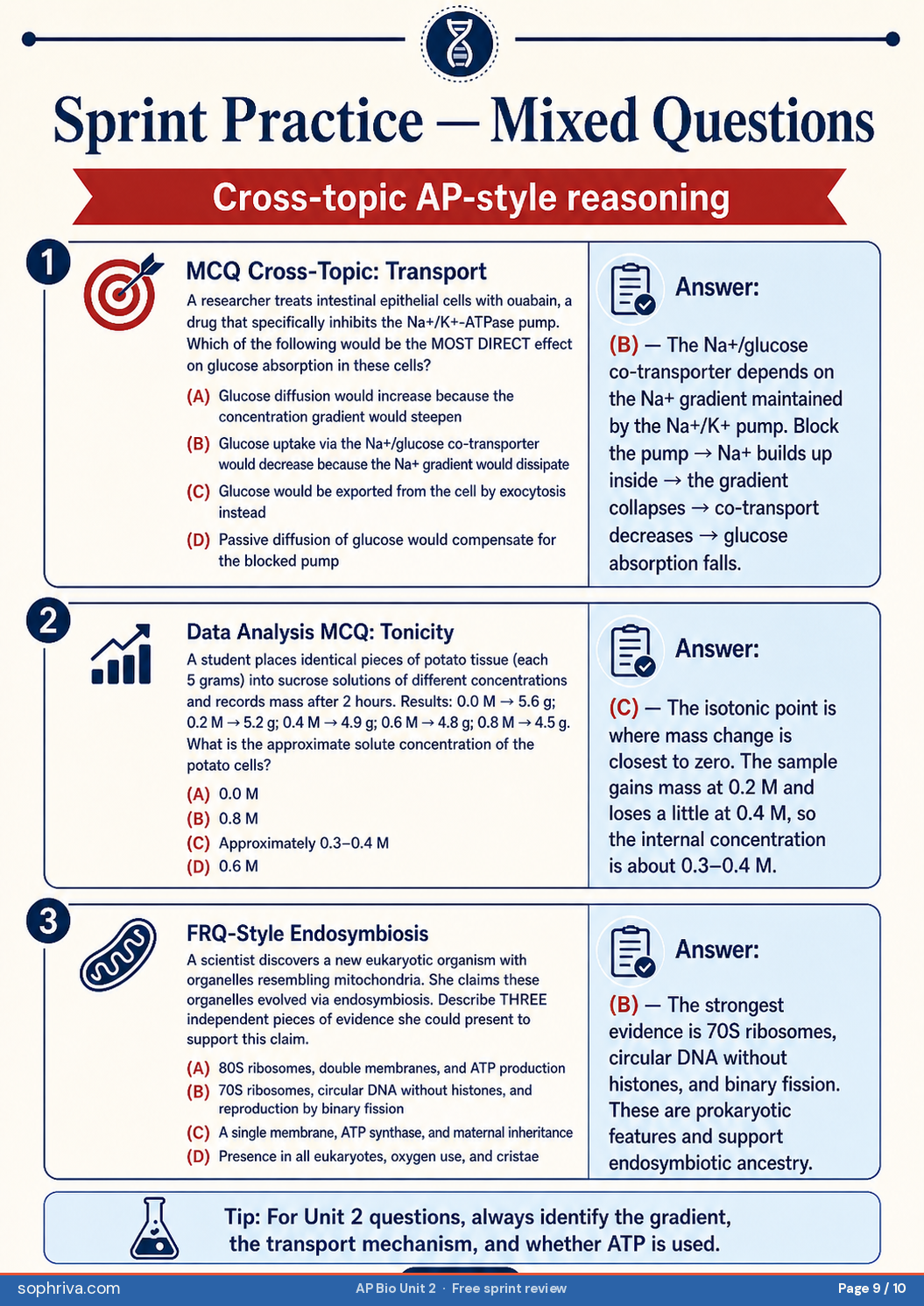
| 2.7 Tonicity / Osmosis | ★★★ | MCQ, Calc, Data | Plant cells: hypo → turgid (NOT lysis); animal cells: hypo → lysis. |
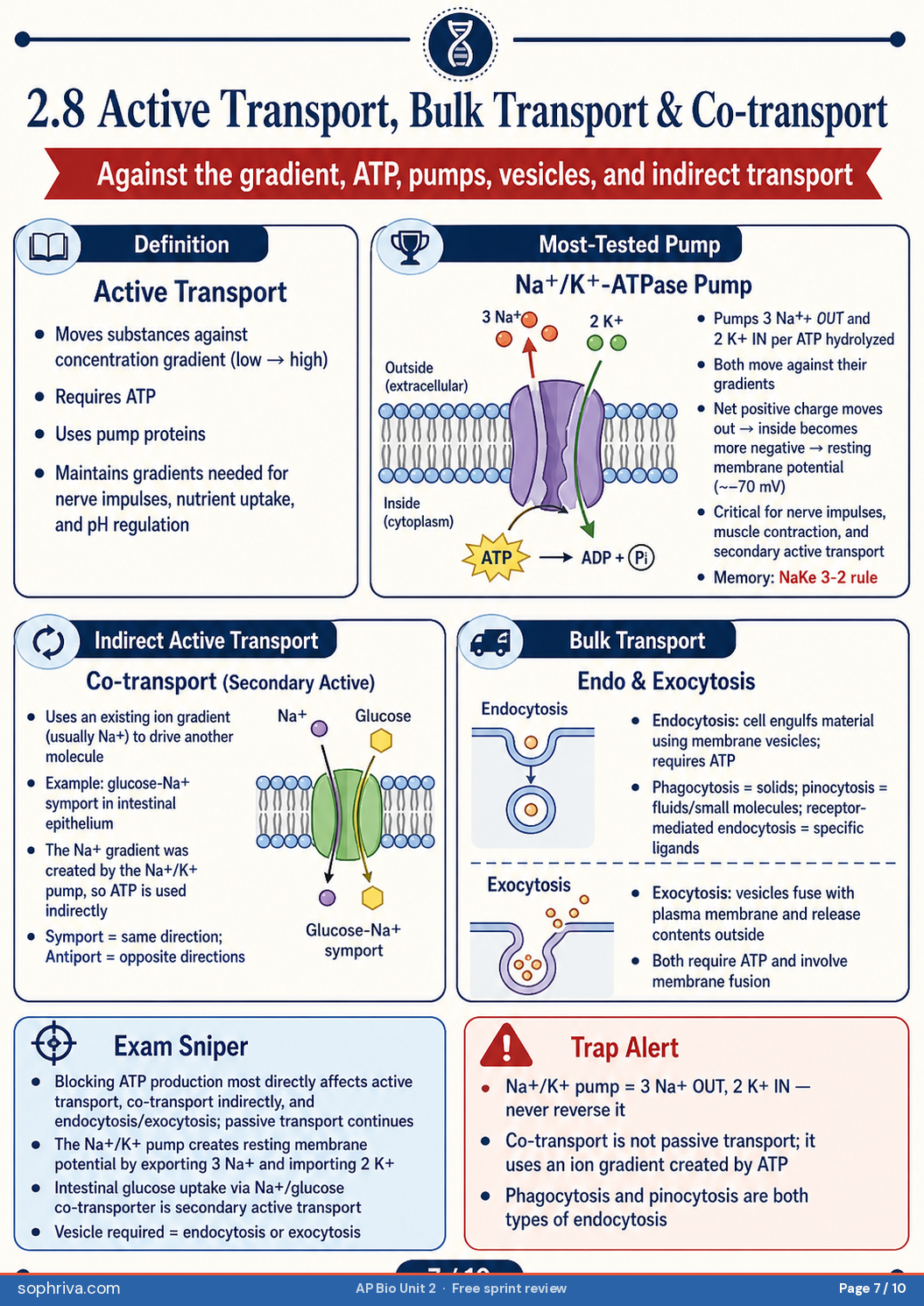
| 2.8 Active Transport | ★★★ | MCQ, FRQ | Na+/K+ pump: 3 Na+ OUT, 2 K+ IN — net charge moves out → electrochemical gradient. |
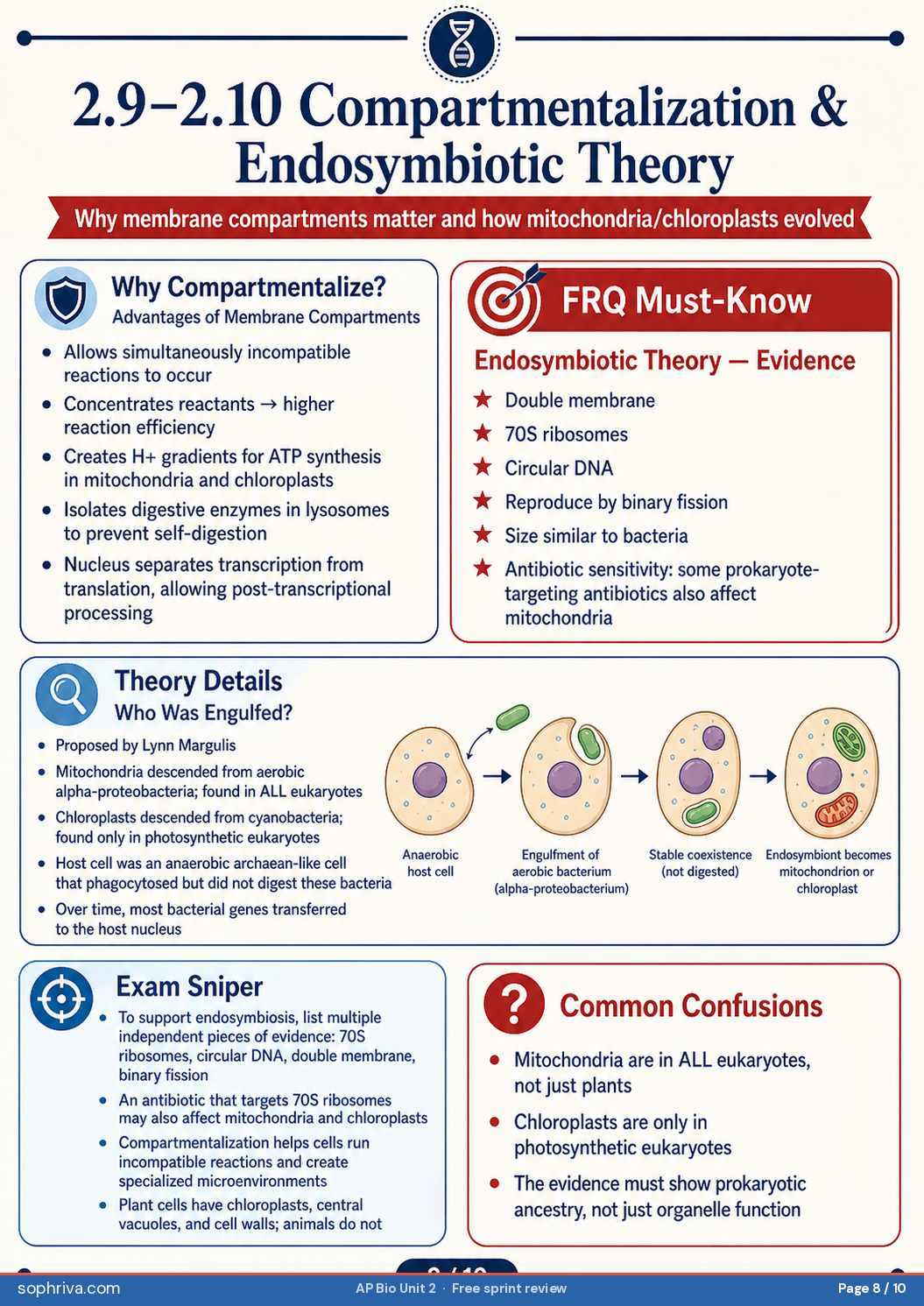
| 2.9–2.10 Compartments + Endosymbiosis | ★★★ | MCQ, FRQ | Cite 3+ pieces of evidence for endosymbiosis; mitochondria in ALL eukaryotes. |
Topic-by-topic visual review
Nine pages, one topic each. Open the PDF for print quality, or scroll to study on screen.
Done with the sheet? Now get marked.
Upload your own AP Bio FRQ and we score it like an AP Reader — point by point — and show you exactly which rubric points you missed.
Get your first FRQ marked free →