AP Biology Unit 4 · Sprint Review · Free
AP Biology Unit 4 — Cell Communication & Cell Cycle
One-page sprint review
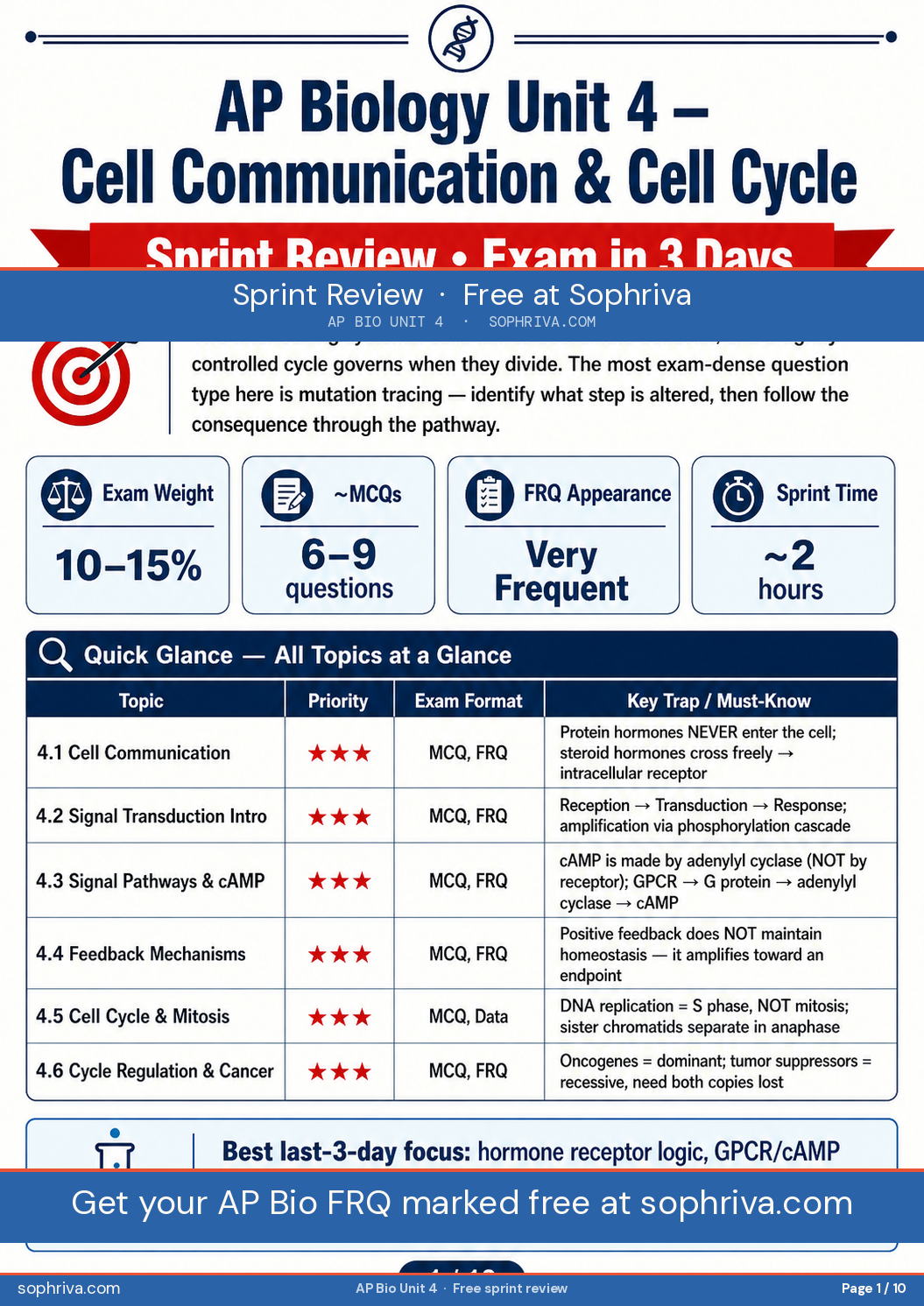
Ten pages on cell communication, signal transduction, feedback mechanisms, mitosis, and cancer regulation — the most pathway-tracing unit on the exam.
Exam Weight
10–15%
MCQs
6–9
FRQ Appearance
Very Frequent
Sprint Time
~2 hours
Quick Glance — all topics in this unit
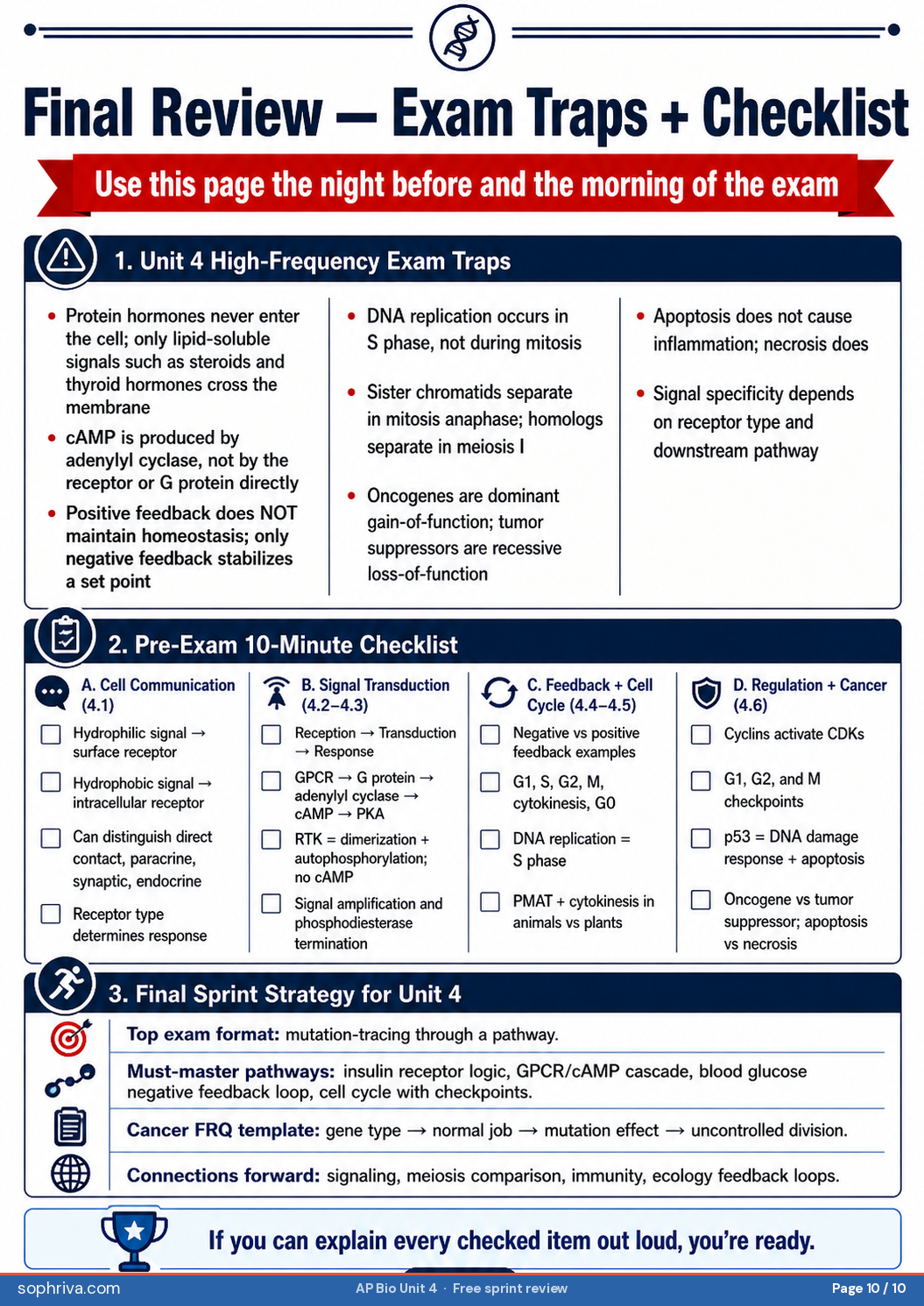
Priority, exam format, and the trap that most often costs the point. Transcribed from page 1 so this content is searchable.
| Topic | Priority | Format | Key trap / must-know |
|---|---|---|---|
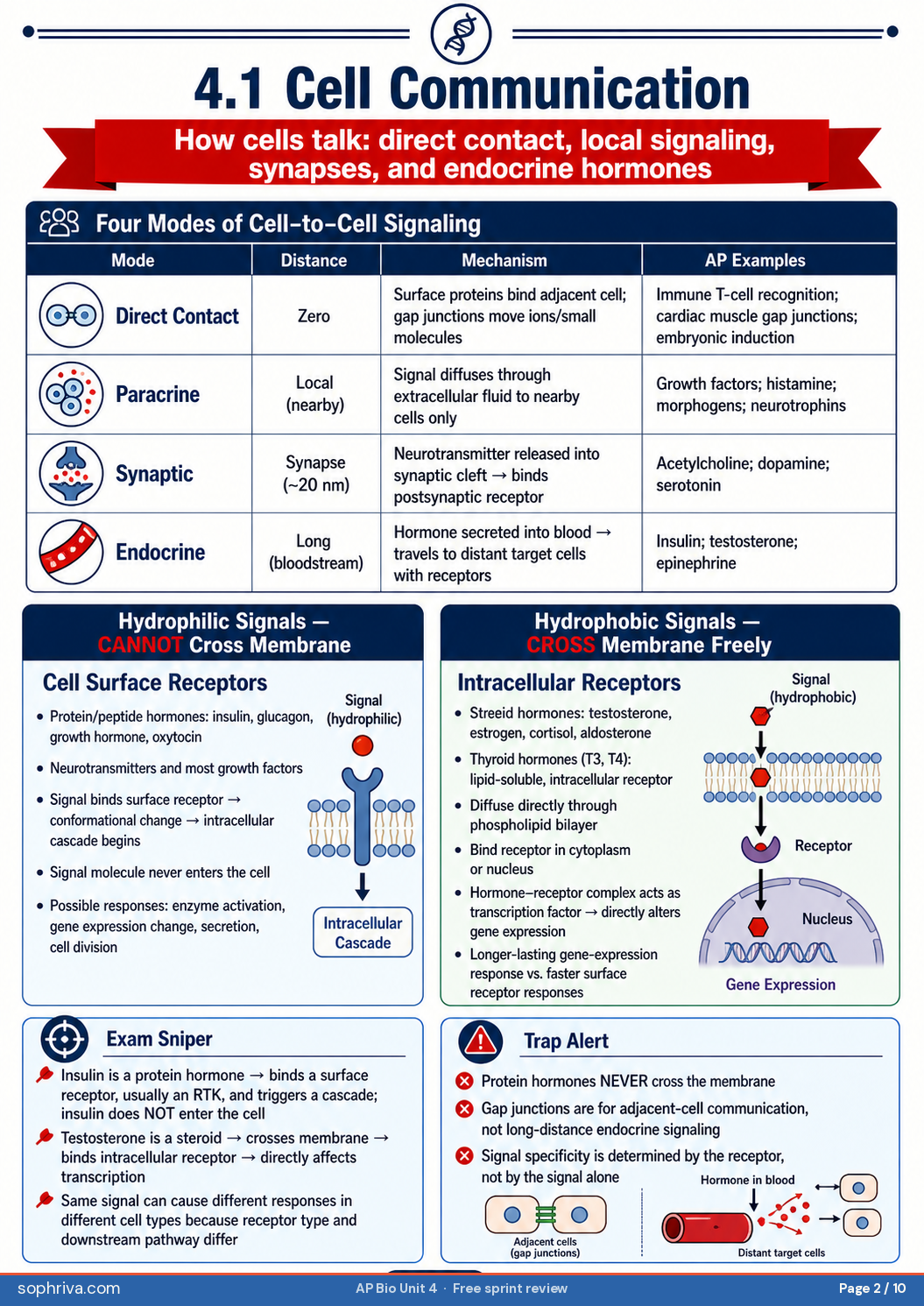
| 4.1 Cell Communication | ★★★ | MCQ, FRQ | Protein hormones NEVER enter the cell; steroid hormones cross freely → intracellular receptor. |
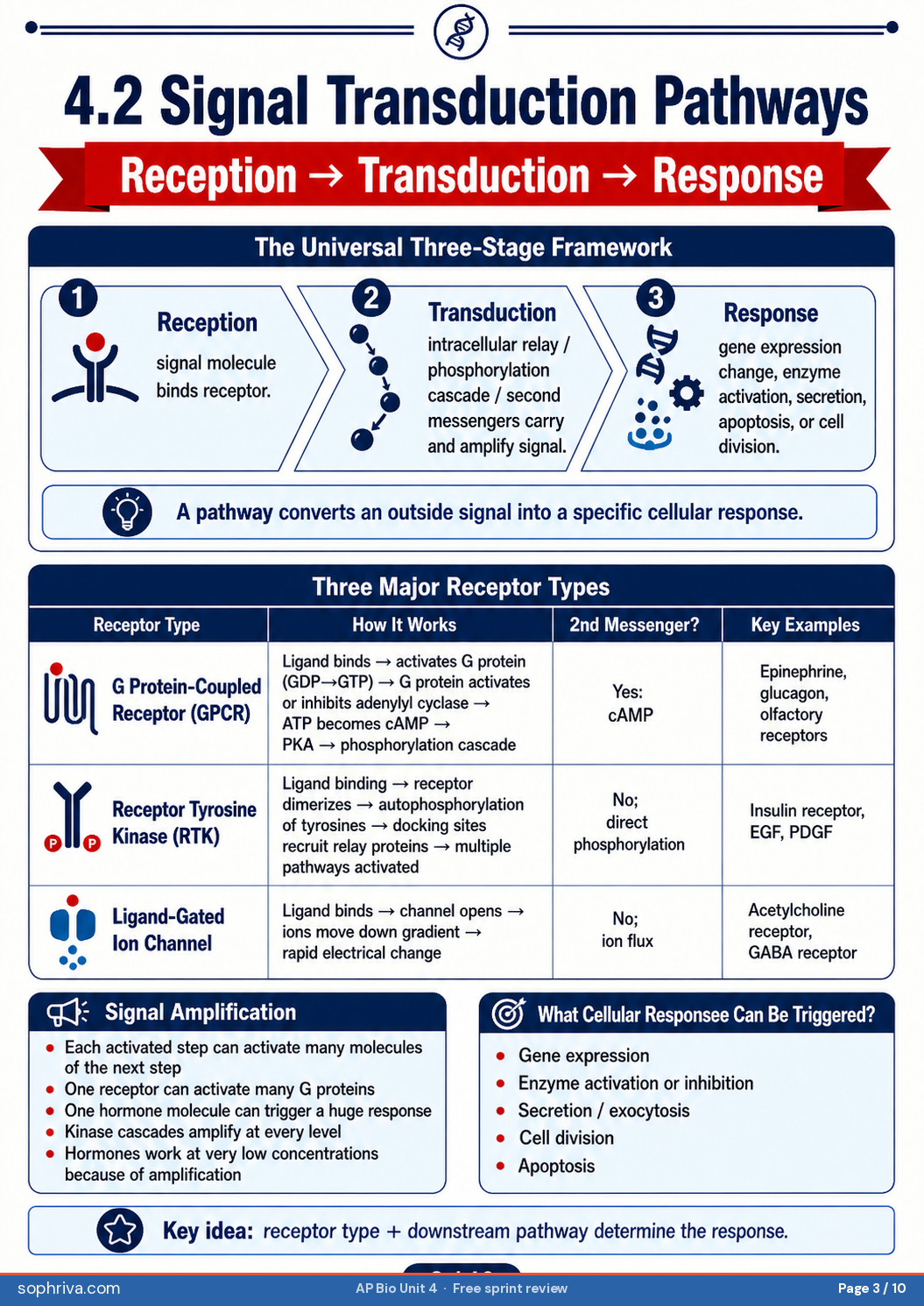
| 4.2 Signal Transduction Intro | ★★★ | MCQ, FRQ | Reception → Transduction → Response; amplification via phosphorylation cascade. |
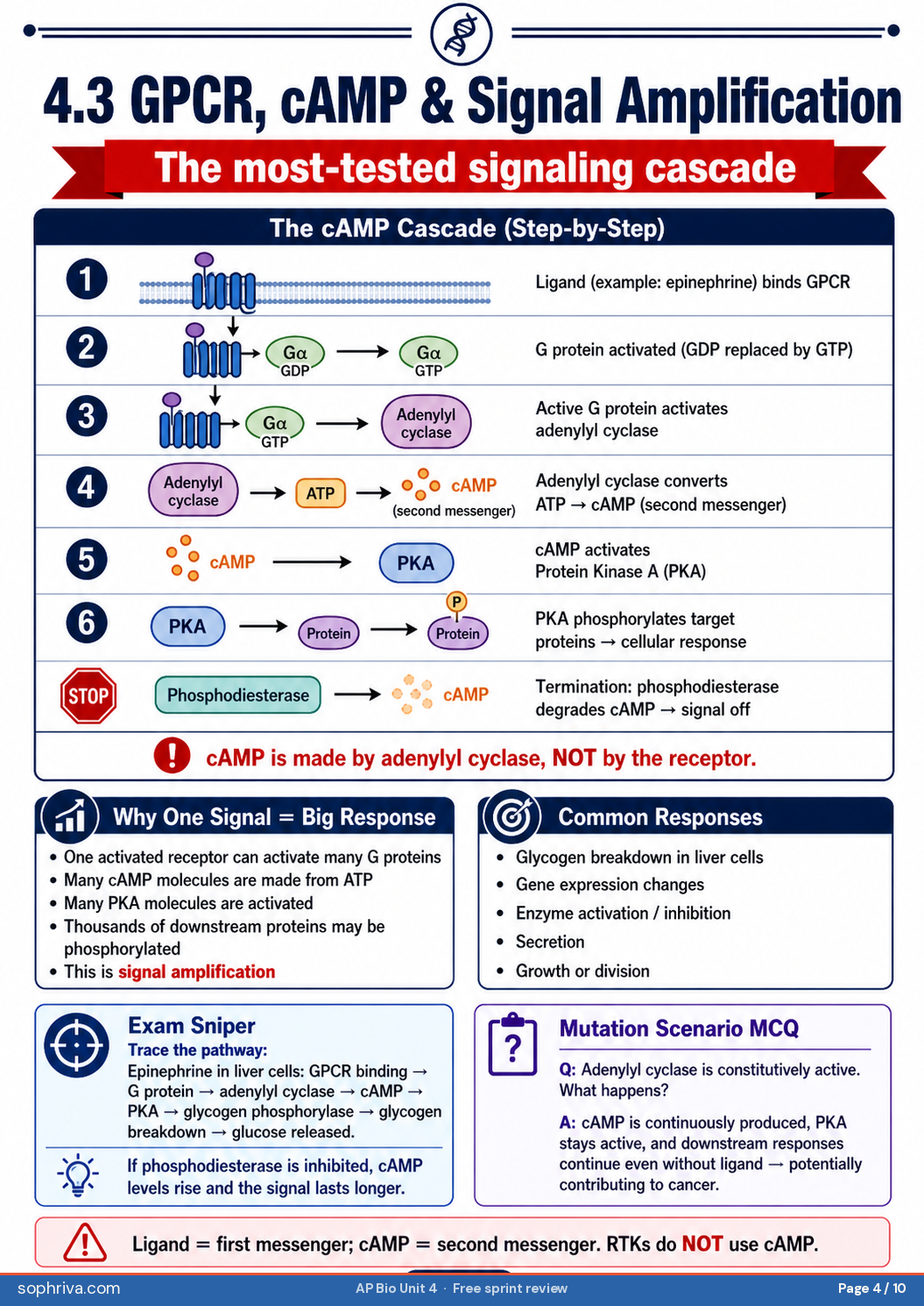
| 4.3 Signal Pathways & cAMP | ★★★ | MCQ, FRQ | cAMP made by adenylyl cyclase (NOT by receptor); GPCR → G-protein → adenylyl cyclase → cAMP. |
| 4.4 Feedback Mechanisms | ★★★ | MCQ, FRQ | Positive feedback does NOT maintain homeostasis — it amplifies toward an endpoint. |
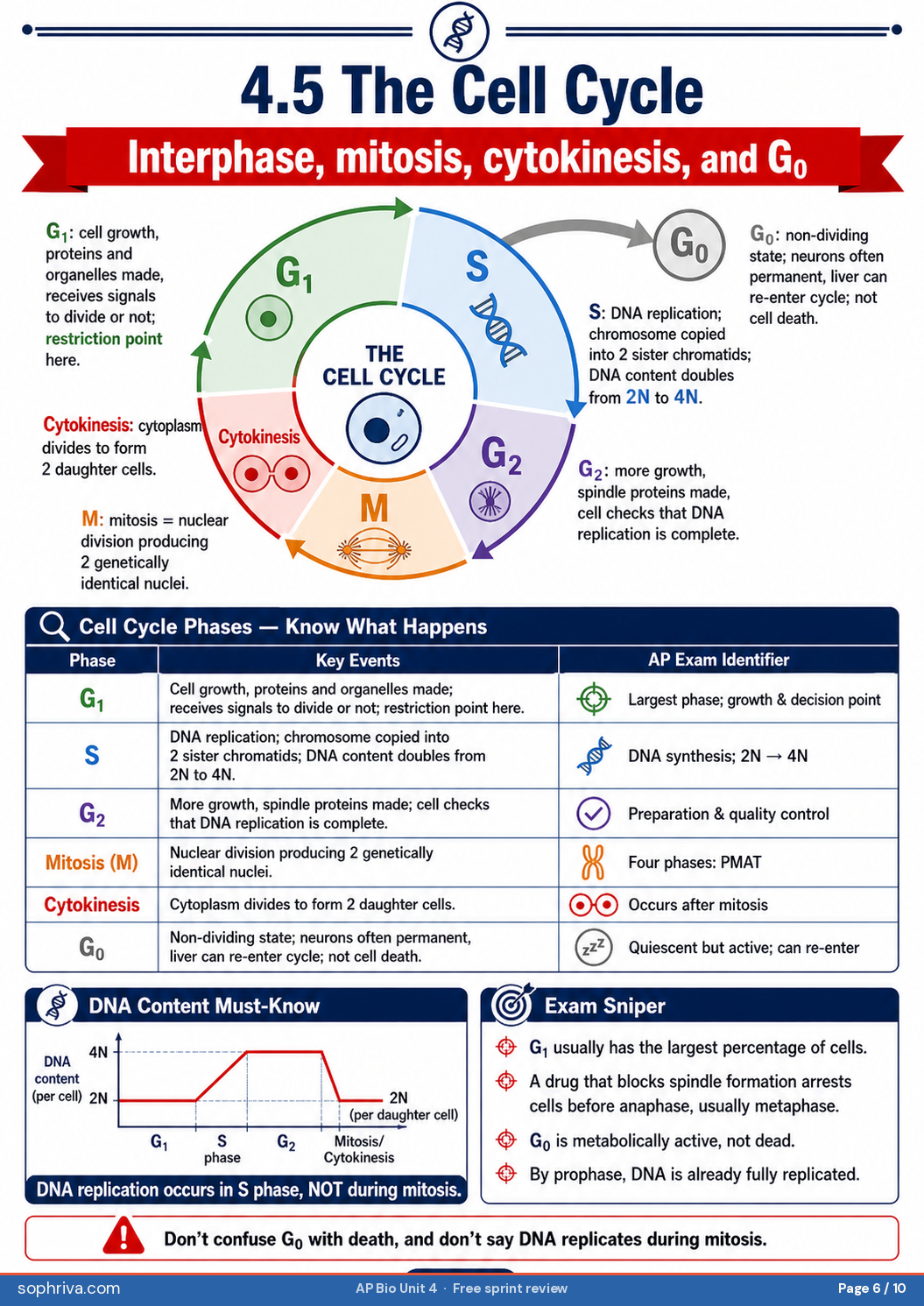
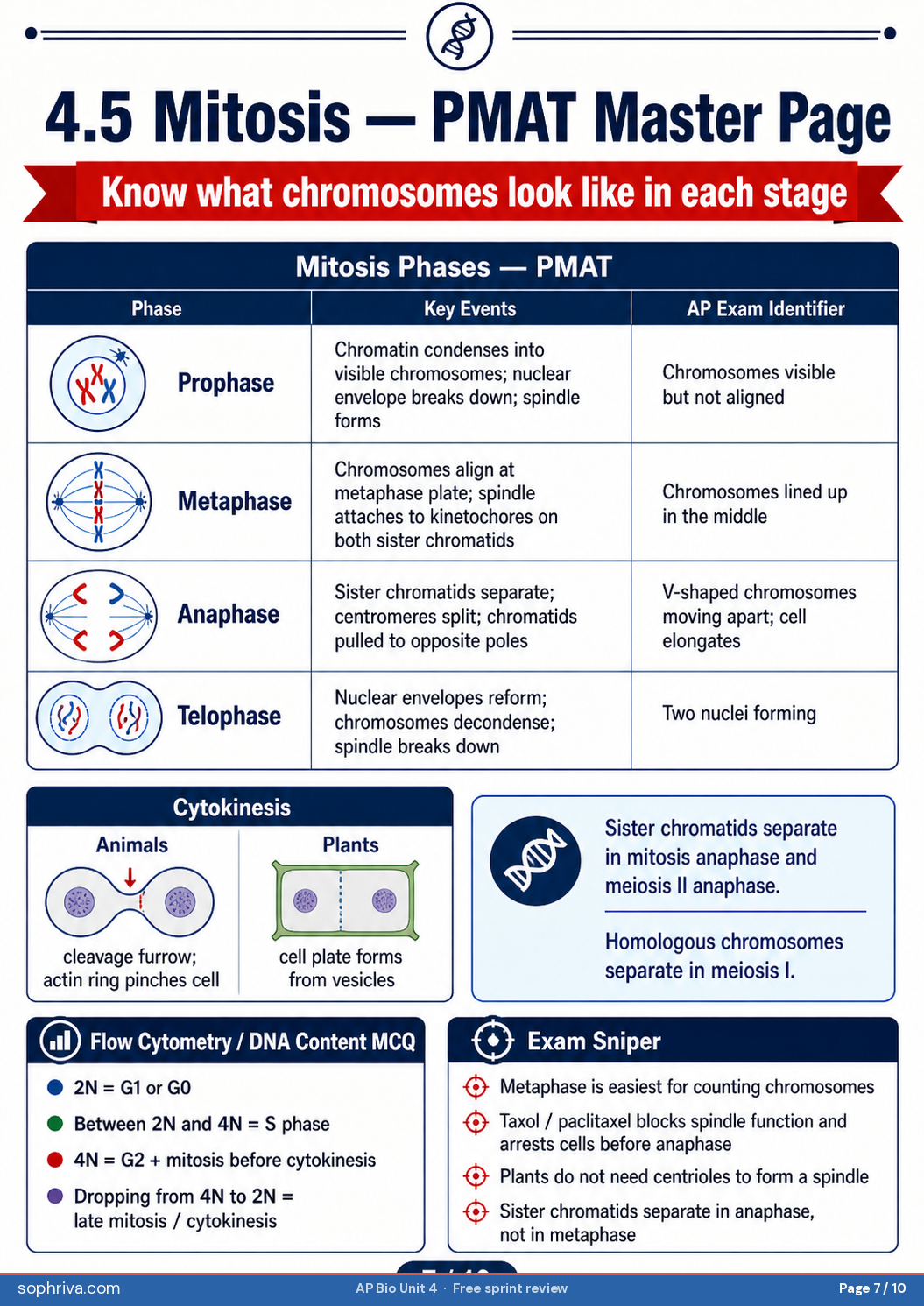
| 4.5 Cell Cycle & Mitosis | ★★★ | MCQ, Data | DNA replication = S phase, NOT mitosis; sister chromatids separate in anaphase. |
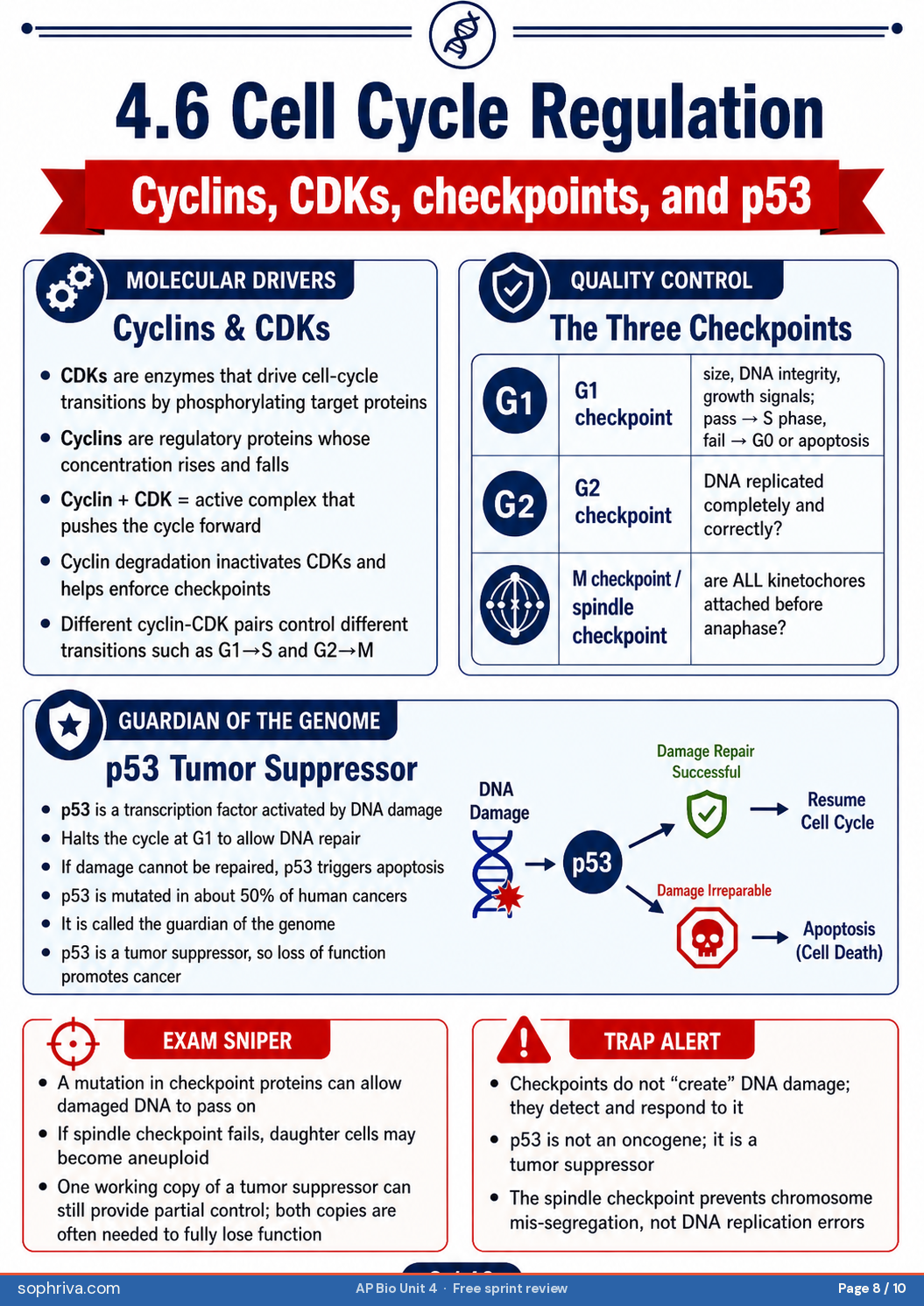
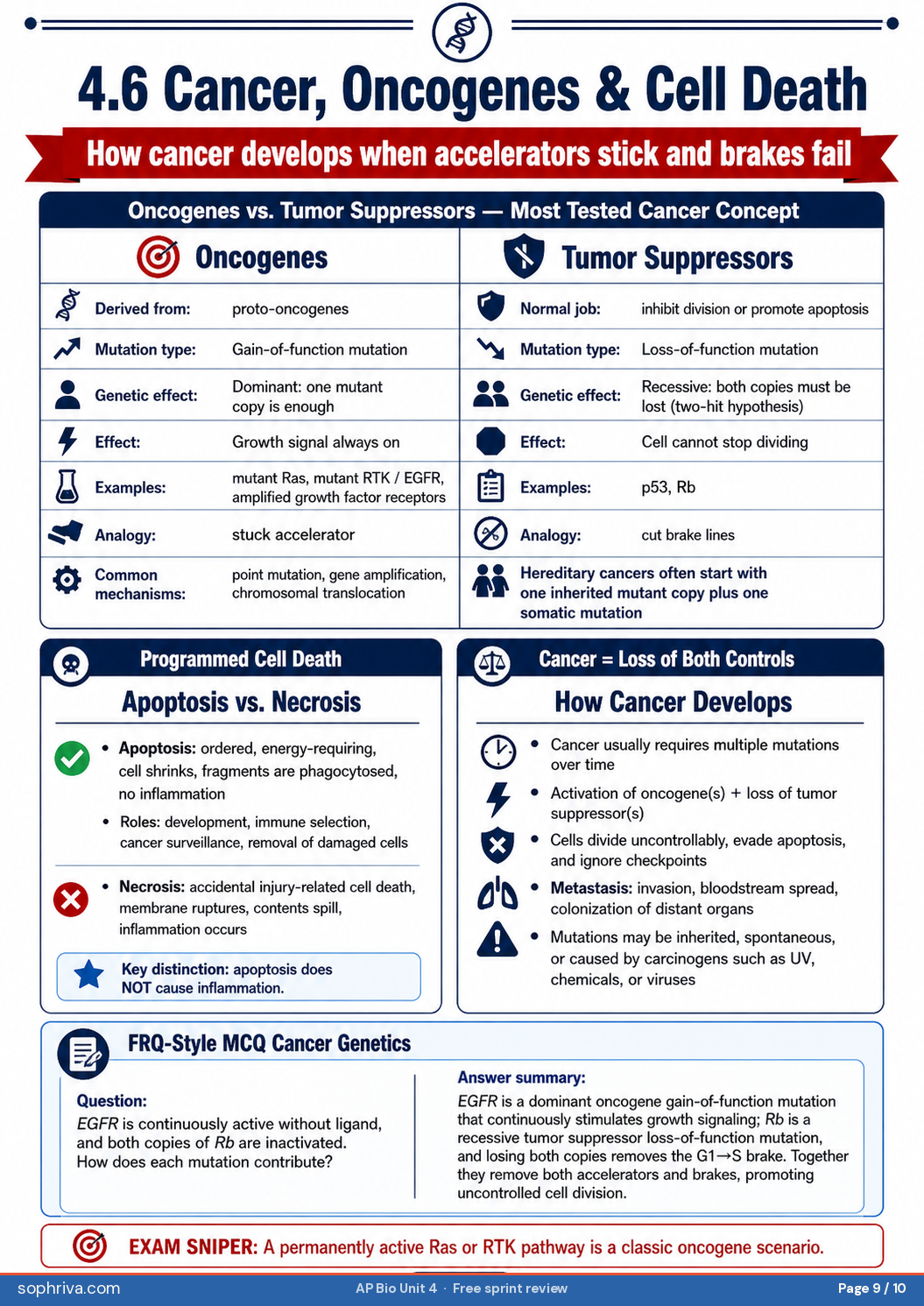
| 4.6 Cycle Regulation & Cancer | ★★★ | MCQ, FRQ | Oncogenes = dominant; tumor suppressors = recessive, need both copies lost. |
Topic-by-topic visual review
Nine pages, one topic each. Open the PDF for print quality, or scroll to study on screen.

Done with the sheet? Now get marked.
Upload your own AP Bio FRQ and we score it like an AP Reader — point by point — and show you exactly which rubric points you missed.
Get your first FRQ marked free →