AP Biology Unit 7 · Sprint Review · Free
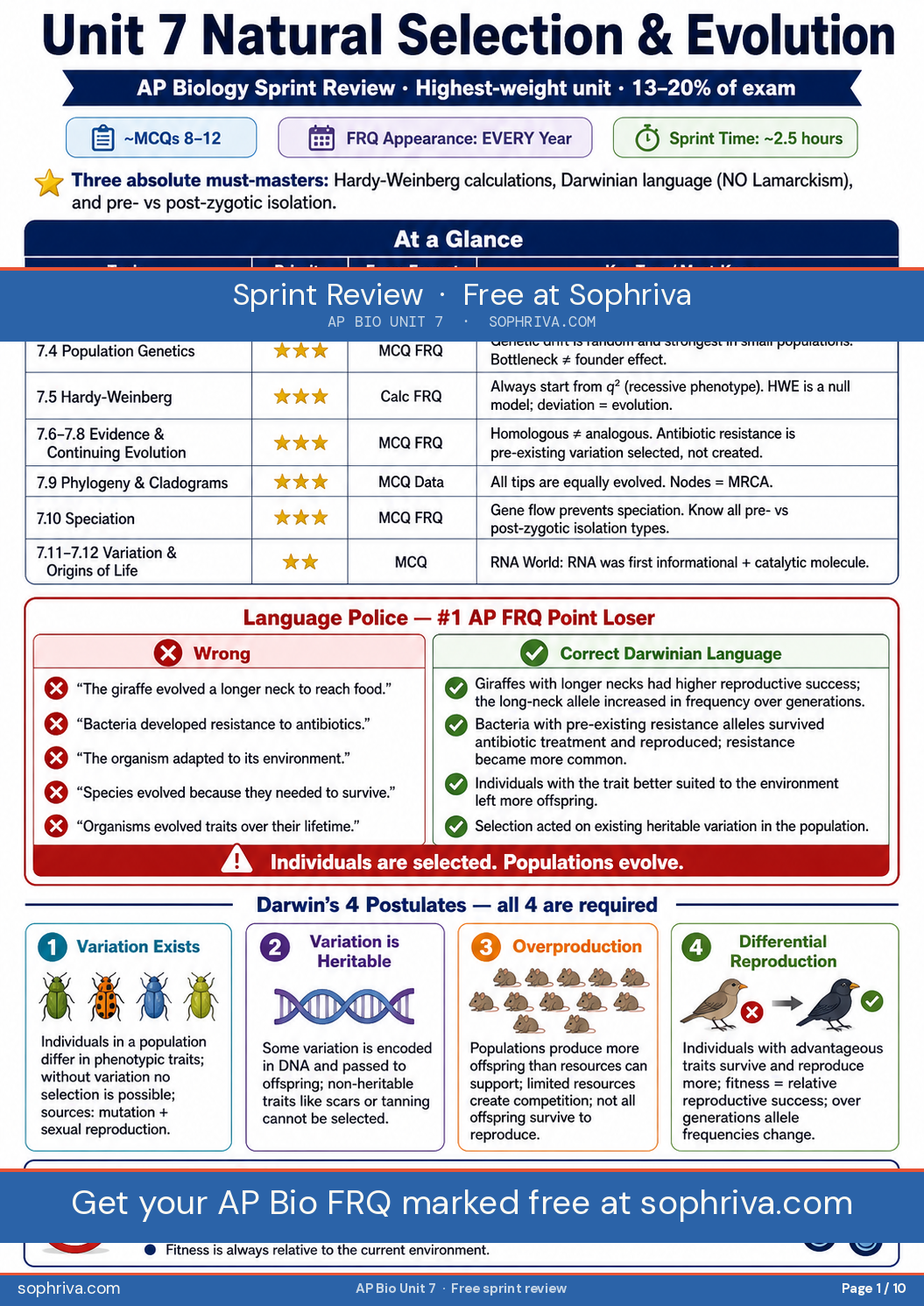
AP Biology Unit 7 — Natural Selection
One-page sprint review
Ten pages on Darwinian language, Hardy-Weinberg calculations, evidence for evolution, phylogeny, and the speciation modes that appear on the exam every year.
Exam Weight
13–20%
MCQs
8–12
FRQ Appearance
Every Year
Sprint Time
~2.5 hours
Quick Glance — all topics in this unit
Priority, exam format, and the trap that most often costs the point. Transcribed from page 1 so this content is searchable.
| Topic | Priority | Format | Key trap / must-know |
|---|---|---|---|
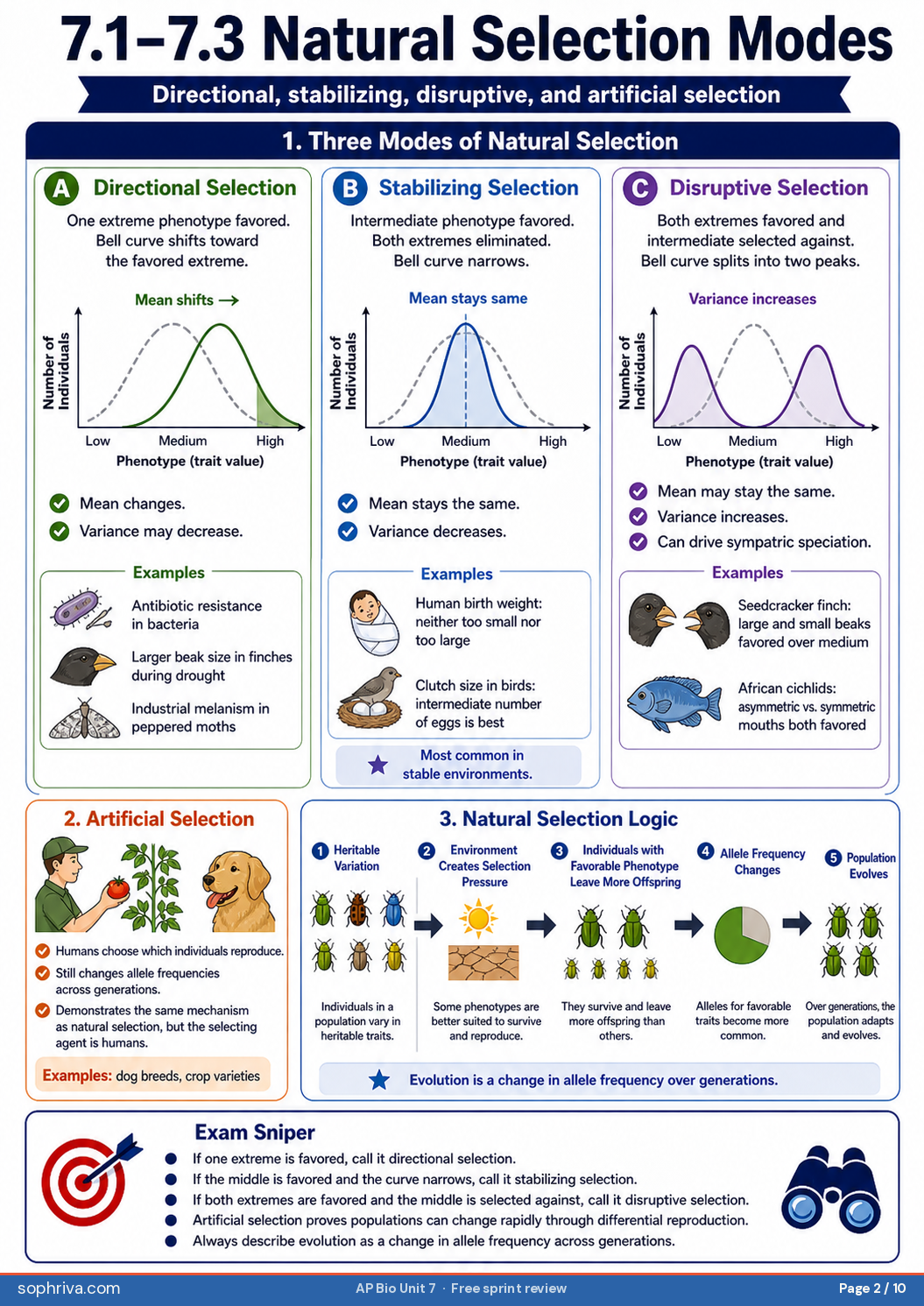
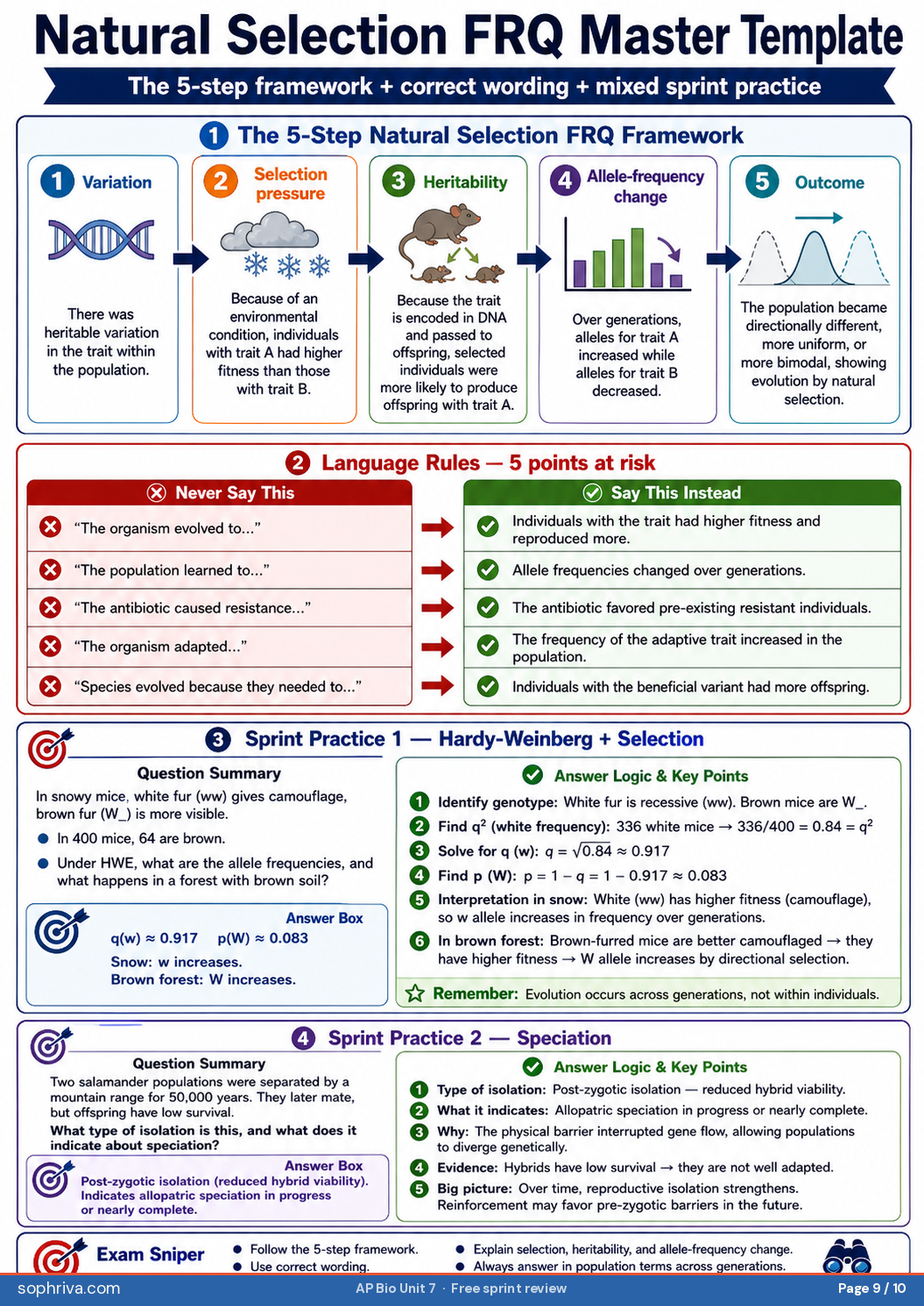
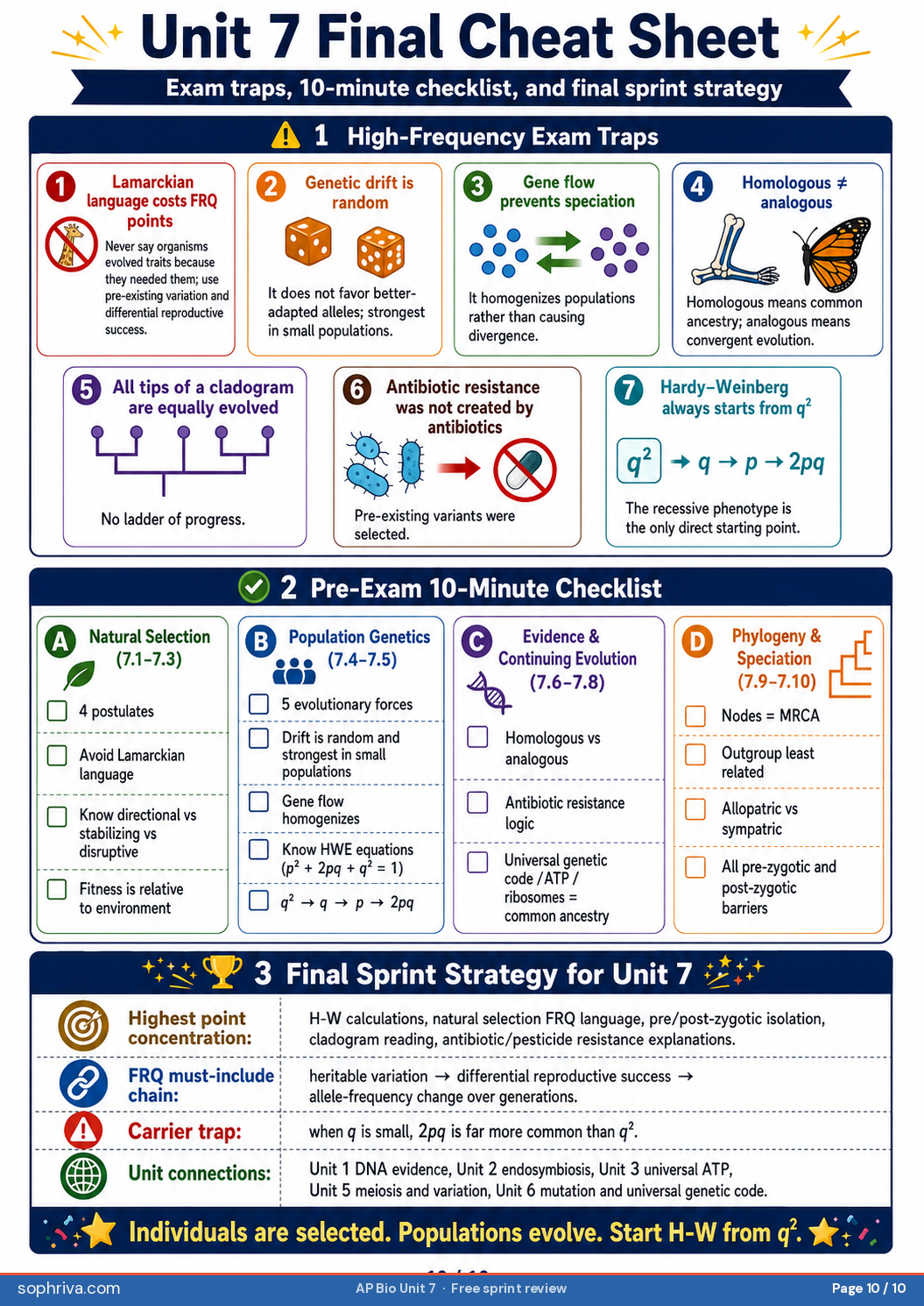
| 7.1–7.3 Natural & Artificial Selection | ★★★ | MCQ, FRQ | NEVER write Lamarckian language. Populations evolve; individuals are selected. |
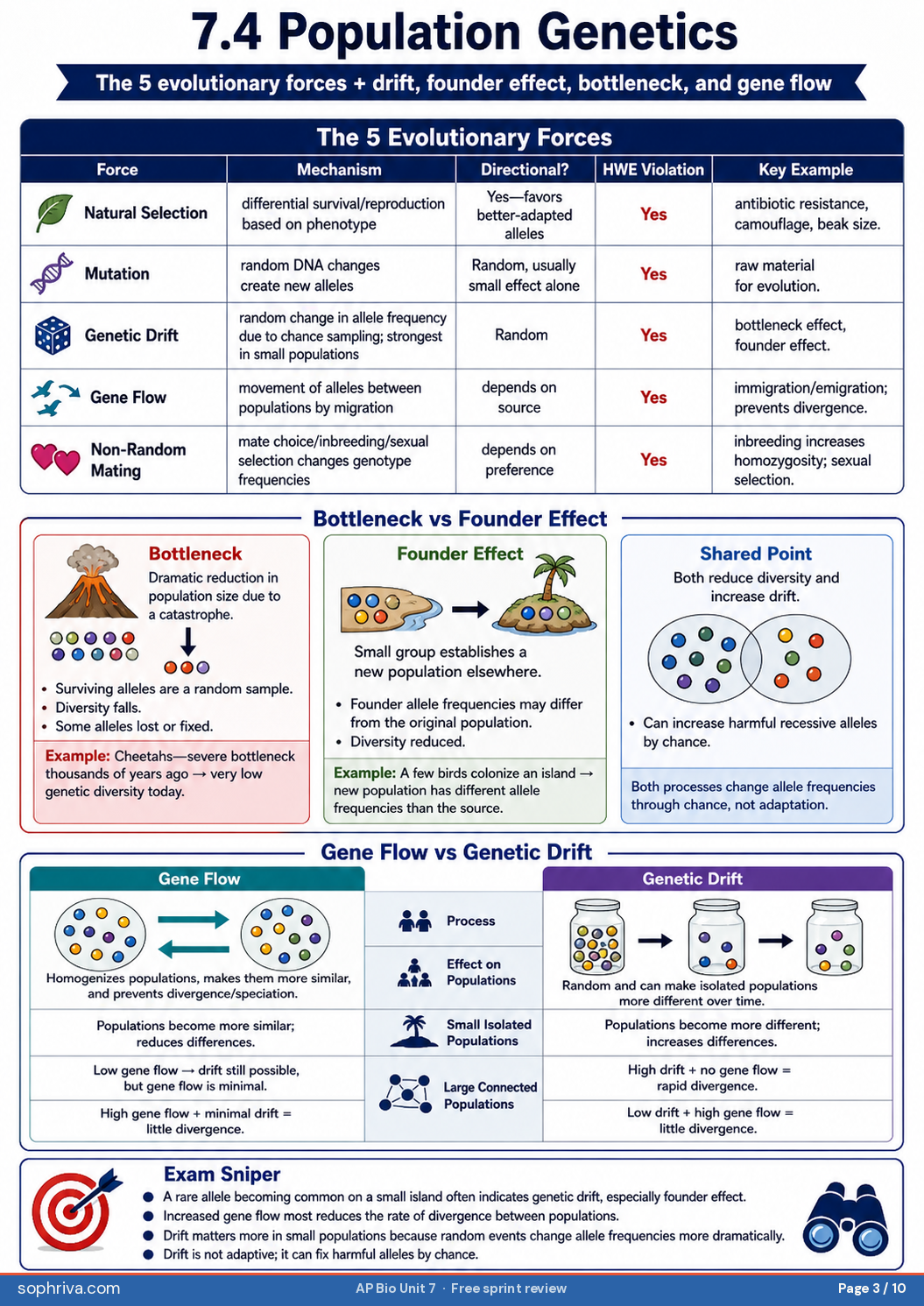
| 7.4 Population Genetics | ★★★ | MCQ, FRQ | Genetic drift is random and strongest in small populations. Bottleneck and founder effects. |
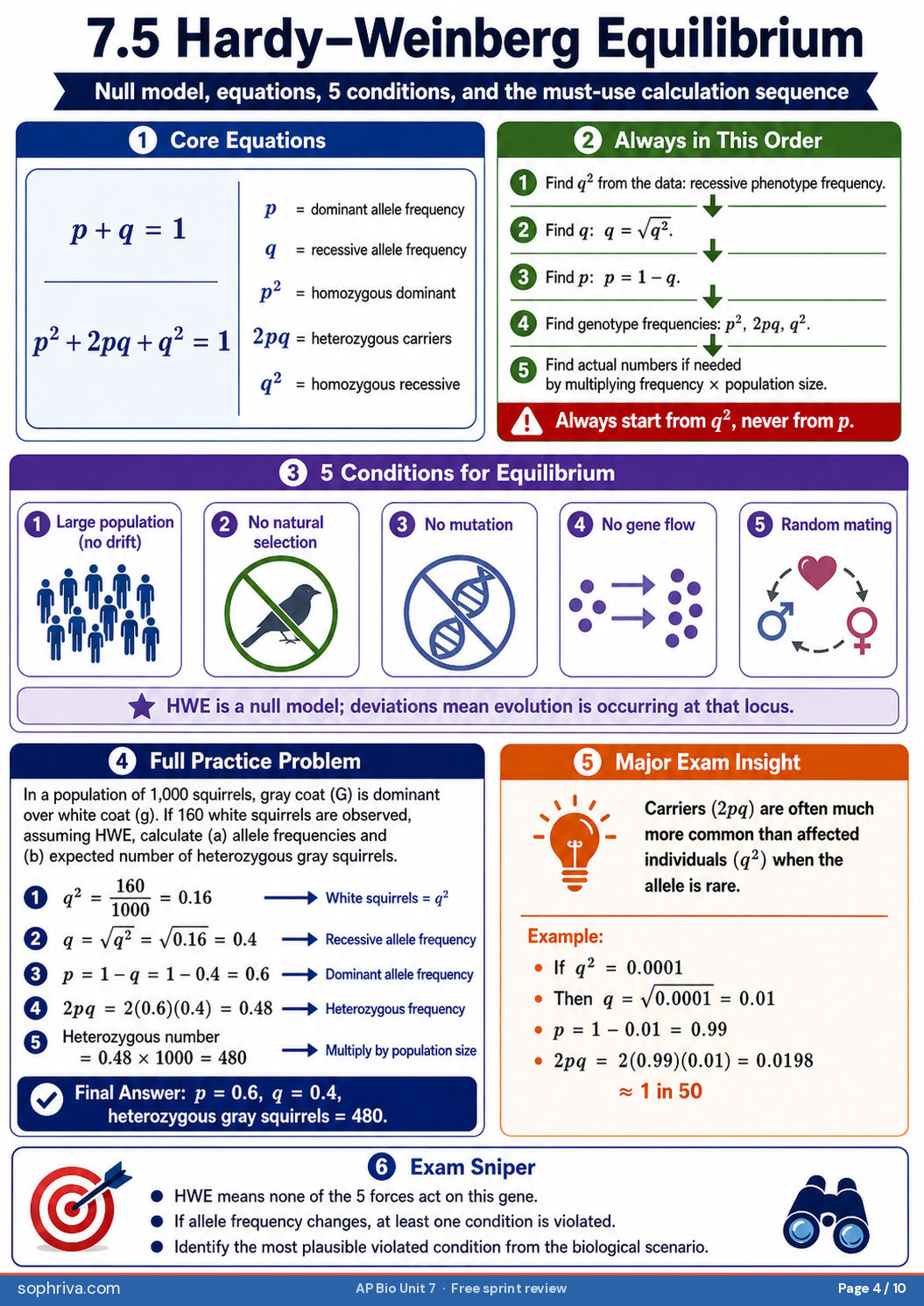
| 7.5 Hardy-Weinberg | ★★★ | Calc, FRQ | Always start from q² (recessive phenotype). HWE is a null model — deviation = evolution. |
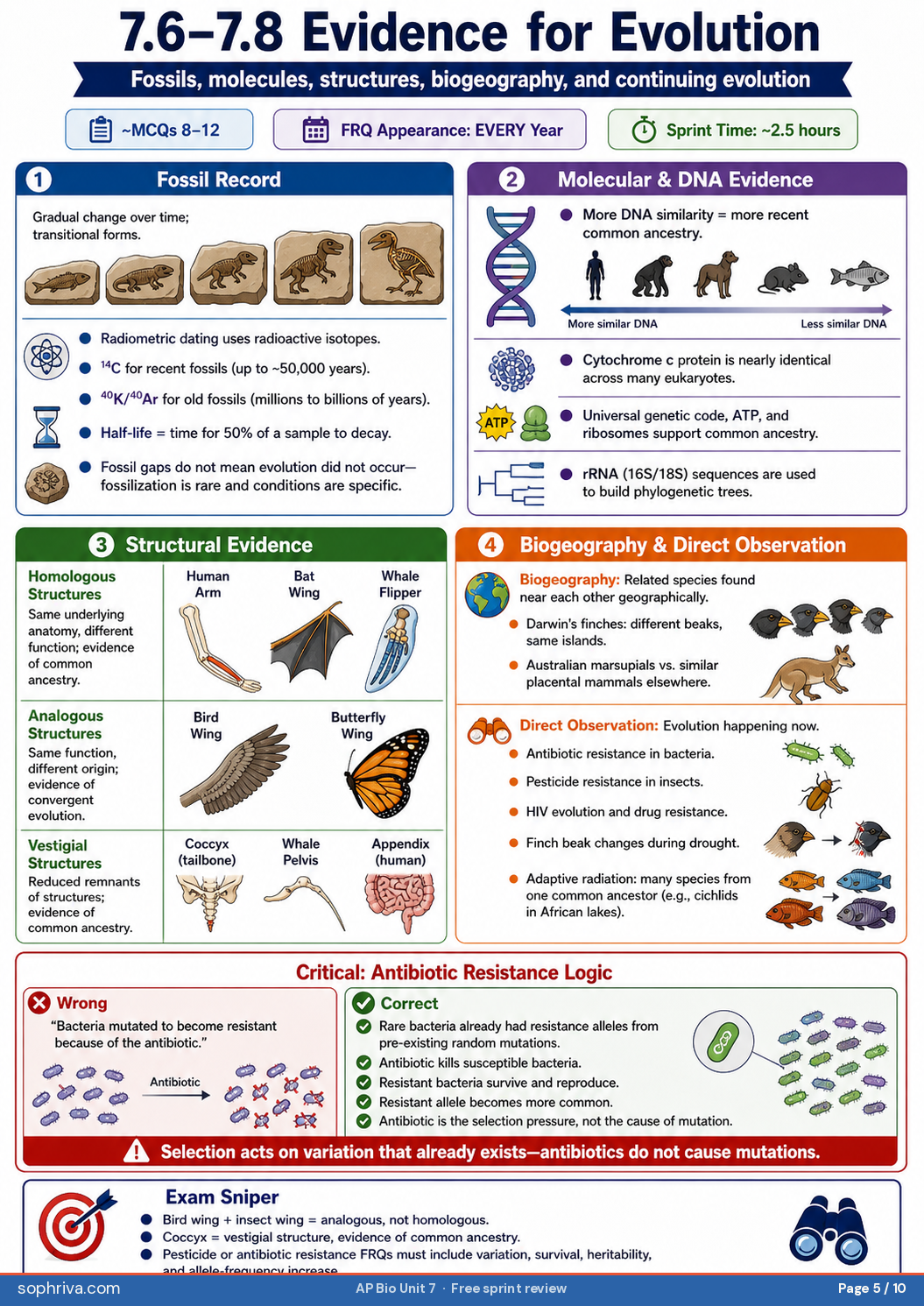
| 7.6–7.8 Evidence & Continuing Evolution | ★★★ | MCQ, FRQ | Homologous = analogous. Antibiotic resistance is pre-existing variation selected, NOT created. |
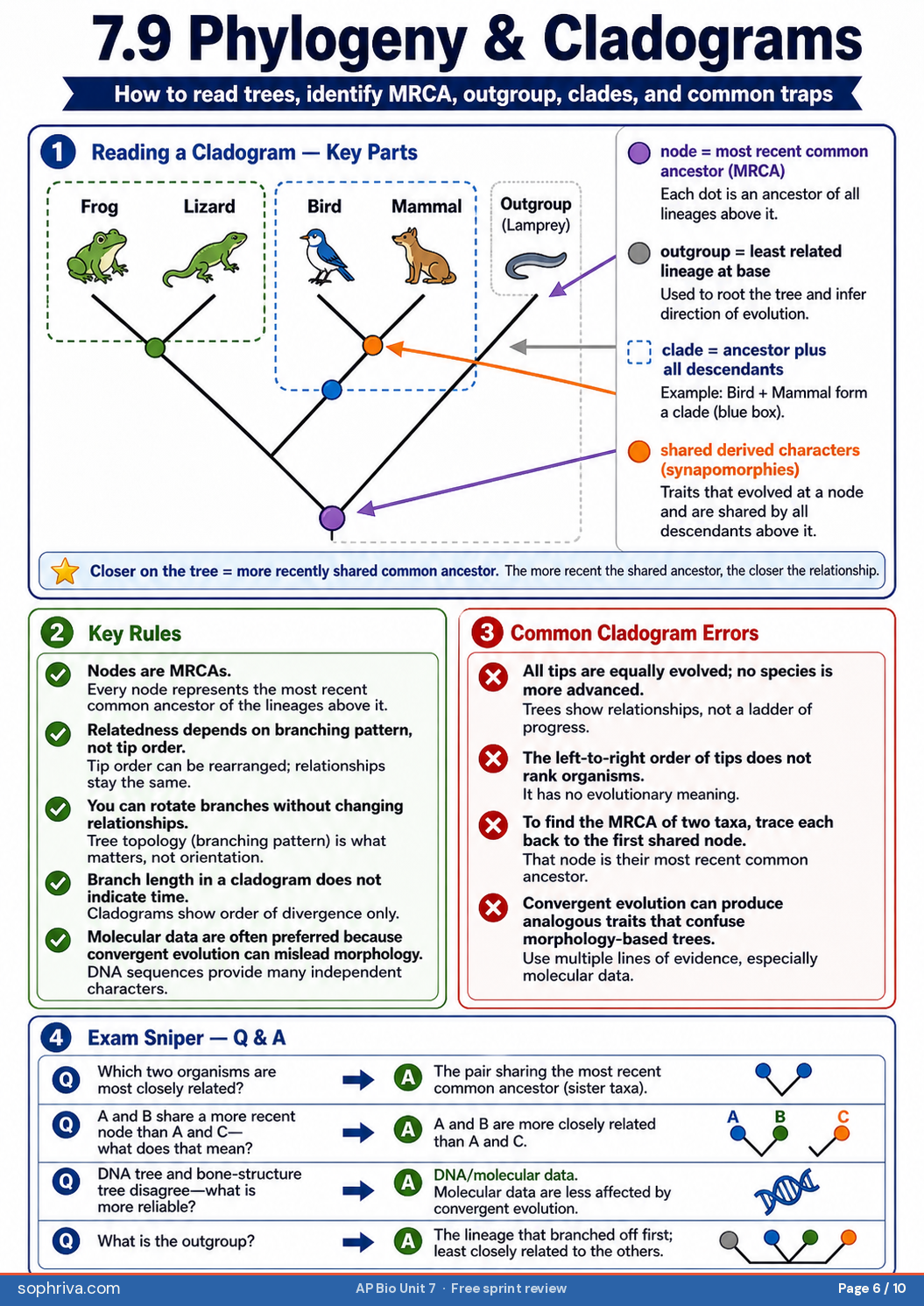
| 7.9 Phylogeny & Cladograms | ★★★ | MCQ, Data | All tips are equally evolved. Nodes = MRCA. |
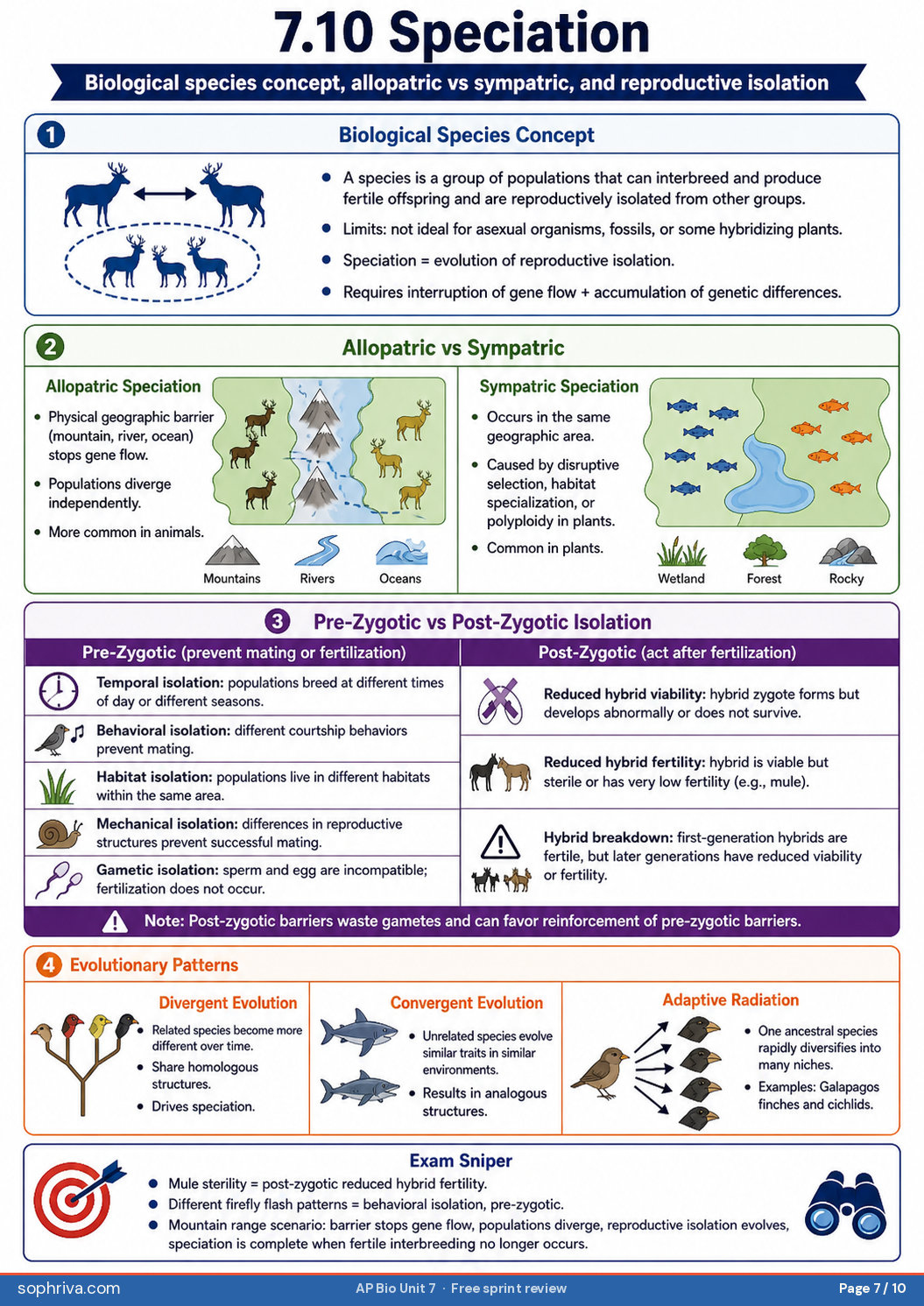
| 7.10 Speciation | ★★★ | MCQ, FRQ | Gene flow PREVENTS speciation. Know all pre- vs post-zygotic isolation modes. |
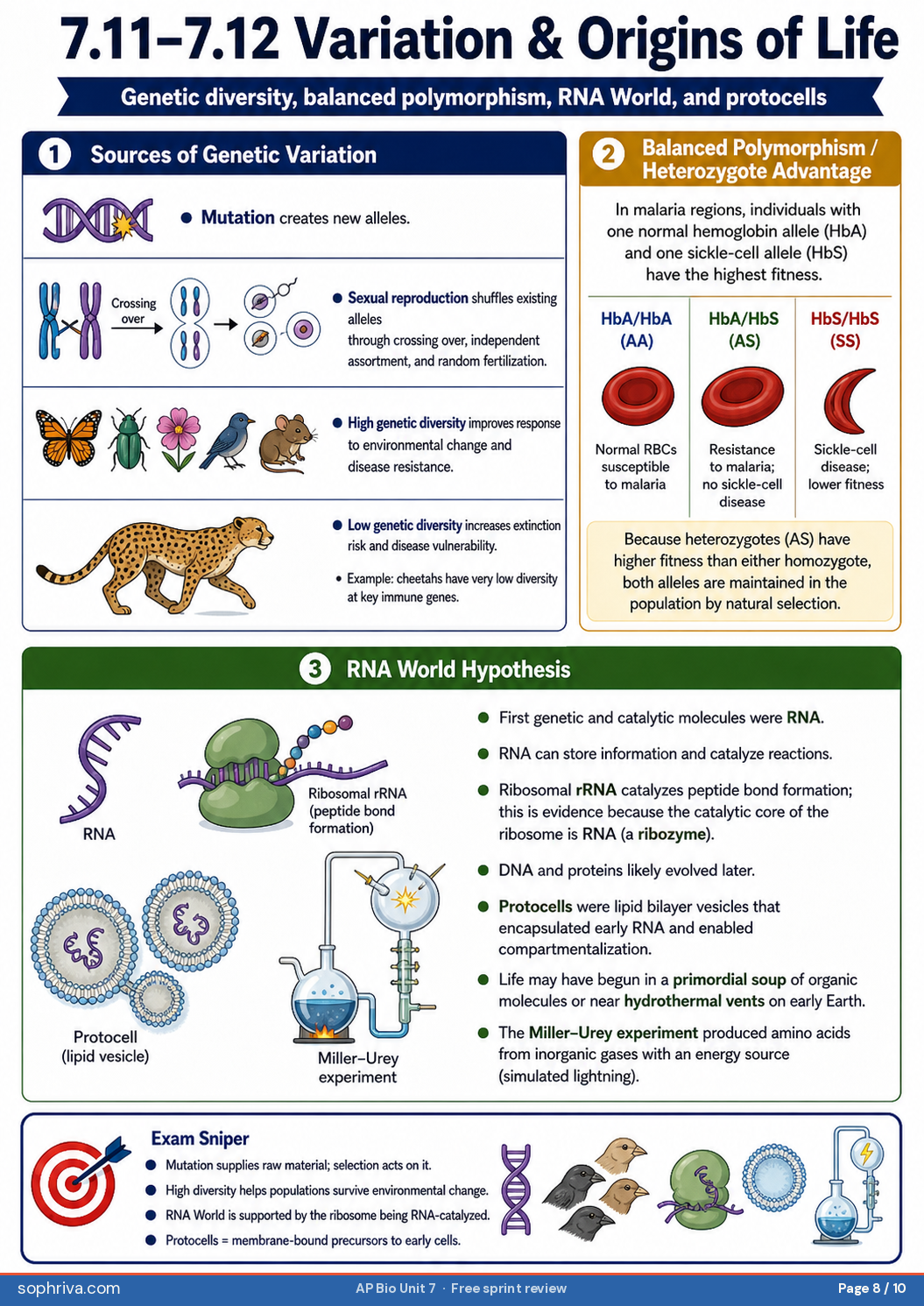
| 7.11–7.12 Variation & Origins of Life | ★★ | MCQ | RNA world: first informational + catalytic molecule. |
Topic-by-topic visual review
Nine pages, one topic each. Open the PDF for print quality, or scroll to study on screen.

Done with the sheet? Now get marked.
Upload your own AP Bio FRQ and we score it like an AP Reader — point by point — and show you exactly which rubric points you missed.
Get your first FRQ marked free →