AP Biology Unit 8 · Sprint Review · Free
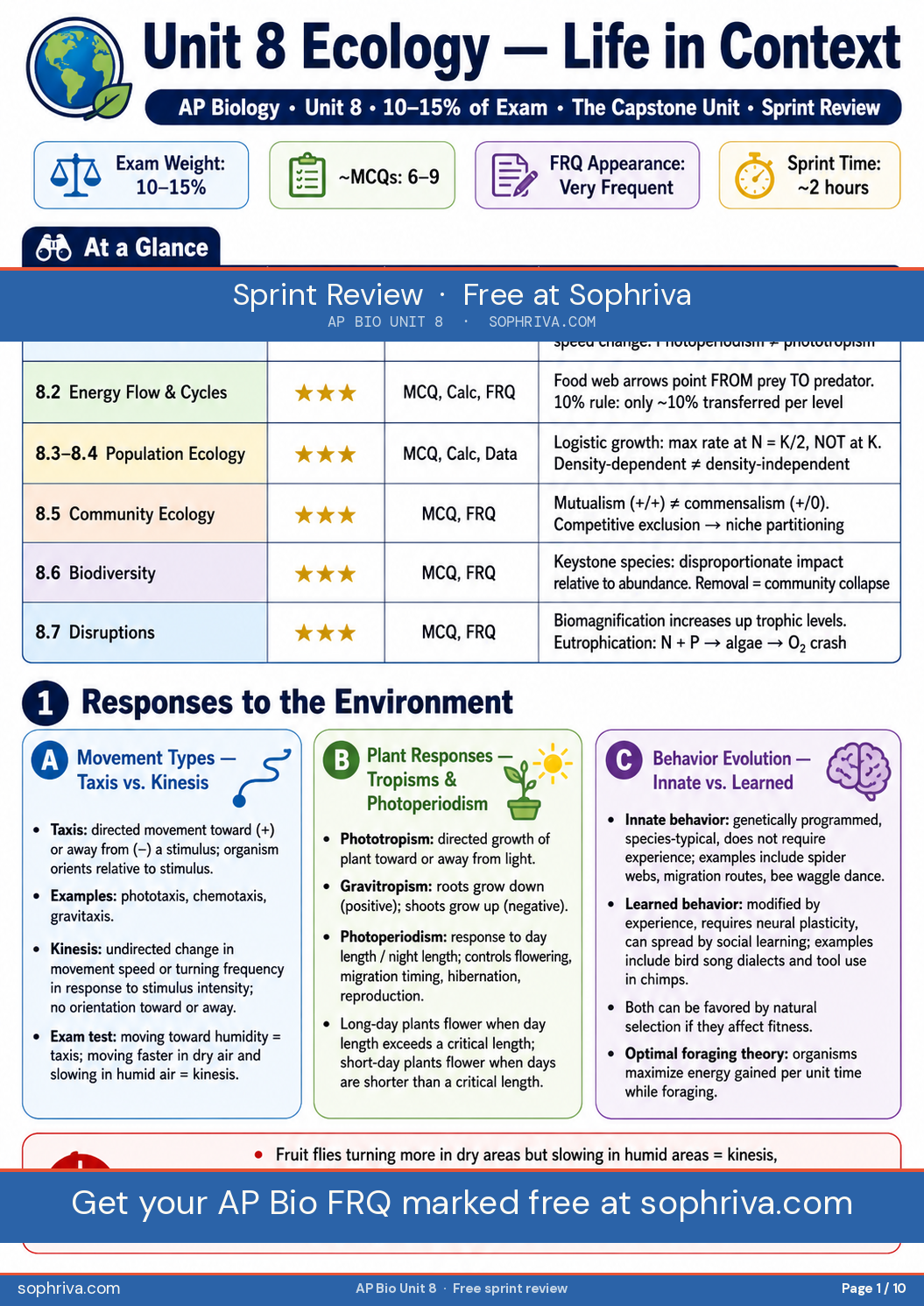
AP Biology Unit 8 — Ecology
One-page sprint review
Ten pages on animal behavior, energy flow, population growth, community ecology, biodiversity, and ecosystem disruption — the capstone unit that ties together every prior unit.
Exam Weight
10–15%
MCQs
6–9
FRQ Appearance
Very Frequent
Sprint Time
~2 hours
Quick Glance — all topics in this unit
Priority, exam format, and the trap that most often costs the point. Transcribed from page 1 so this content is searchable.
| Topic | Priority | Format | Key trap / must-know |
|---|---|---|---|
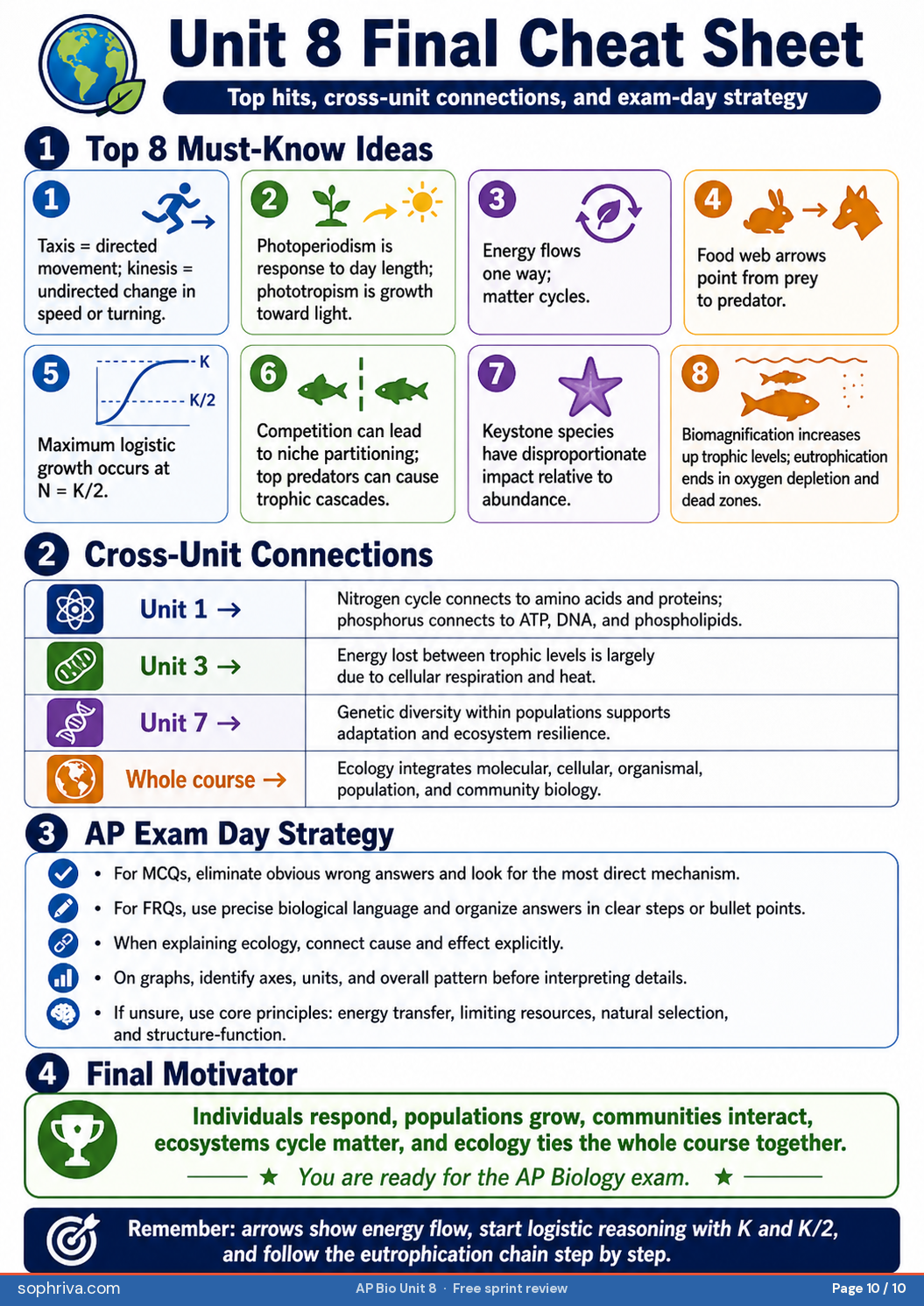
| 8.1 Behavioral Responses | ★★ | MCQ | Taxis = directed movement; kinesis = undirected speed change. Photoperiodism ≠ phototropism. |
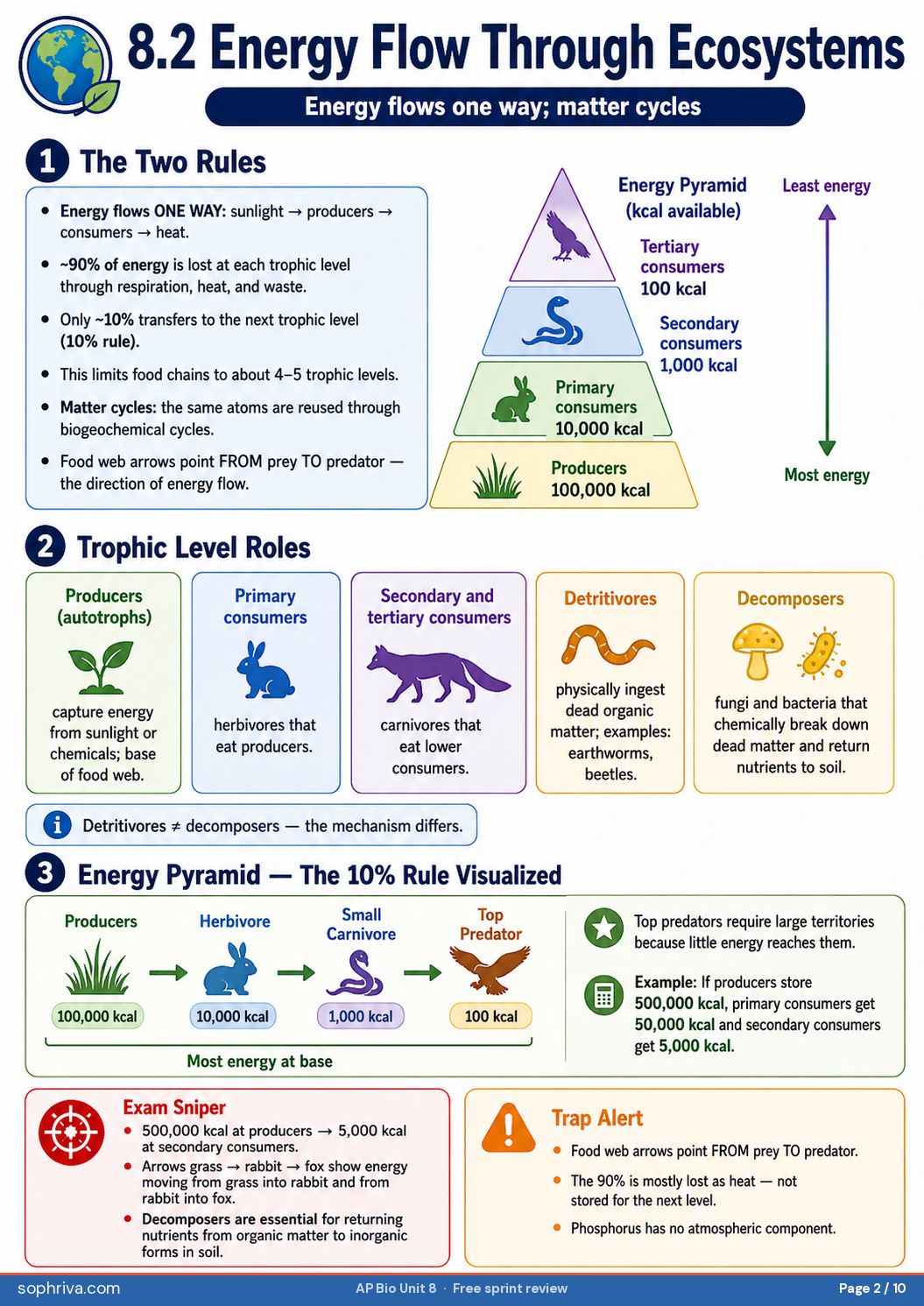
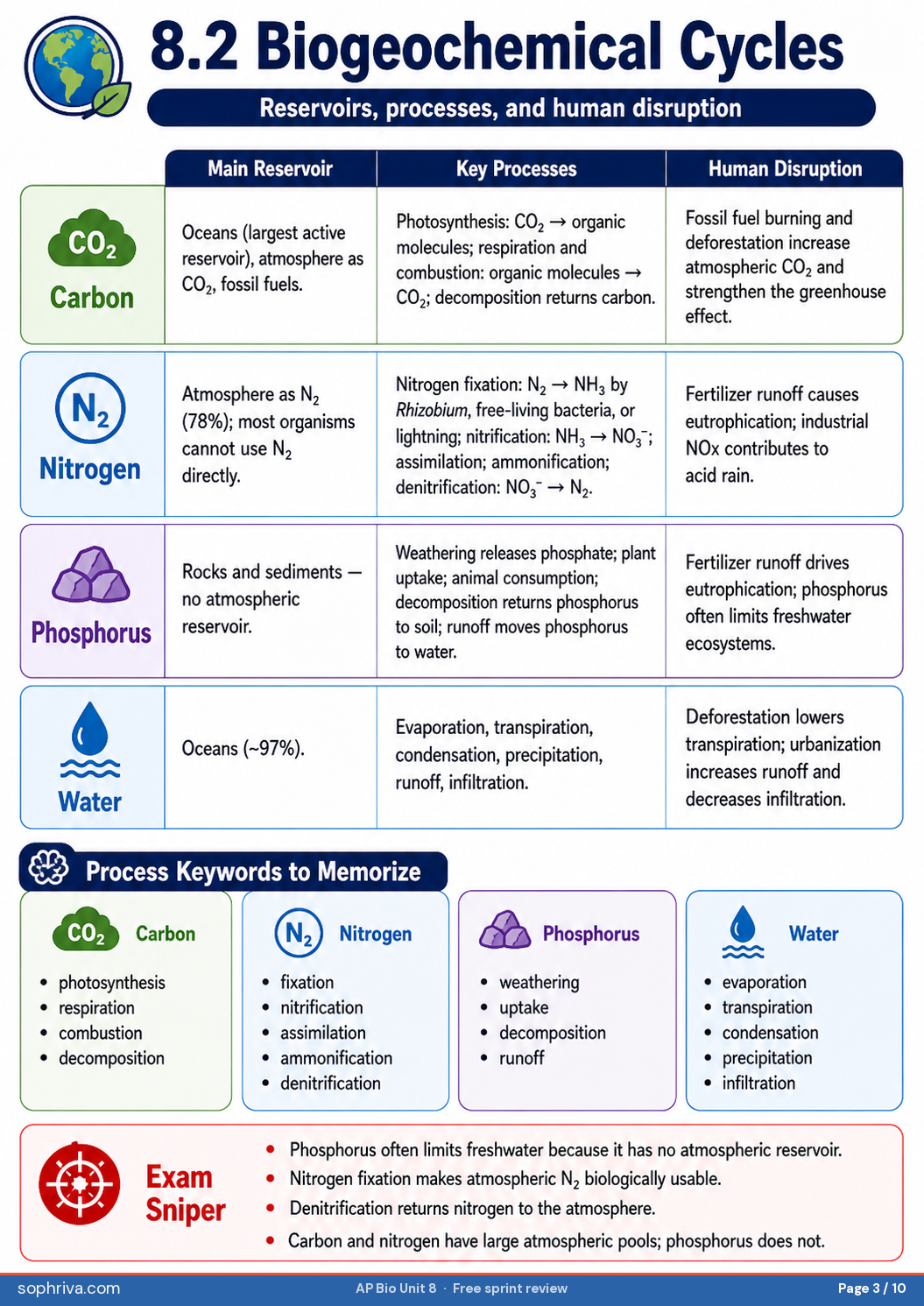
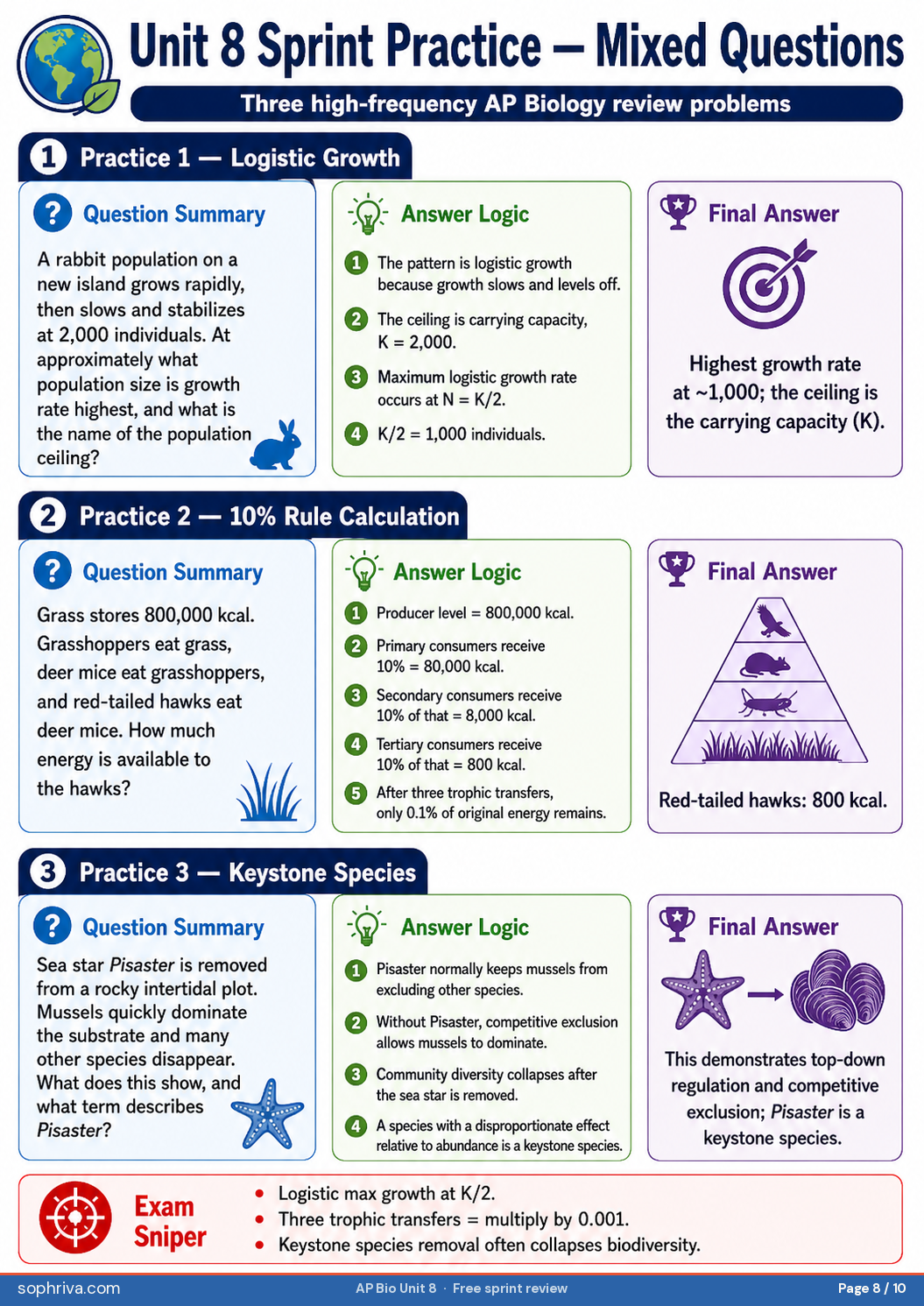
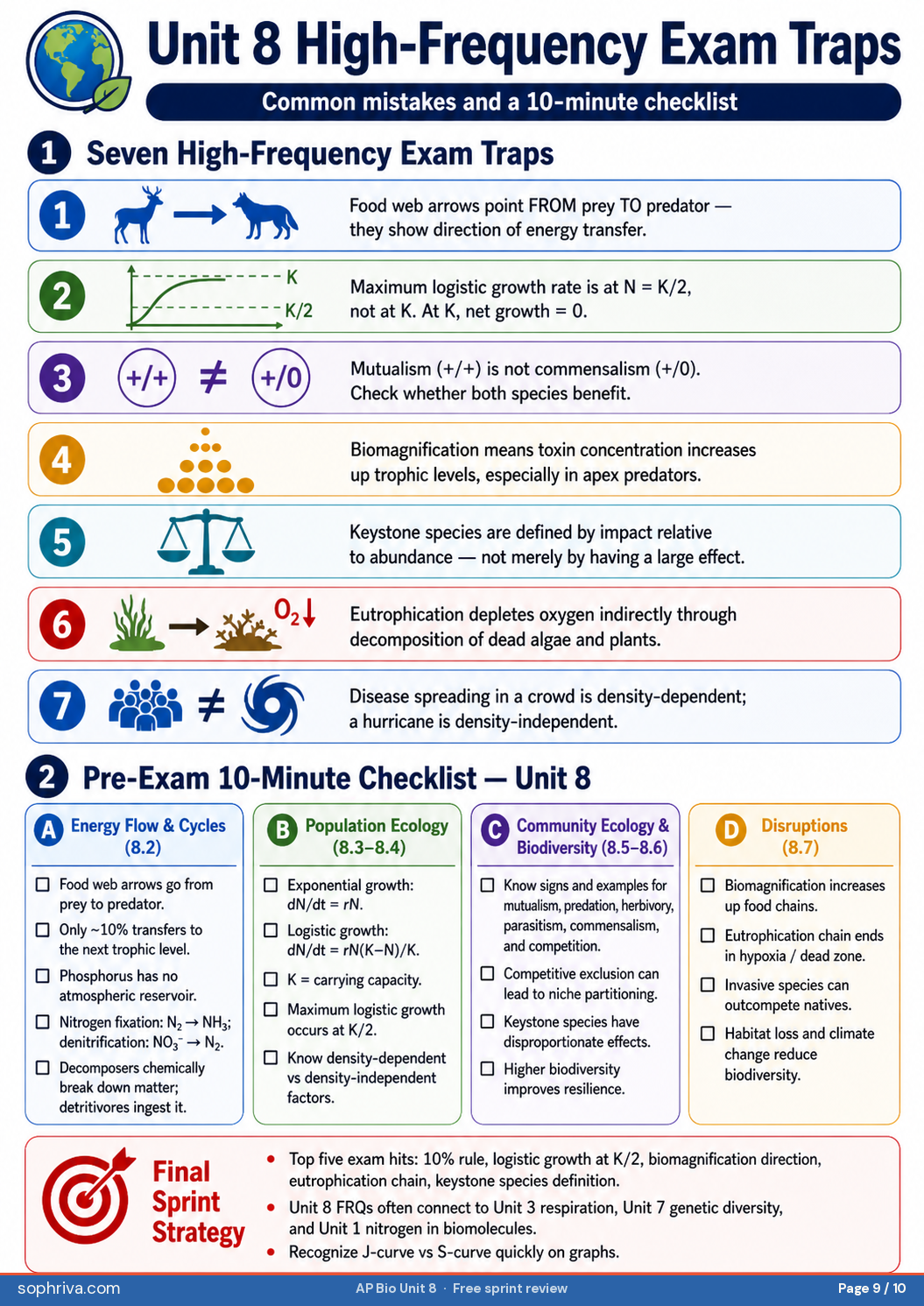
| 8.2 Energy Flow & Cycles | ★★★ | MCQ, Calc, FRQ | Food web arrows point FROM prey TO predator. ~10% rule: only ~10% transferred per level. |
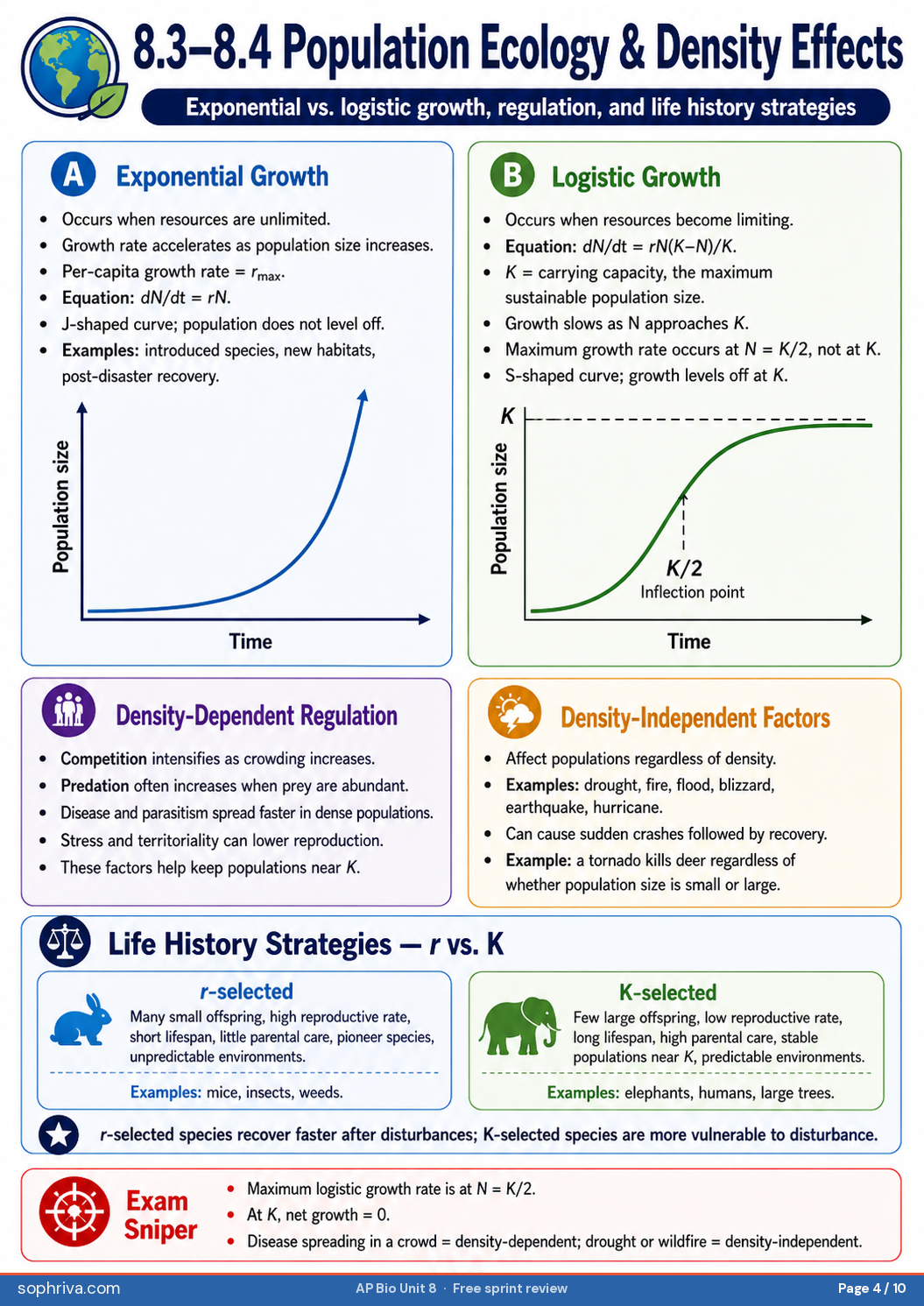
| 8.3–8.4 Population Ecology | ★★★ | MCQ, Calc, Data | Logistic growth: max rate at N = K/2, NOT K. Density-dependent vs density-independent. |
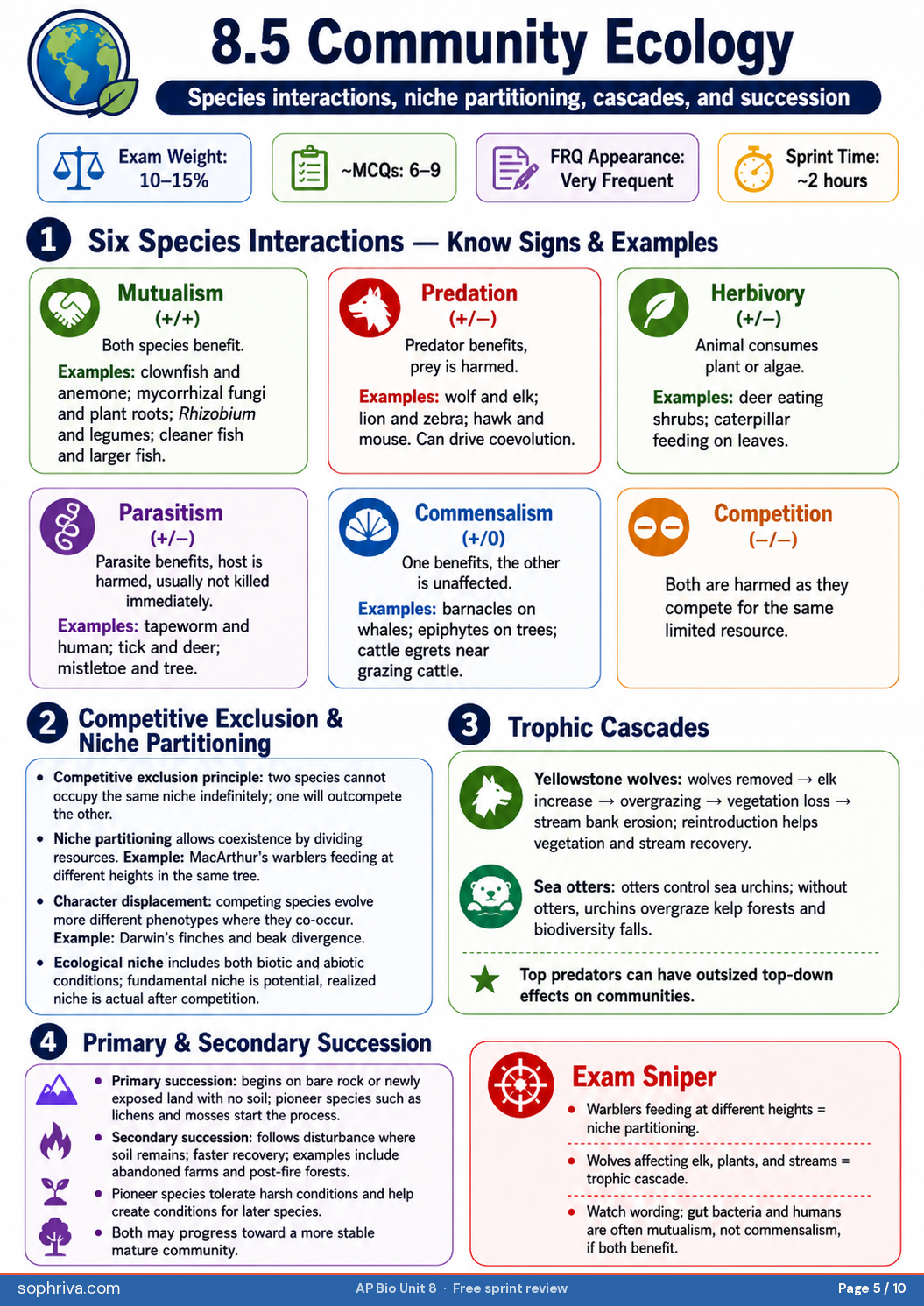
| 8.5 Community Ecology | ★★★ | MCQ, FRQ | Mutualism (+/+) ≠ commensalism (+/0). Competitive exclusion → niche partitioning. |
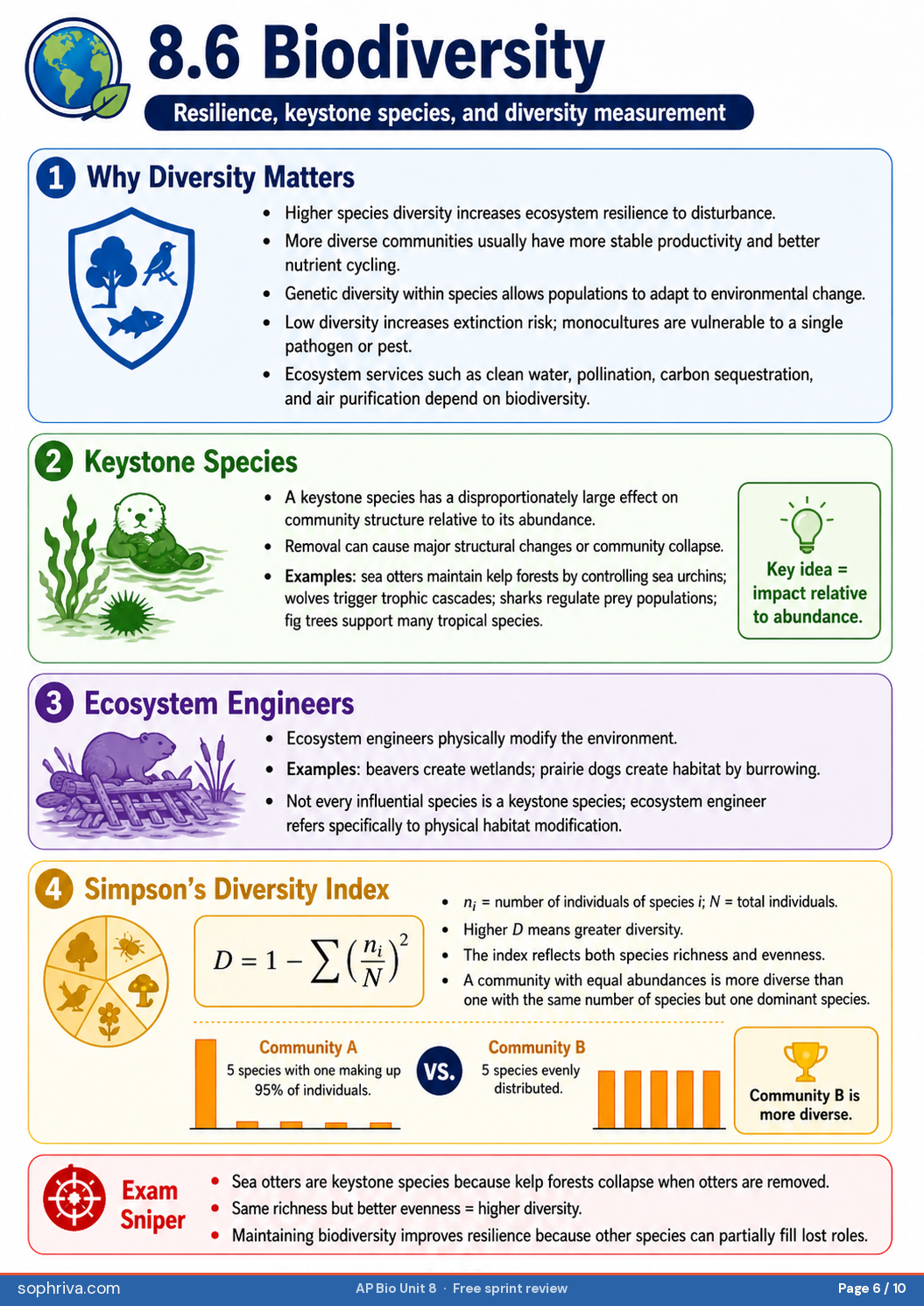
| 8.6 Biodiversity | ★★★ | MCQ, FRQ | Keystone species: disproportionate impact relative to abundance. Removal → community collapse. |
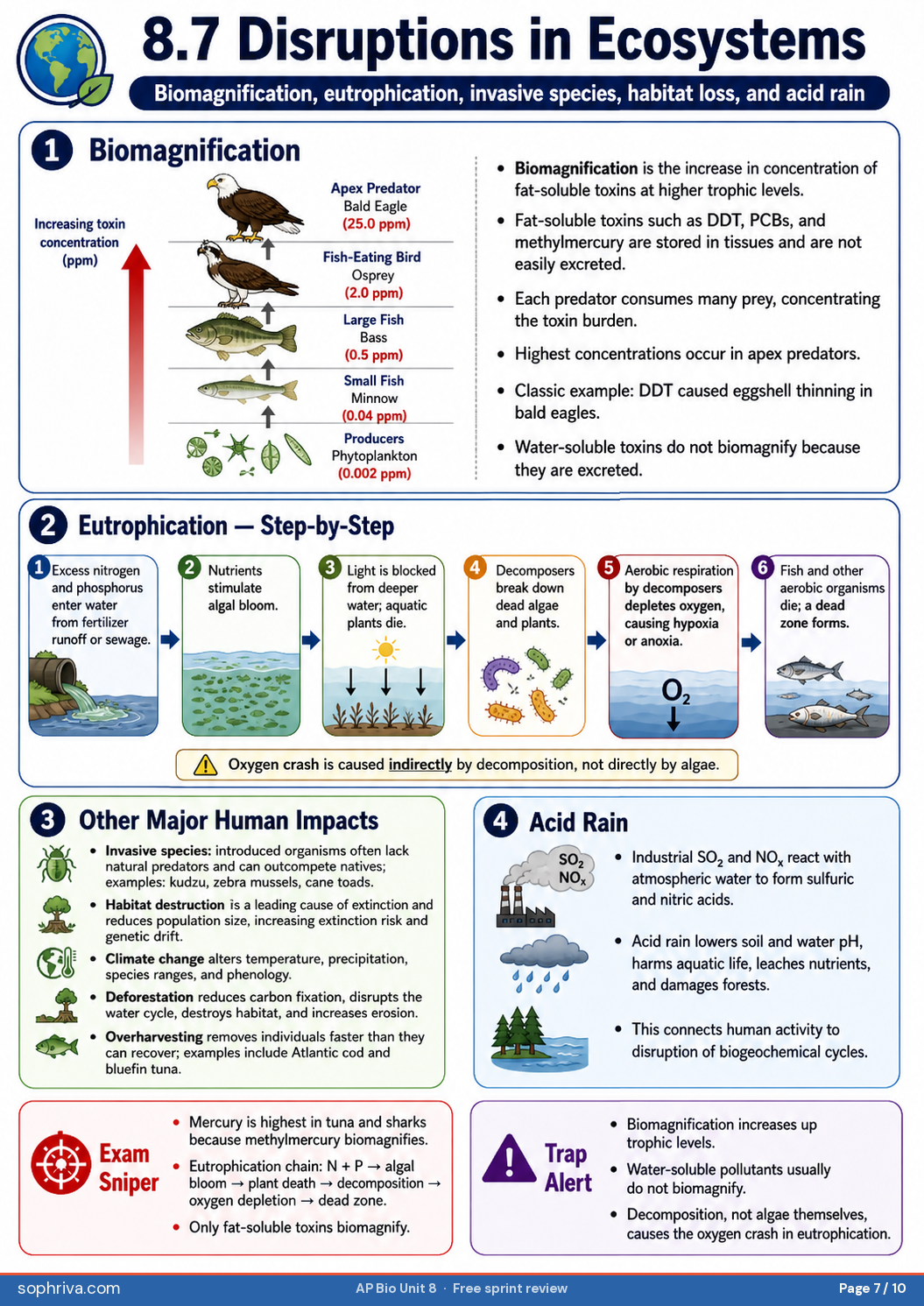
| 8.7 Disruptions | ★★★ | MCQ, FRQ | Biomagnification increases up trophic levels. Eutrophication: N + P → algae → O2 crash. |
Topic-by-topic visual review
Nine pages, one topic each. Open the PDF for print quality, or scroll to study on screen.
Done with the sheet? Now get marked.
Upload your own AP Bio FRQ and we score it like an AP Reader — point by point — and show you exactly which rubric points you missed.
Get your first FRQ marked free →