AP Biology Strategy Q4 · Disruption · Strategy Playbook · Free
Q4 Disruption Cascade Template
Causal-chain framework for the Conceptual Analysis FRQ
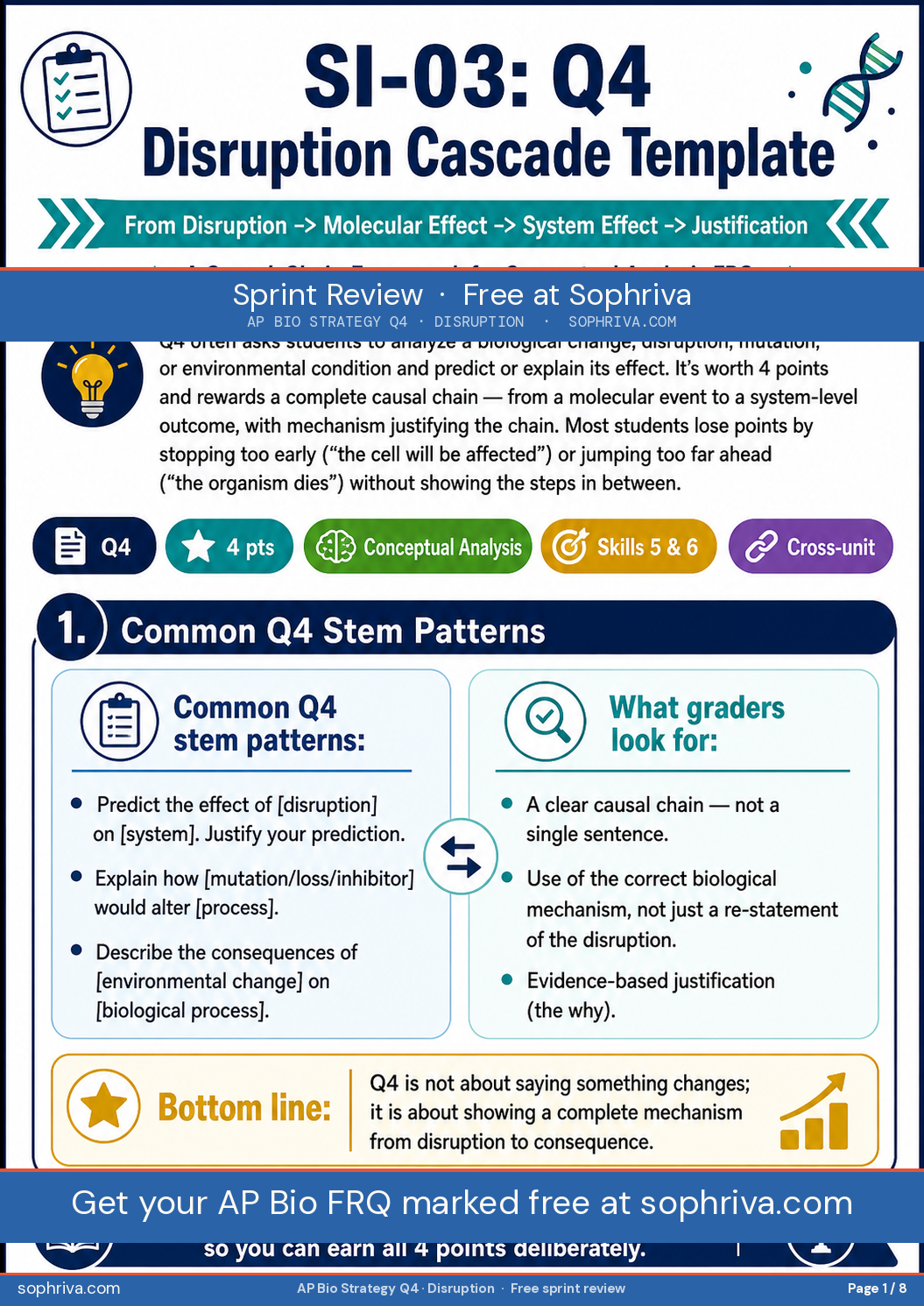
Eight pages on building a complete causal chain — disruption → molecular effect → system effect → justification. Q4 is worth 4 points and rewards full chains; most students lose points by stopping too early or jumping too far ahead.
Exam Weight
Q4 · 4 pts
MCQs
n/a
FRQ Appearance
Q4 (every year)
Sprint Time
~30 min
Quick Glance — all topics in this unit
Priority, exam format, and the trap that most often costs the point. Transcribed from page 1 so this content is searchable.
| Topic | Priority | Format | Key trap / must-know |
|---|---|---|---|
| P1 Common Q4 Stem Patterns | ★★★ | Q4 | Mutation, disruption, environmental change, treatment — all reduce to the same 4-level cascade. |
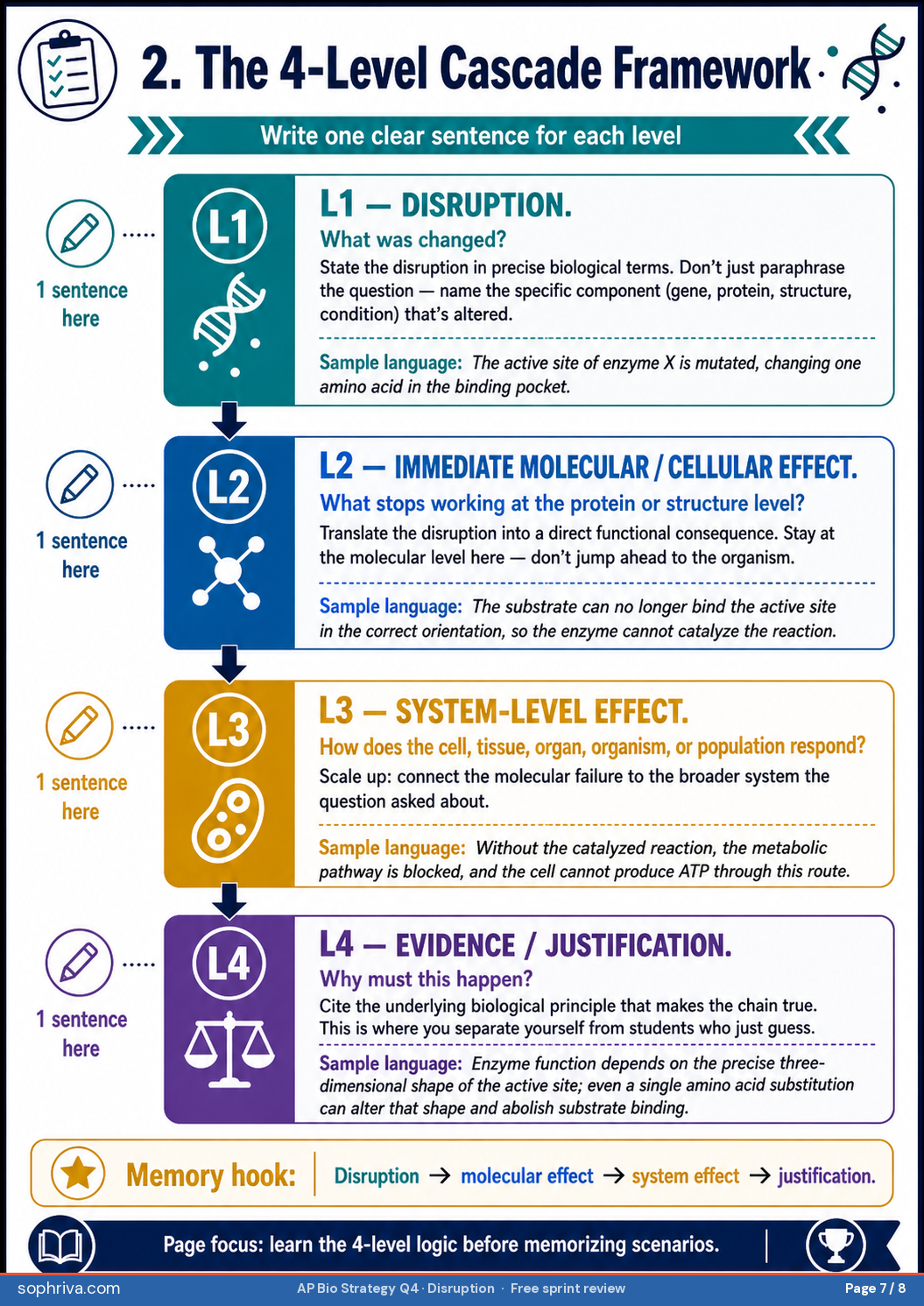
| P2 4-Level Cascade Framework | ★★★ | Q4 | DISRUPTION → MOLECULAR → SYSTEM → JUSTIFICATION. Always all four. |
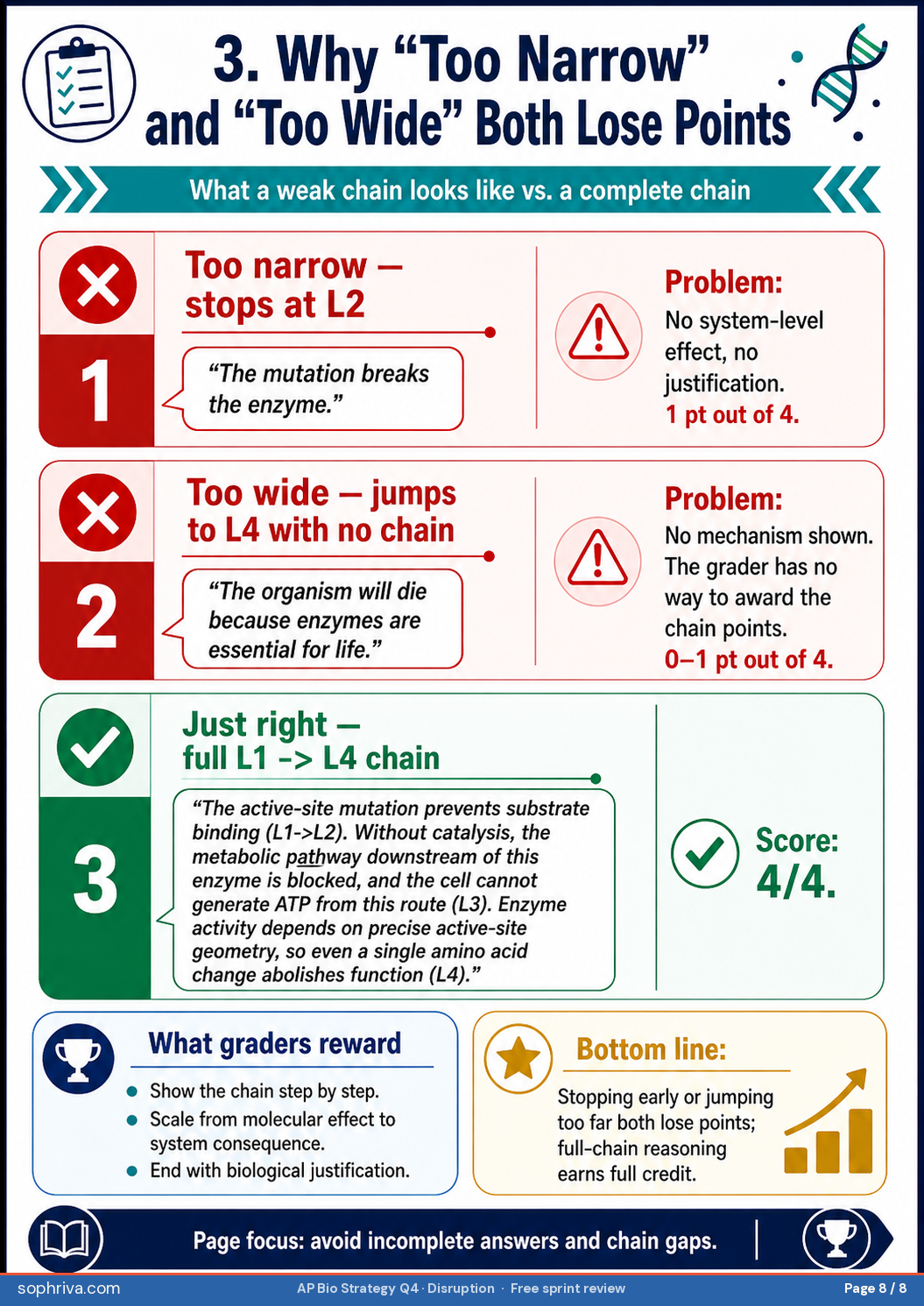
| P3 Too Narrow vs. Too Wide | ★★★ | Q4 | Stopping at L2 = narrow; jumping to L4 with no chain = wide. Both lose points. |
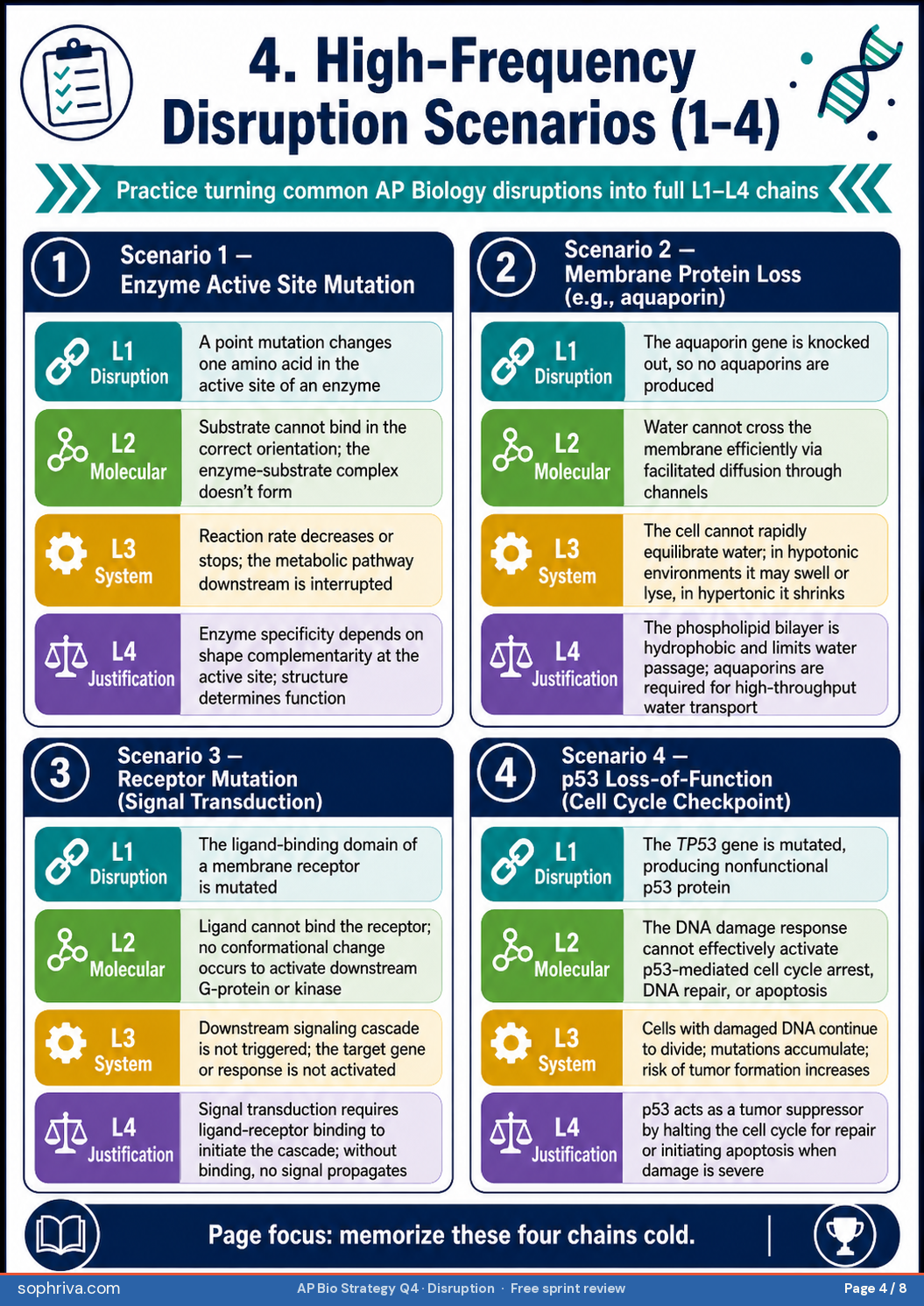
| P4 Scenarios 1–4 (molecular) | ★★★ | Q4 | Enzyme active site, membrane protein loss, receptor mutation, p53 loss — full chains. |
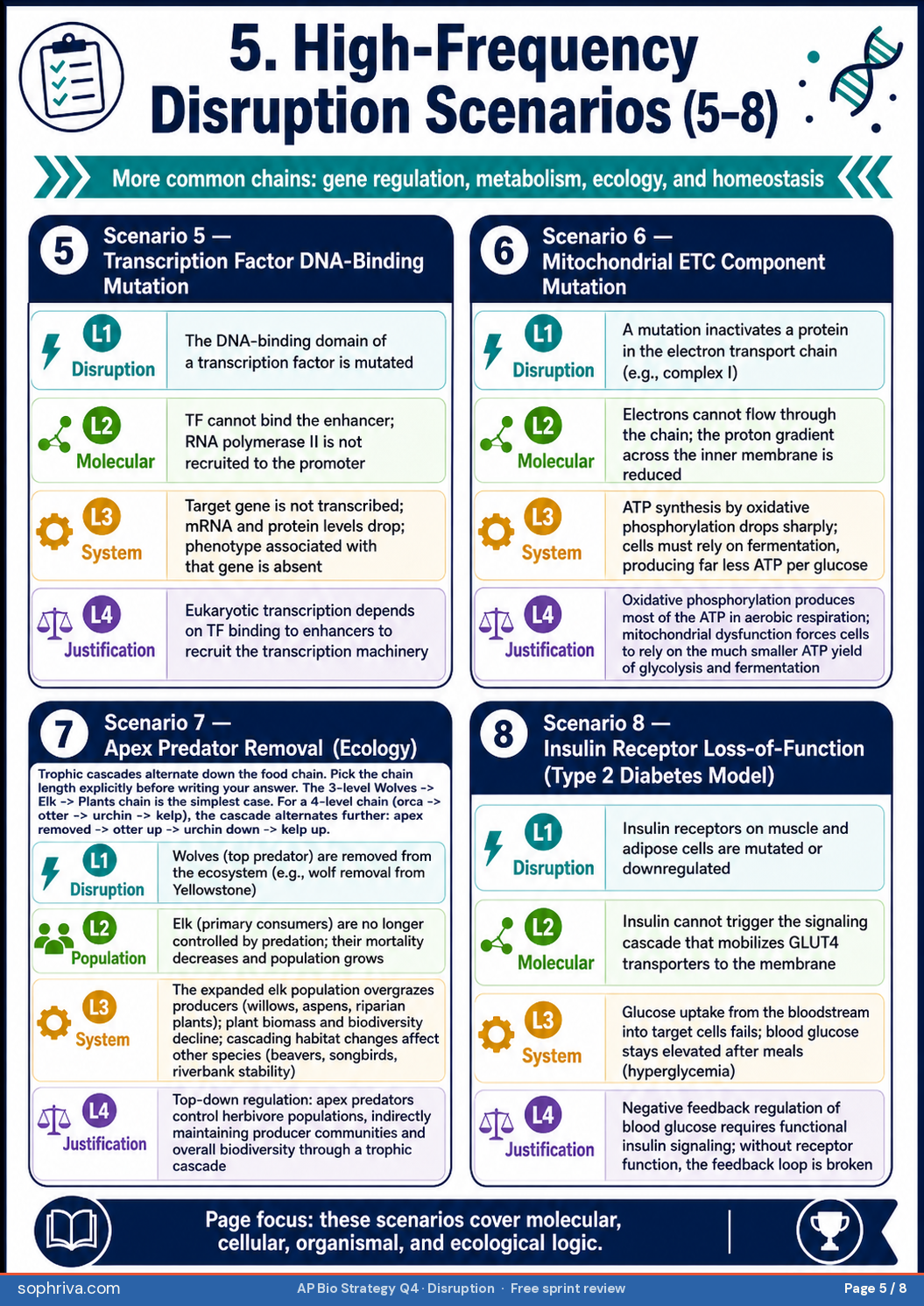
| P5 Scenarios 5–8 (cellular/ecology) | ★★★ | Q4 | TF DNA-binding, ETC component, apex predator, insulin receptor — full chains. |
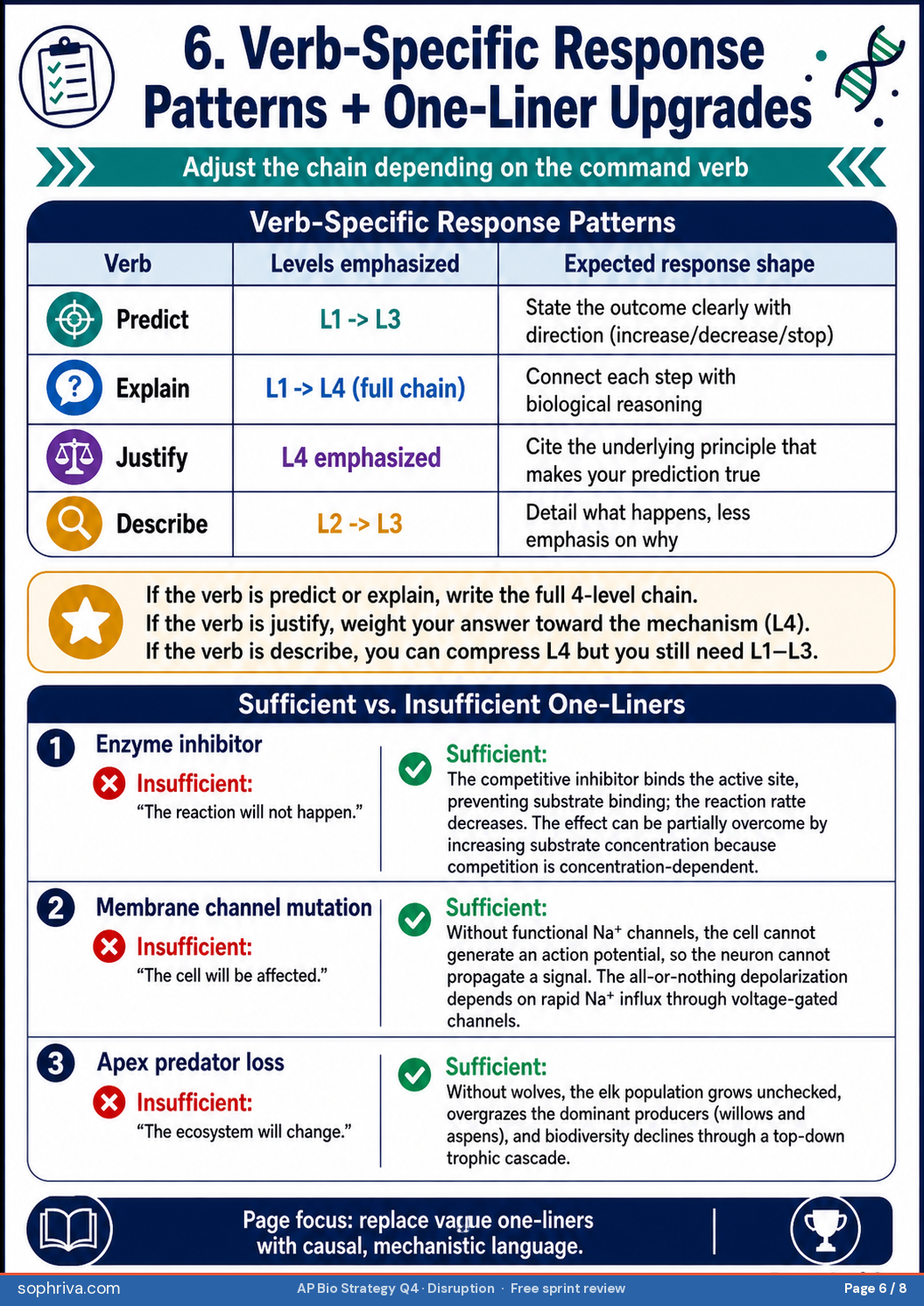
| P6 Verb-Specific Patterns | ★★ | Q4 | Predict vs. explain vs. justify — different chain length and structure. |
| P7 Sufficient vs. Insufficient | ★★ | Q4 | One-liner pairs showing rubric language vs. vague language. |
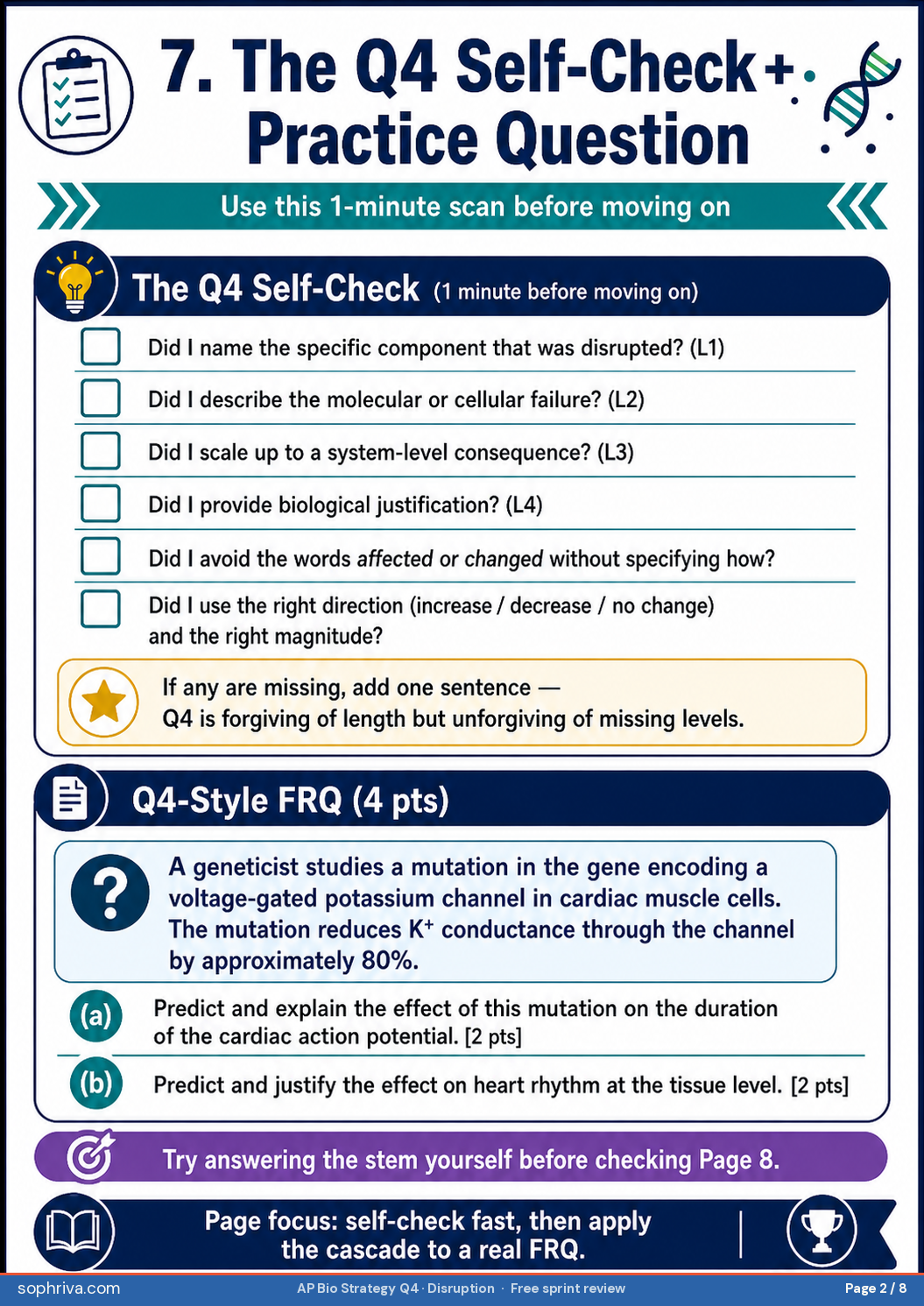
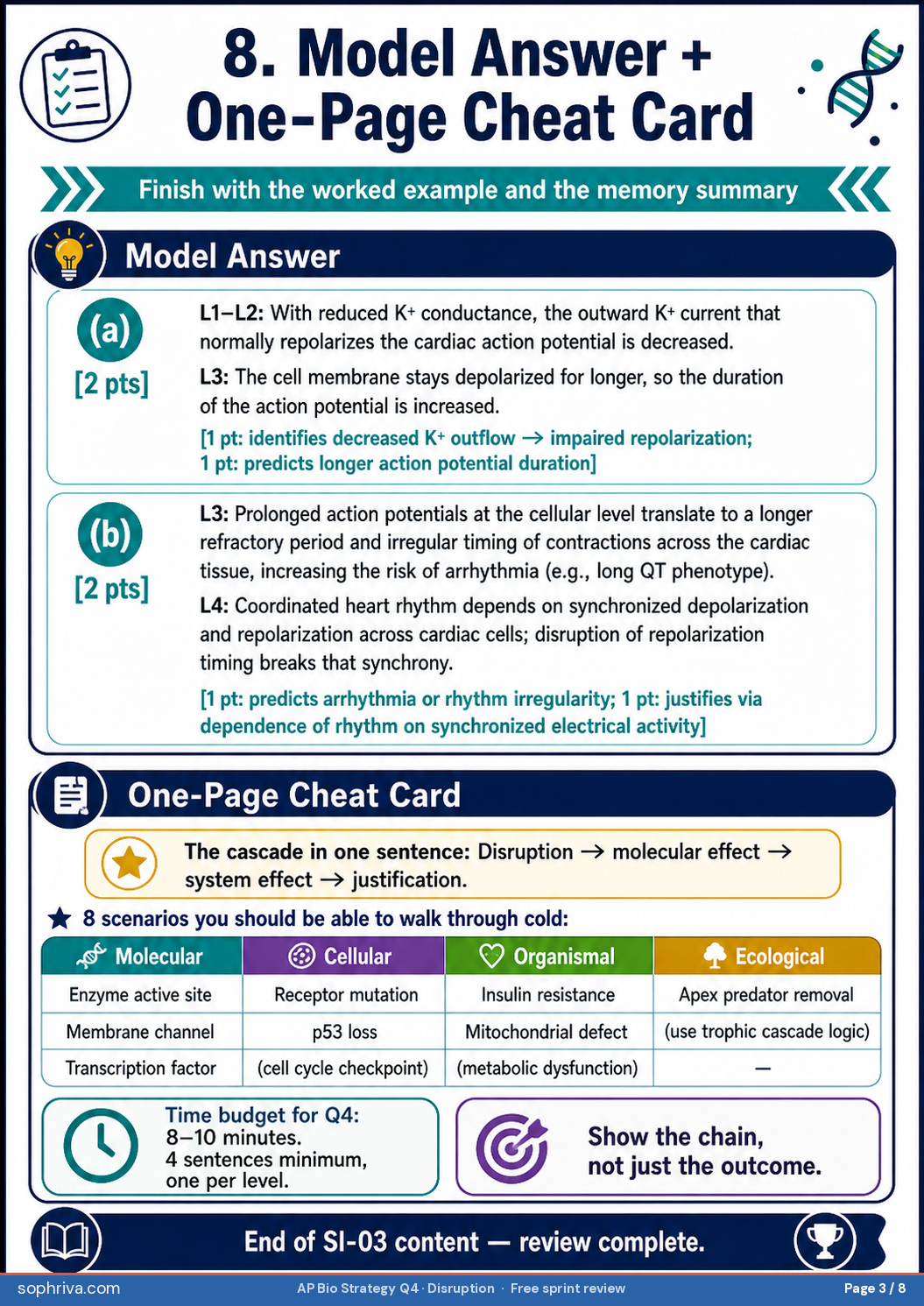
| P8 Practice + Cheat Card | ★★ | Q4 | Worked Q4 plus the universal cascade phrase library. |
Topic-by-topic visual review
Nine pages, one topic each. Open the PDF for print quality, or scroll to study on screen.
Done with the sheet? Now get marked.
Upload your own AP Bio FRQ and we score it like an AP Reader — point by point — and show you exactly which rubric points you missed.
Get your first FRQ marked free →