AP Biology Strategy · Statistics & Claims · Strategy Playbook · Free
Statistics, Error Bars & Evidence Claims
From data to defensible claim — writing conclusions that earn points
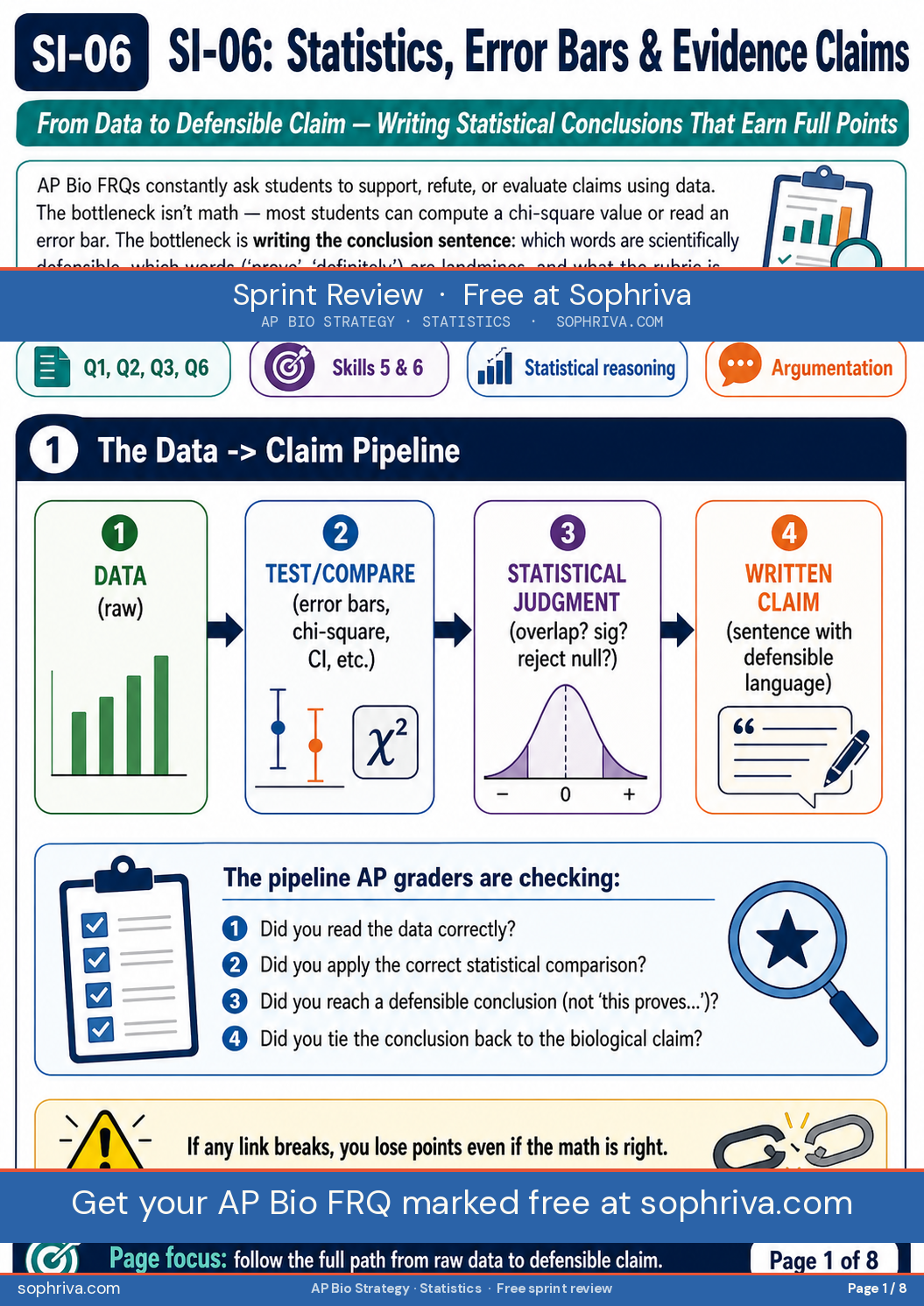
Eight pages on writing the conclusion sentence FRQ rubrics actually award. The bottleneck isn't computing chi-square — it's choosing which words are scientifically defensible and which words ('prove', 'definitely') are landmines.
Exam Weight
Q1·Q2·Q3·Q6 follow-ups
MCQs
n/a
FRQ Appearance
Every data FRQ
Sprint Time
~30 min
Quick Glance — all topics in this unit
Priority, exam format, and the trap that most often costs the point. Transcribed from page 1 so this content is searchable.
| Topic | Priority | Format | Key trap / must-know |
|---|---|---|---|
| P1 Data → Claim Pipeline | ★★★ | Q1·Q2·Q3·Q6 | Data → analysis → conclusion sentence — the conclusion is the rubric-earning step. |
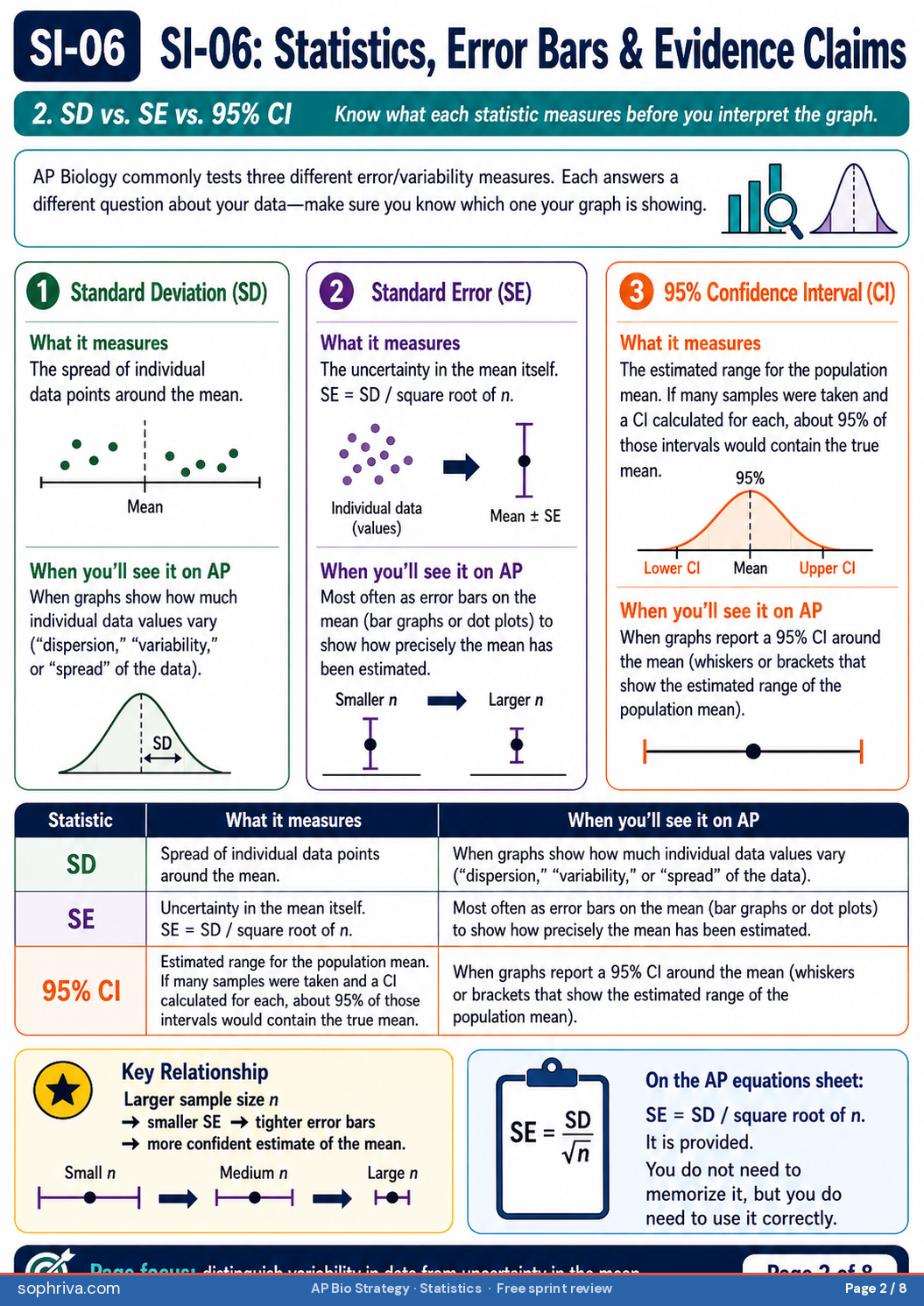
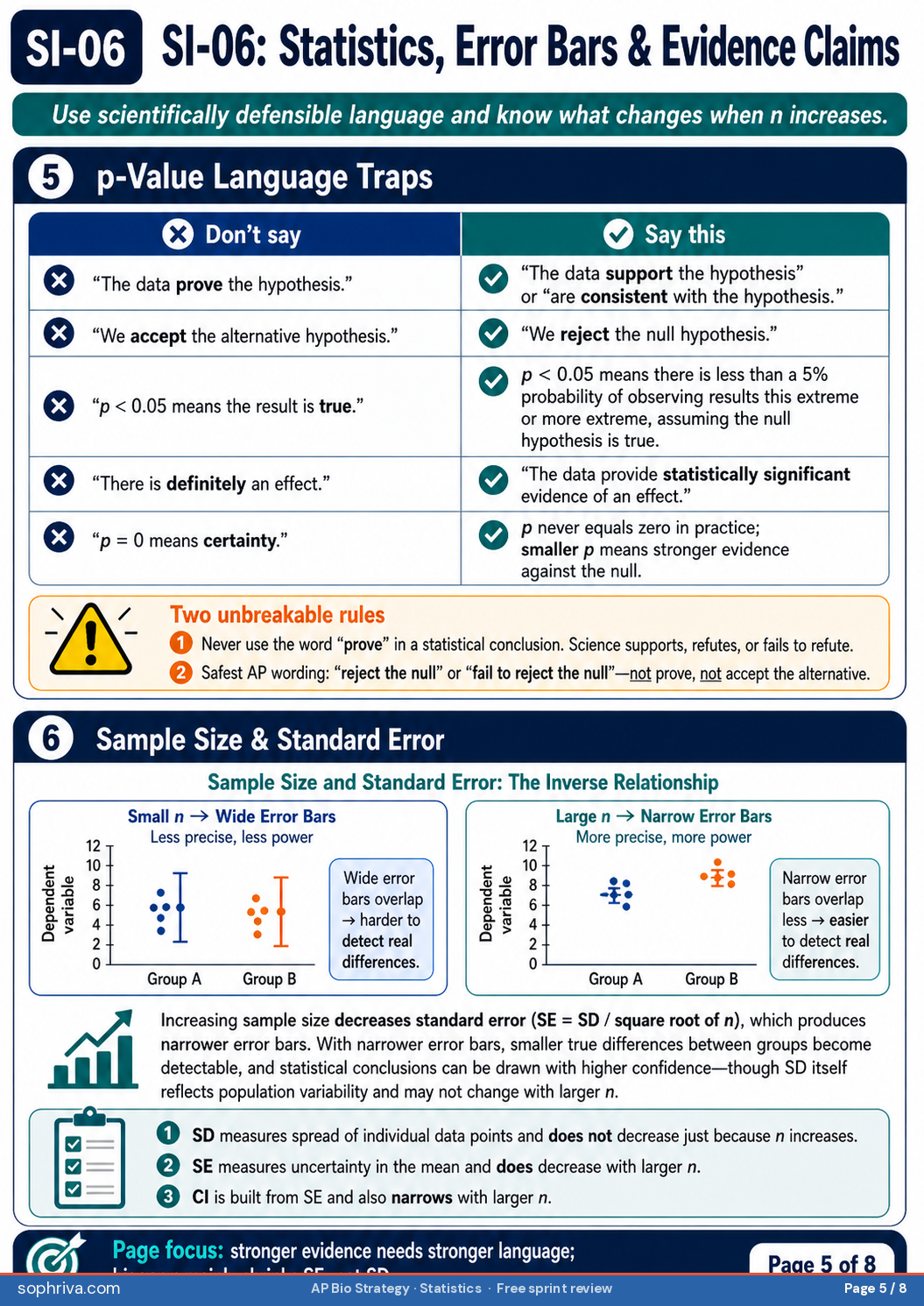
| P2 SD vs. SE vs. 95% CI | ★★★ | All data FRQs | SD = spread; SE = uncertainty in the mean; CI = range likely to contain true mean. |
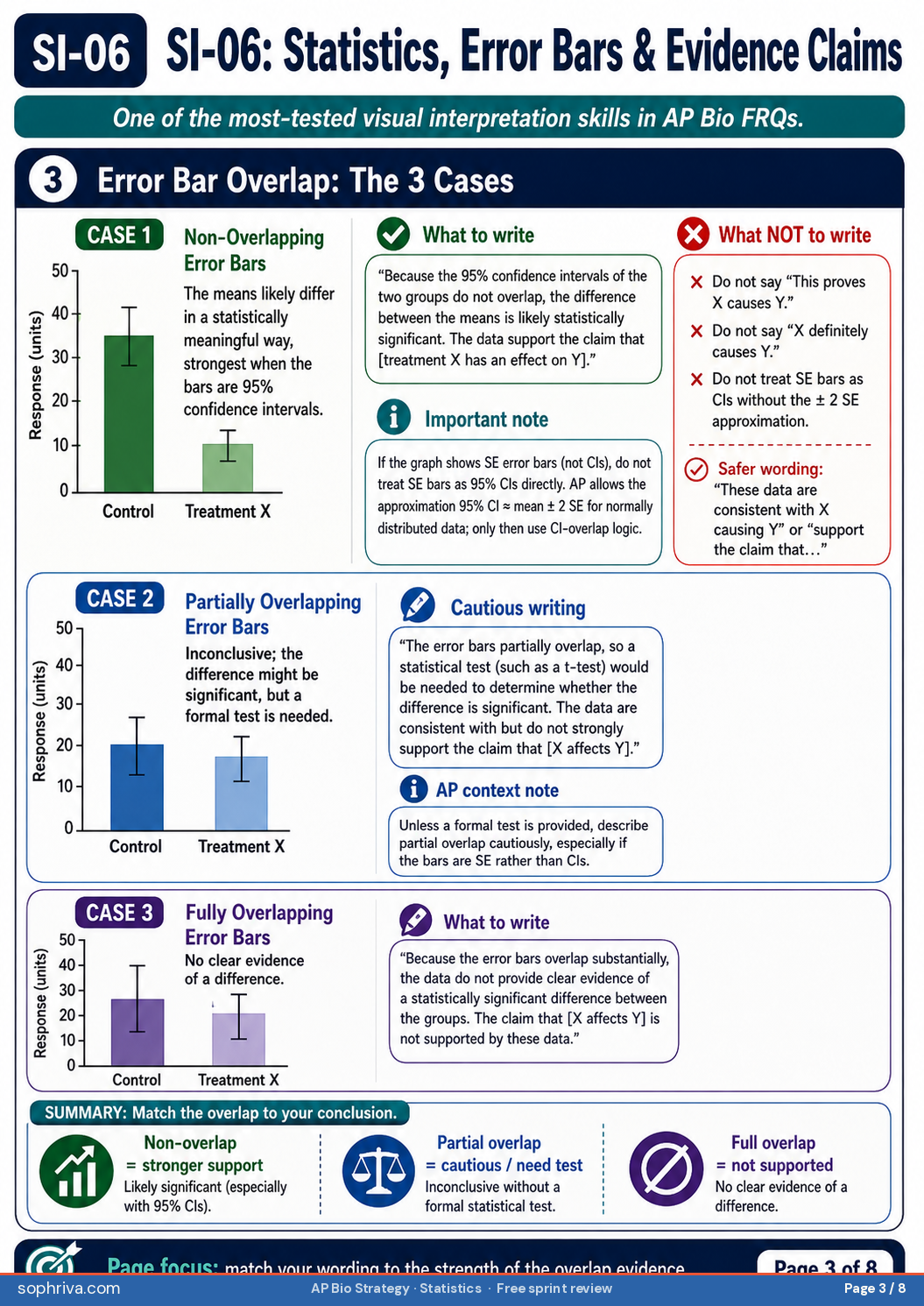
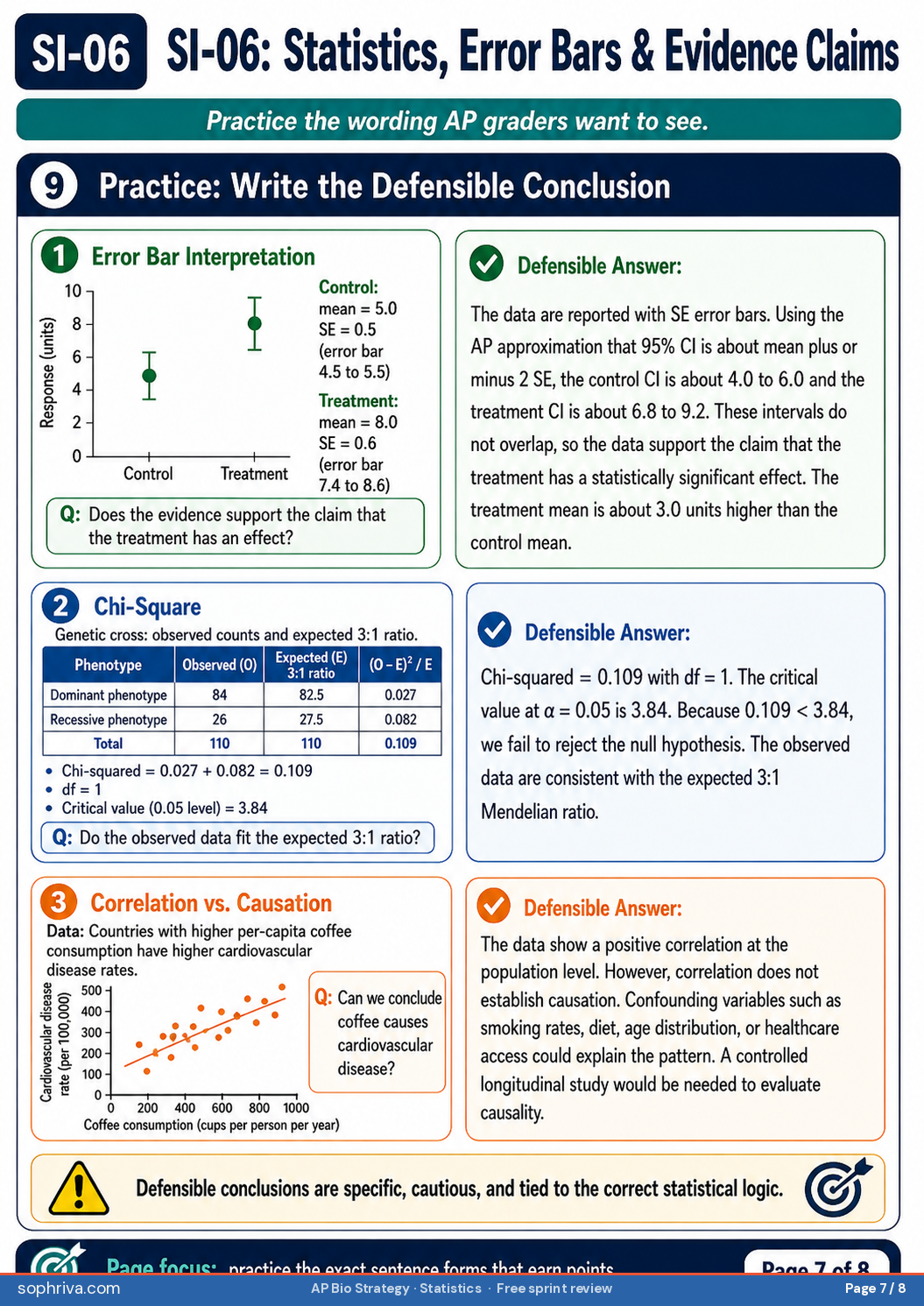
| P3 Error Bar Overlap — 3 Cases | ★★★ | All data FRQs | No overlap = significant; partial = inconclusive; full overlap = not significant. |
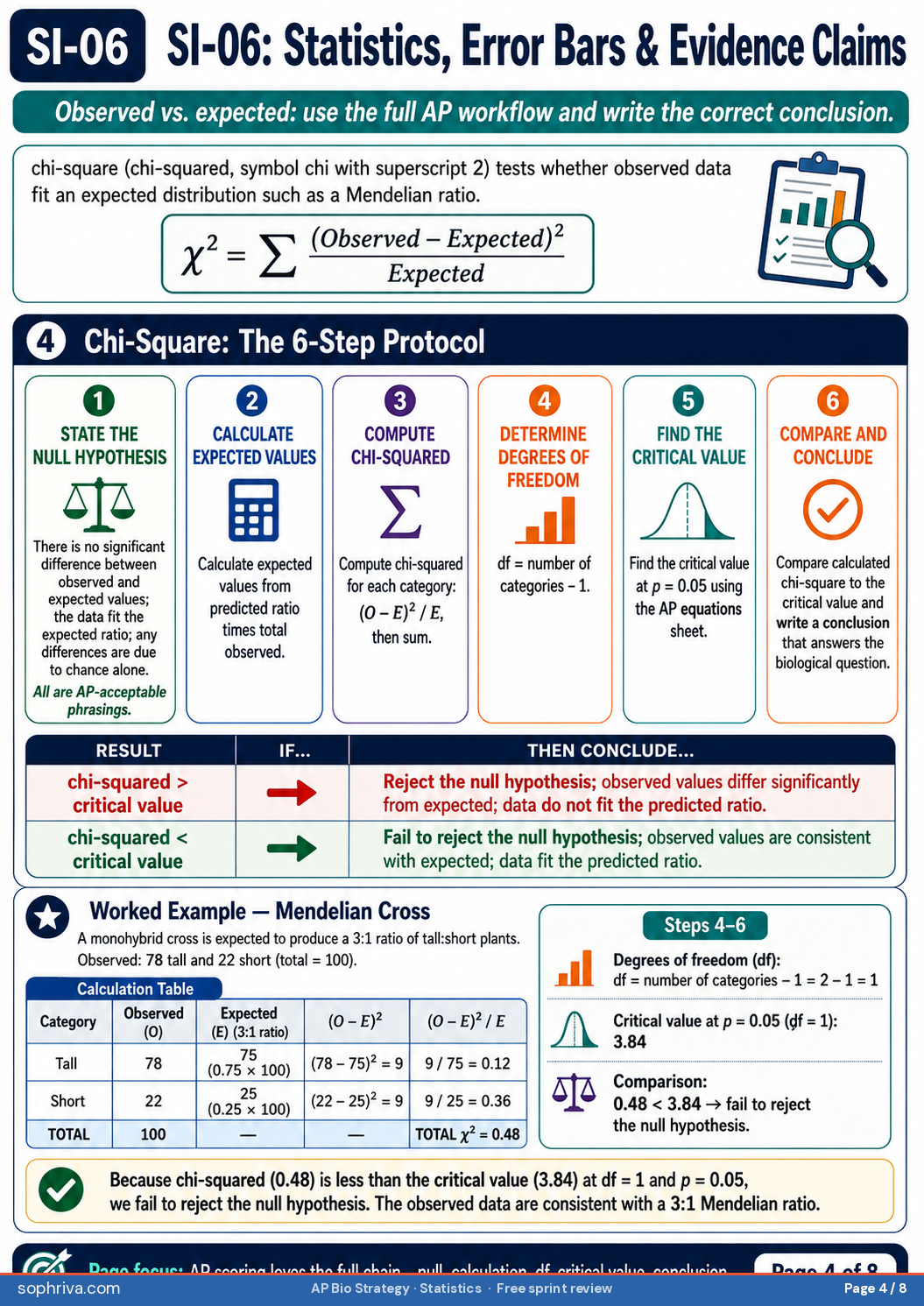
| P4 Chi-Square 6-Step Protocol | ★★★ | Genetics FRQs | Hypothesis → expected → χ² calc → df → critical value → conclusion language. |
| P5 p-Value Language Traps | ★★★ | All data FRQs | Never 'proves'; use 'supports' or 'fails to reject the null'. |
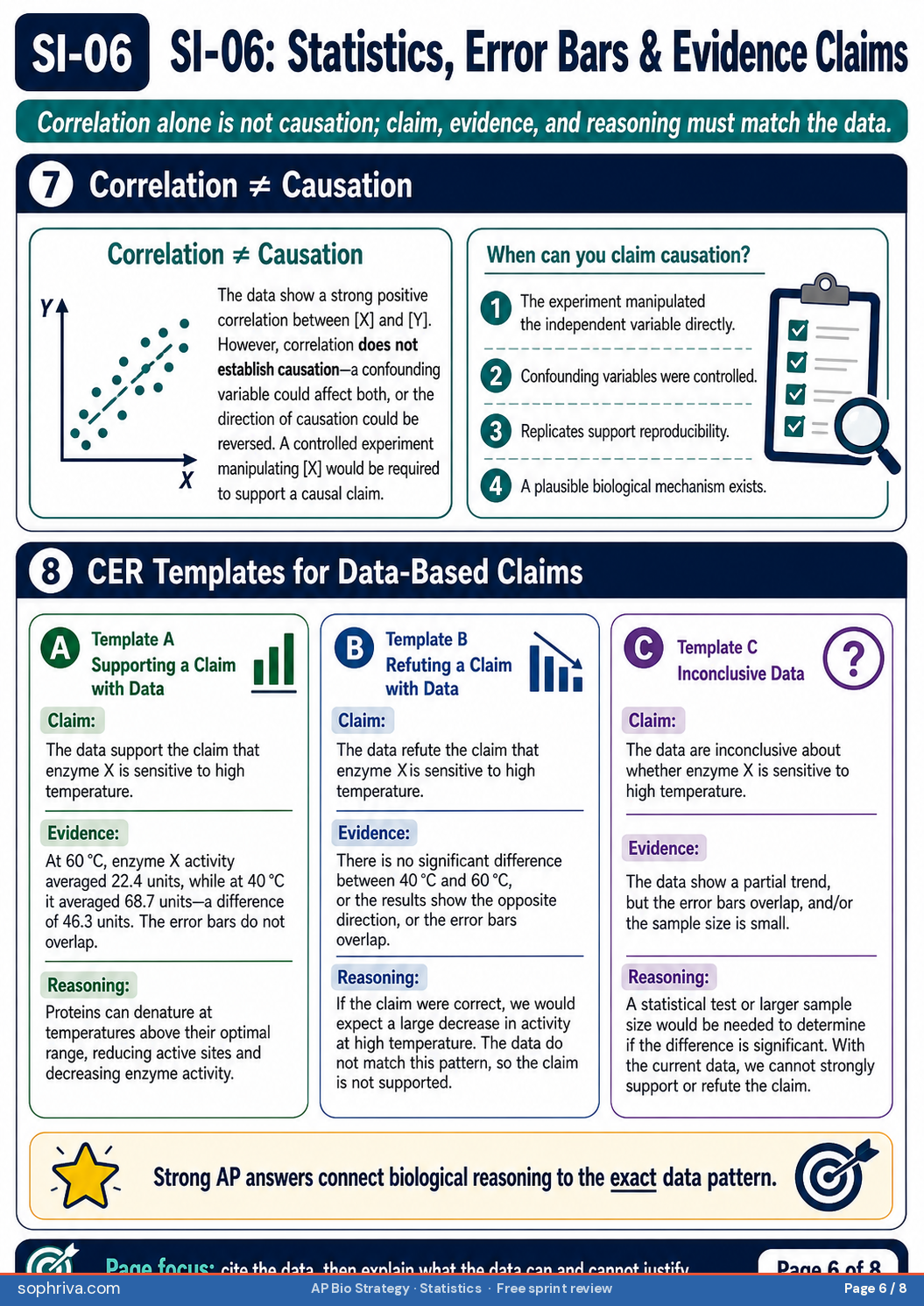
| P6 Correlation ≠ Causation | ★★ | Q3·Q6 | Strong correlation alone never establishes causation. |
| P7 CER Templates | ★★★ | Q3·Q6 | Claim · Evidence · Reasoning — three templates: support, refute, inconclusive. |
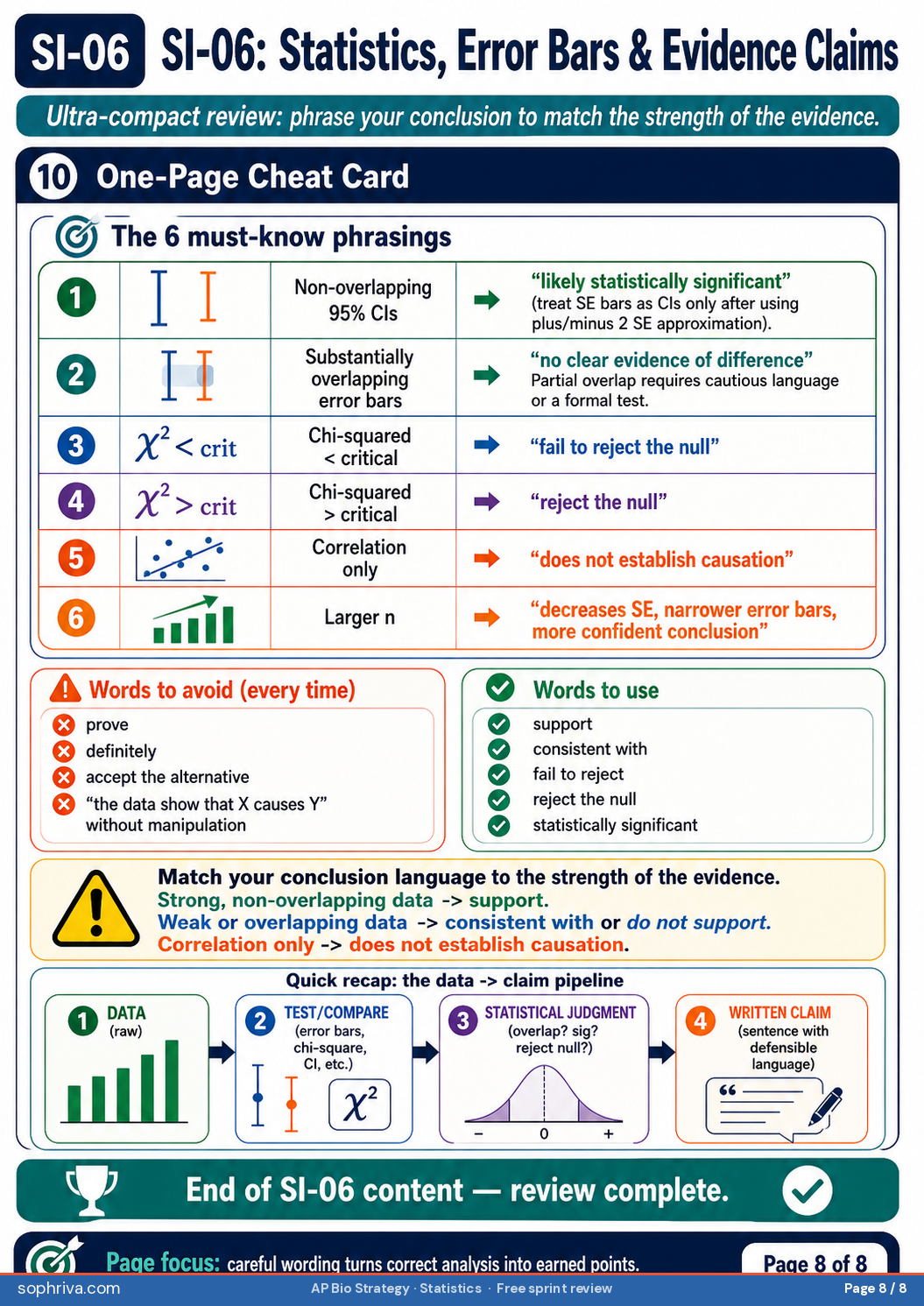
| P8 Practice + Cheat Card | ★★ | All data FRQs | Six must-know phrasings the rubric explicitly rewards. |
Topic-by-topic visual review
Nine pages, one topic each. Open the PDF for print quality, or scroll to study on screen.
Done with the sheet? Now get marked.
Upload your own AP Bio FRQ and we score it like an AP Reader — point by point — and show you exactly which rubric points you missed.
Get your first FRQ marked free →