AP Biology Strategy · Phylogeny · Strategy Playbook · Free
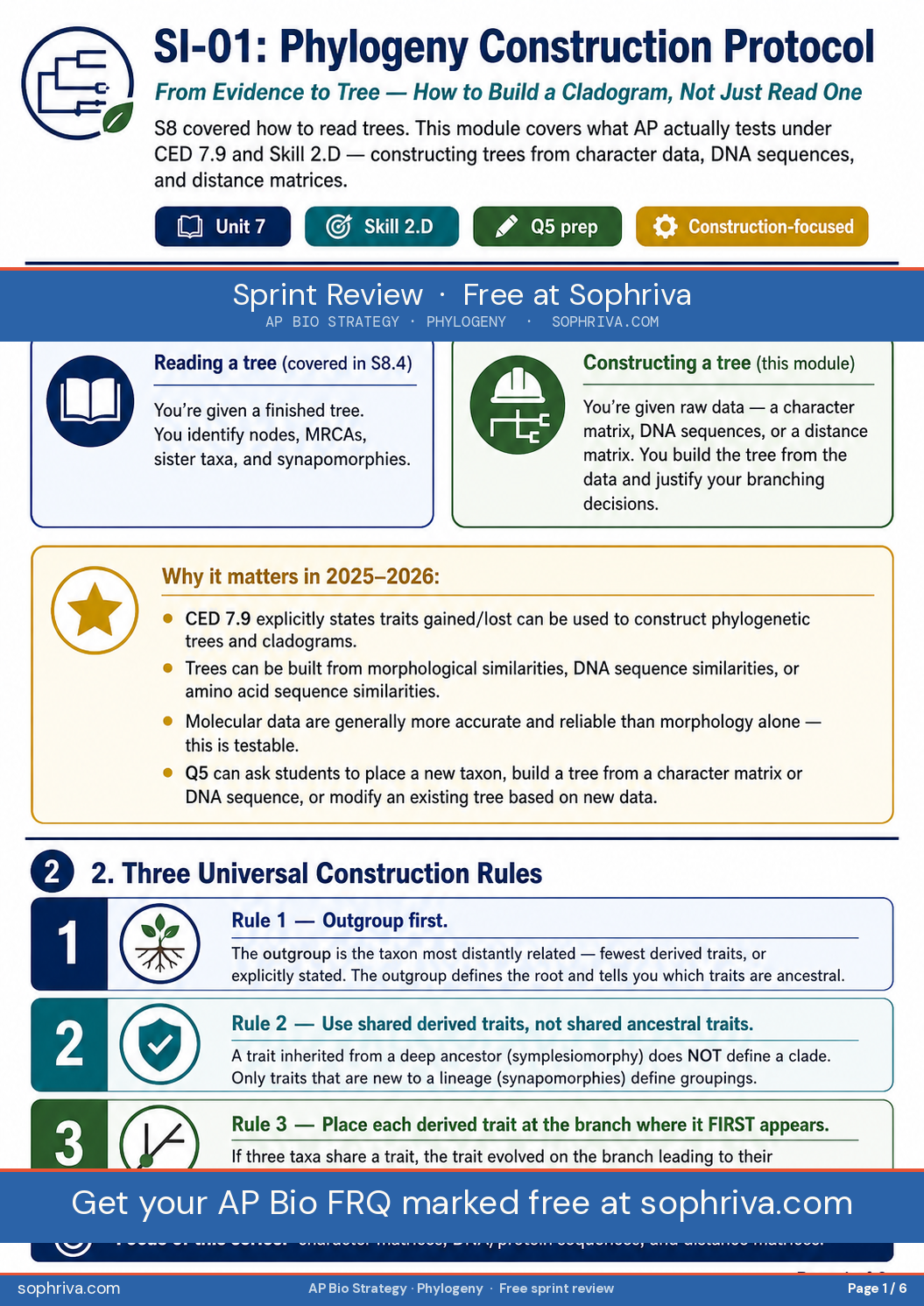
Phylogeny Construction Protocol
From evidence to tree — how to build a cladogram, not just read one
Six pages on building cladograms from character matrices, DNA sequences, and distance matrices — what AP actually tests under CED 7.9 and Skill 2.D. Covers the molecular-over-morphology rule and Q5 placement traps.
Exam Weight
Q5 · 4 pts
MCQs
1–2 placement
FRQ Appearance
Q3 · Q5
Sprint Time
~25 min
Quick Glance — all topics in this unit
Priority, exam format, and the trap that most often costs the point. Transcribed from page 1 so this content is searchable.
| Topic | Priority | Format | Key trap / must-know |
|---|---|---|---|
| P1 Reading vs. Constructing | ★★★ | Q5 | S8 covered reading; Q5 also asks you to BUILD trees from data. |
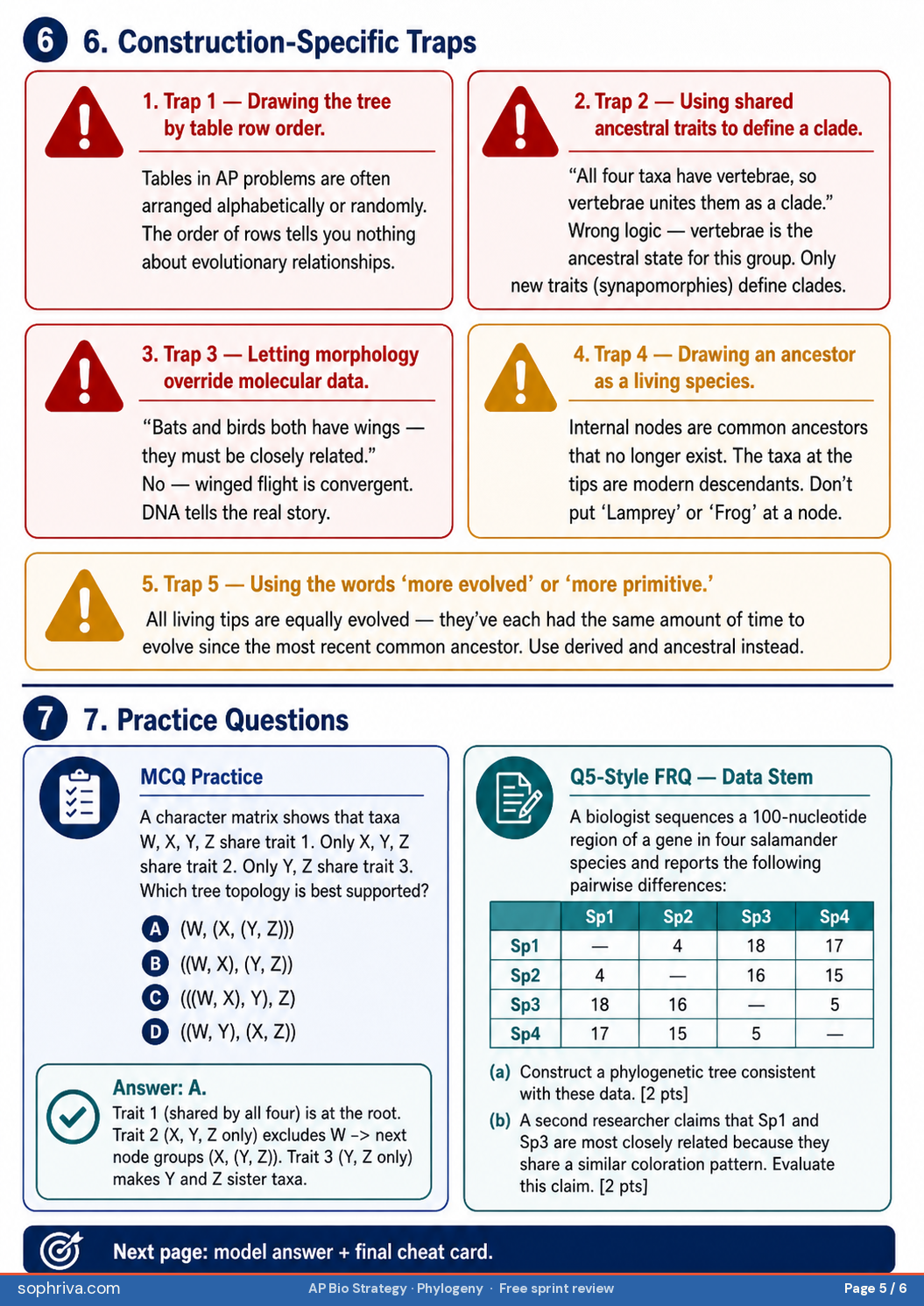
| P2 Three Construction Rules | ★★★ | All trees | Outgroup first, derived (not ancestral) traits, mark each trait at its first-appearance branch. |
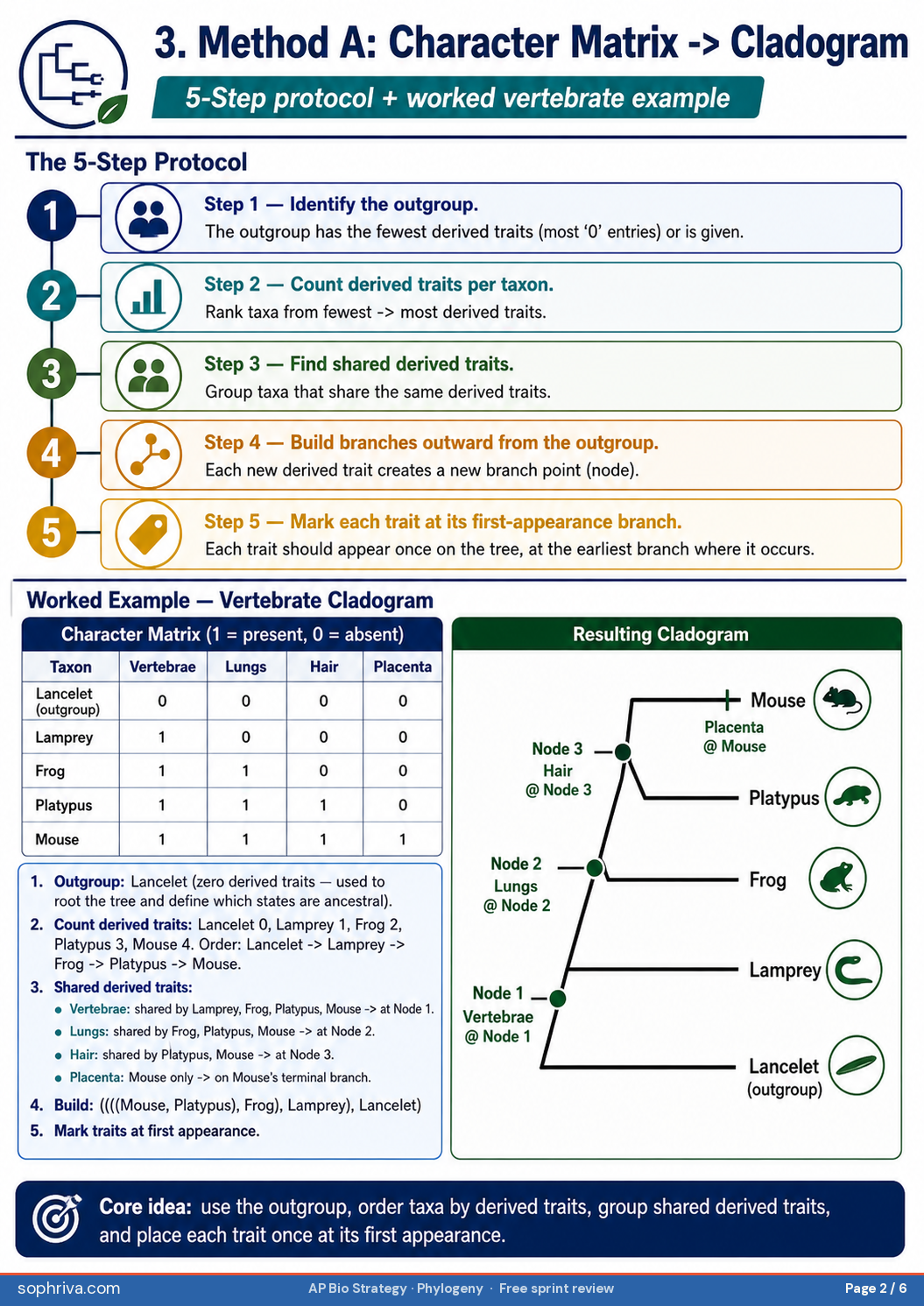
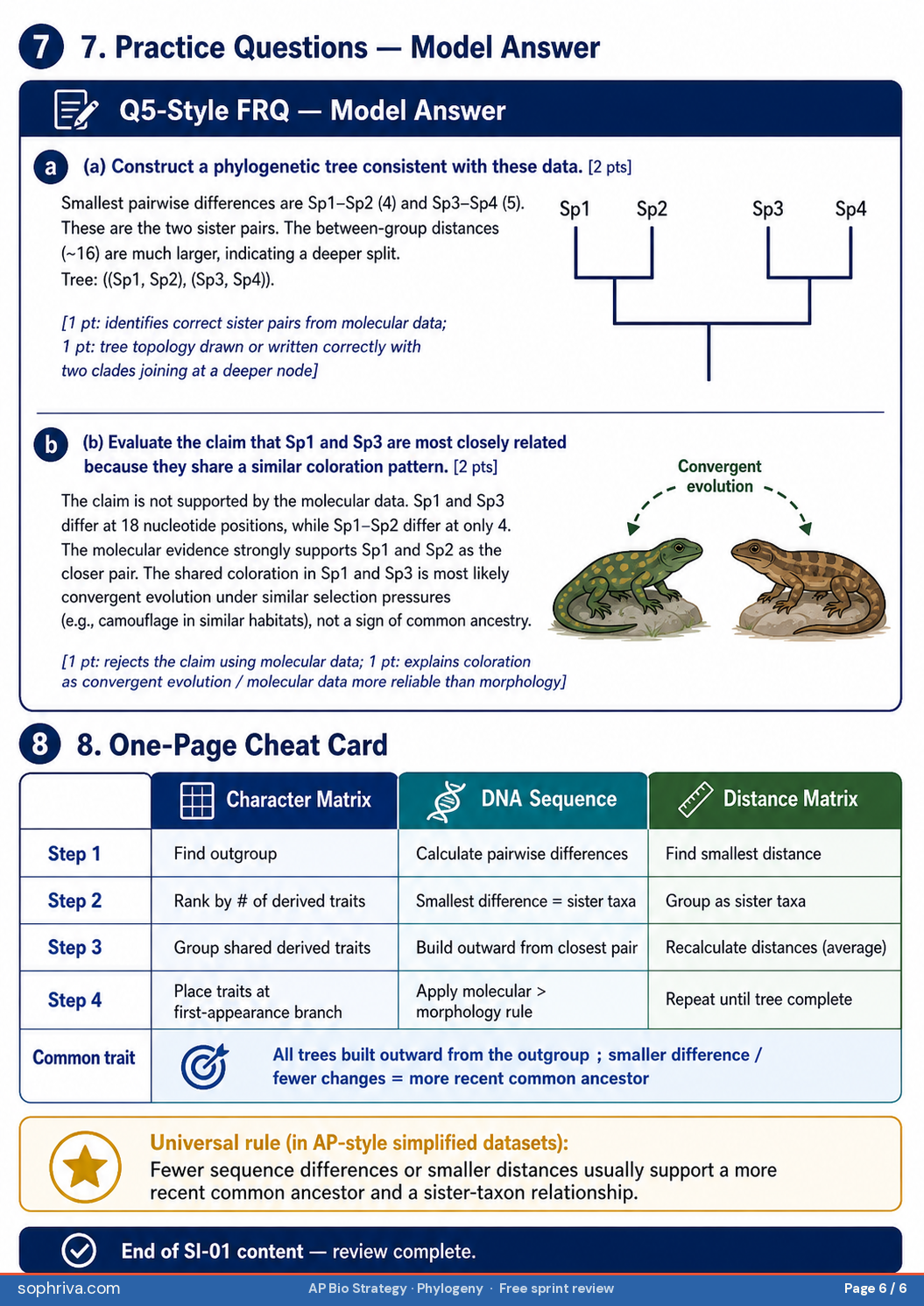
| P3 Method A — Character Matrix | ★★★ | Q5 | Rank by # derived traits; build outward from outgroup, not by row order. |
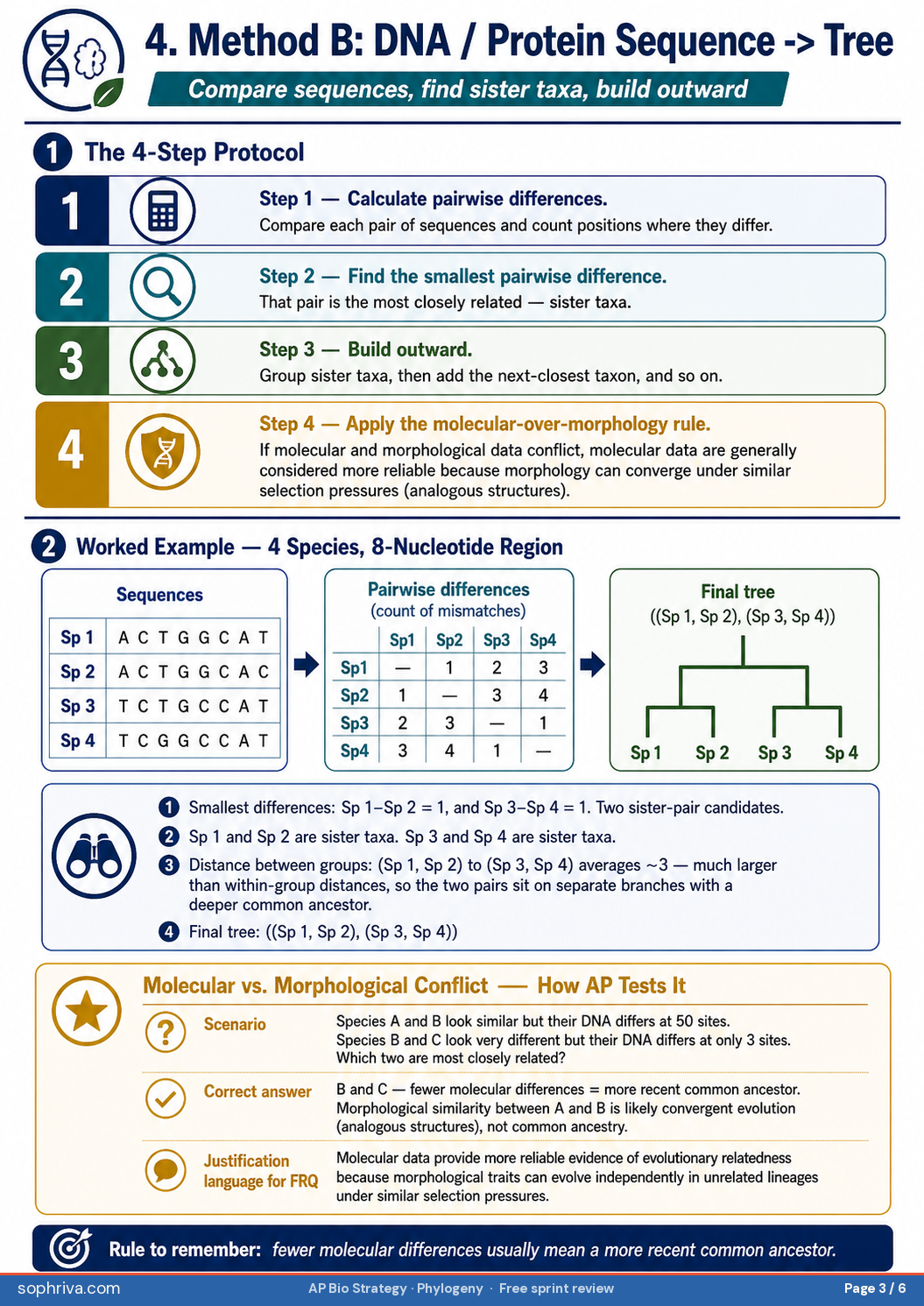
| P4 Method B — DNA Sequence | ★★★ | Q5 | Smallest pairwise difference = sister taxa; molecular > morphology when they conflict. |
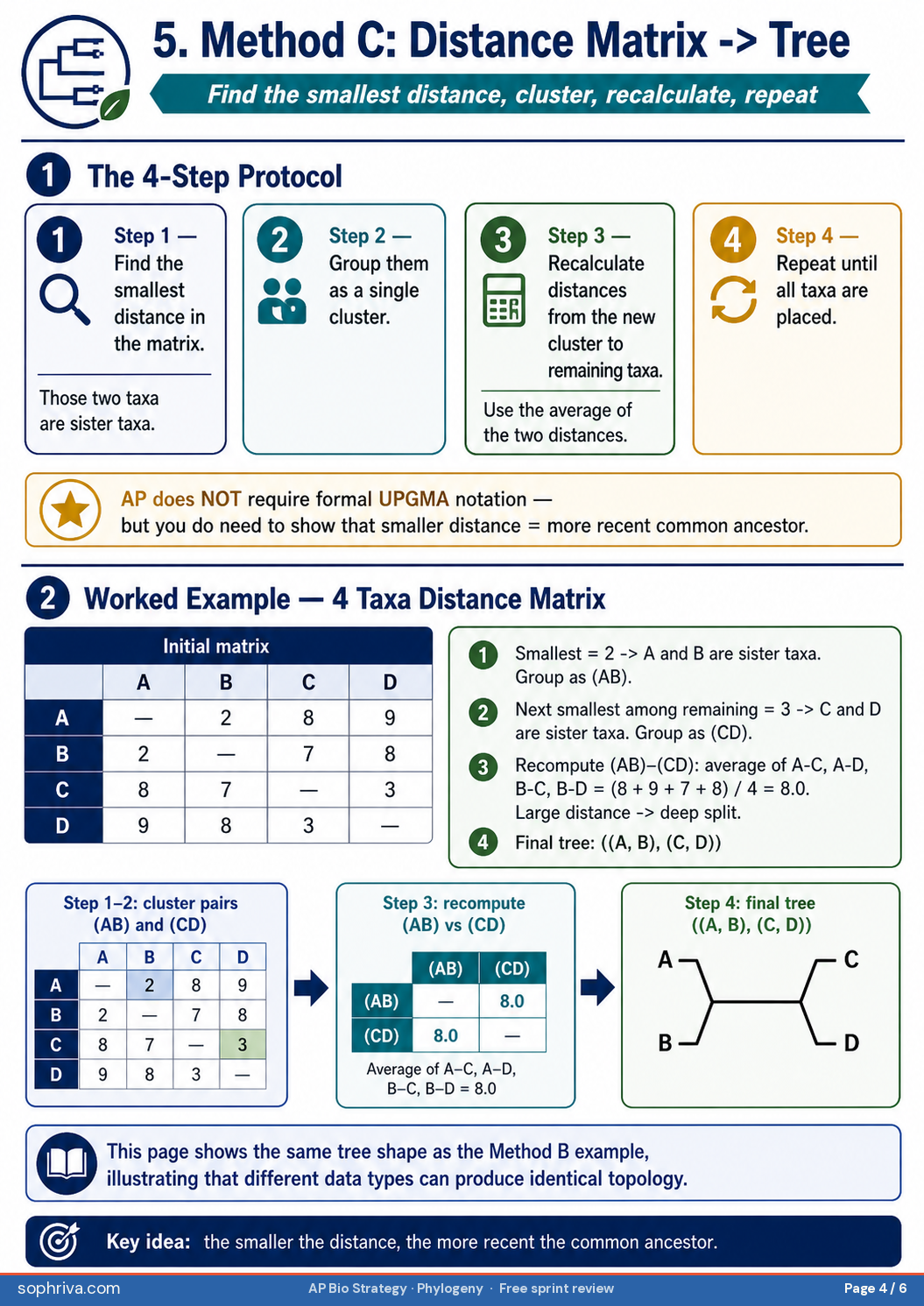
| P5 Method C + Construction Traps | ★★ | Q5 | Don't draw by row order, don't use ancestral traits, don't put modern taxa at internal nodes. |
| P6 Practice + Cheat Card | ★★ | Q5 | Use 'derived/ancestral' — never 'more evolved' or 'more primitive'. |
Topic-by-topic visual review
Nine pages, one topic each. Open the PDF for print quality, or scroll to study on screen.
Done with the sheet? Now get marked.
Upload your own AP Bio FRQ and we score it like an AP Reader — point by point — and show you exactly which rubric points you missed.
Get your first FRQ marked free →