AP Biology Strategy Q5 · Model Completion · Strategy Playbook · Free
Q5 Model Completion Patterns
From reading models to drawing them — five high-yield Q5 patterns
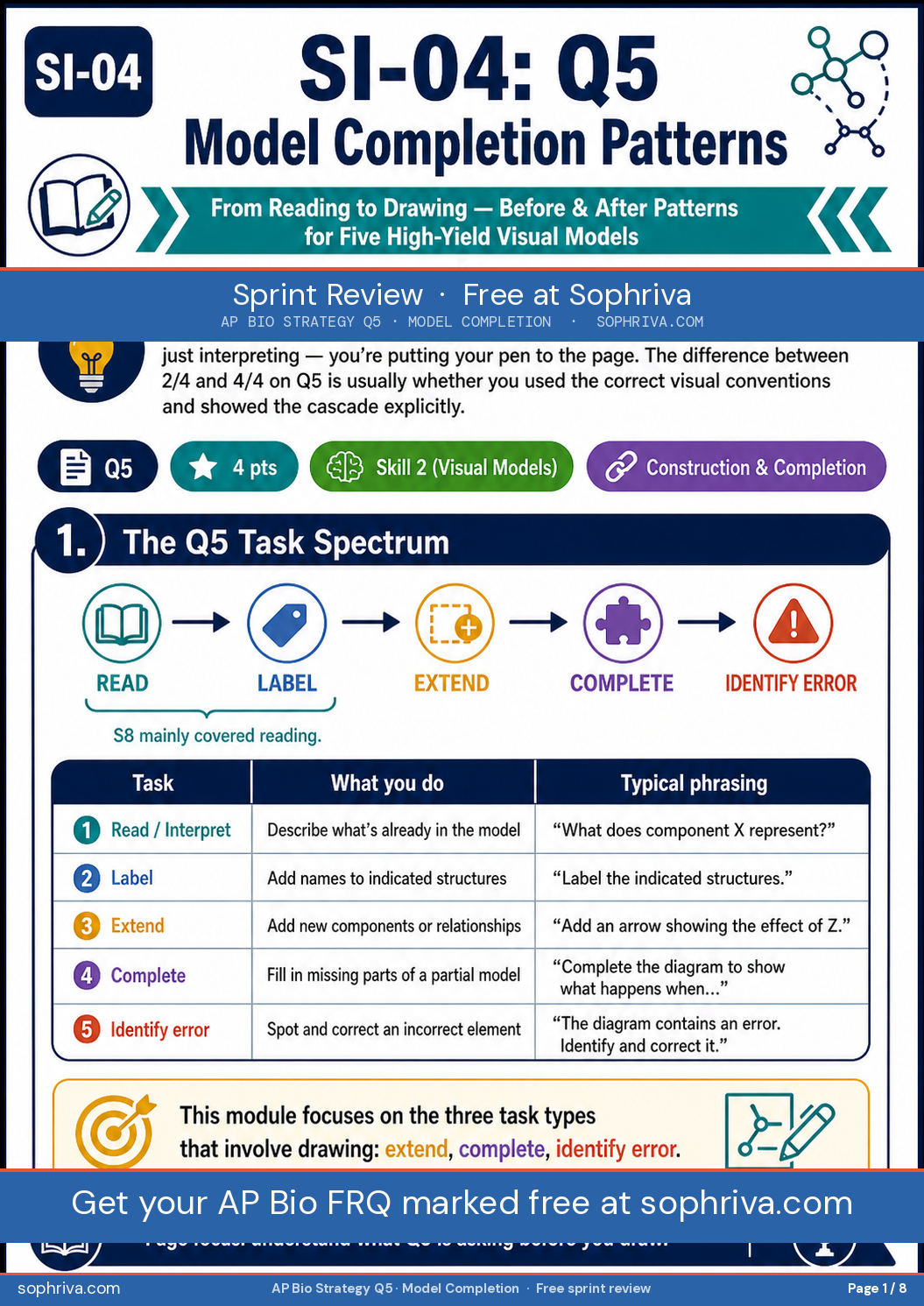
Eight pages on the BEFORE/AFTER patterns for five high-yield visual models students must extend or complete on Q5. The difference between 2/4 and 4/4 is whether you used correct visual conventions and showed the cascade explicitly.
Exam Weight
Q5 · 4 pts
MCQs
n/a
FRQ Appearance
Q5 (every year)
Sprint Time
~30 min
Quick Glance — all topics in this unit
Priority, exam format, and the trap that most often costs the point. Transcribed from page 1 so this content is searchable.
| Topic | Priority | Format | Key trap / must-know |
|---|---|---|---|
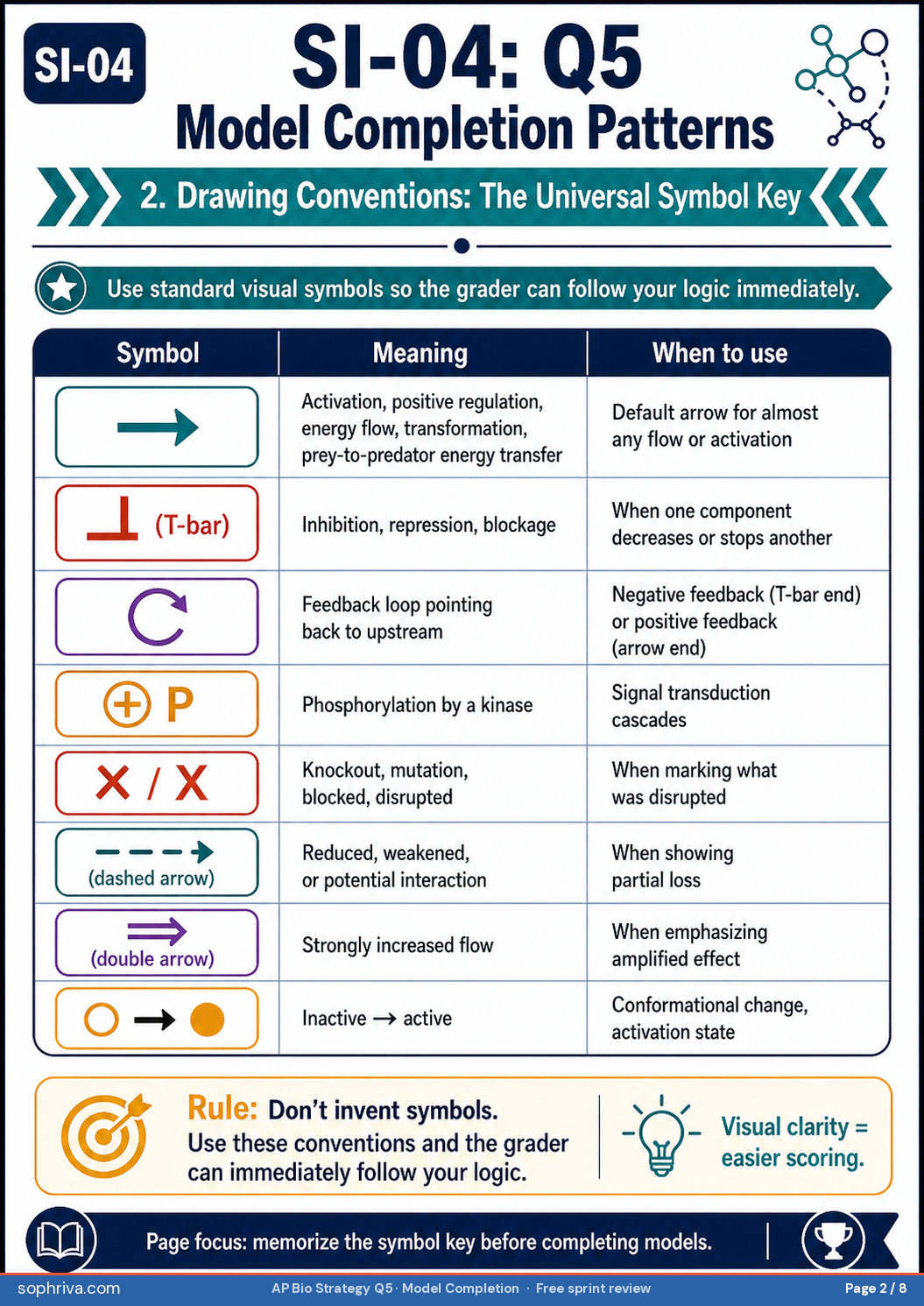
| P1 Q5 Task Spectrum + Symbols | ★★★ | Q5 | Q5 asks you to complete, extend, modify, or correct a model — universal symbol key matters. |
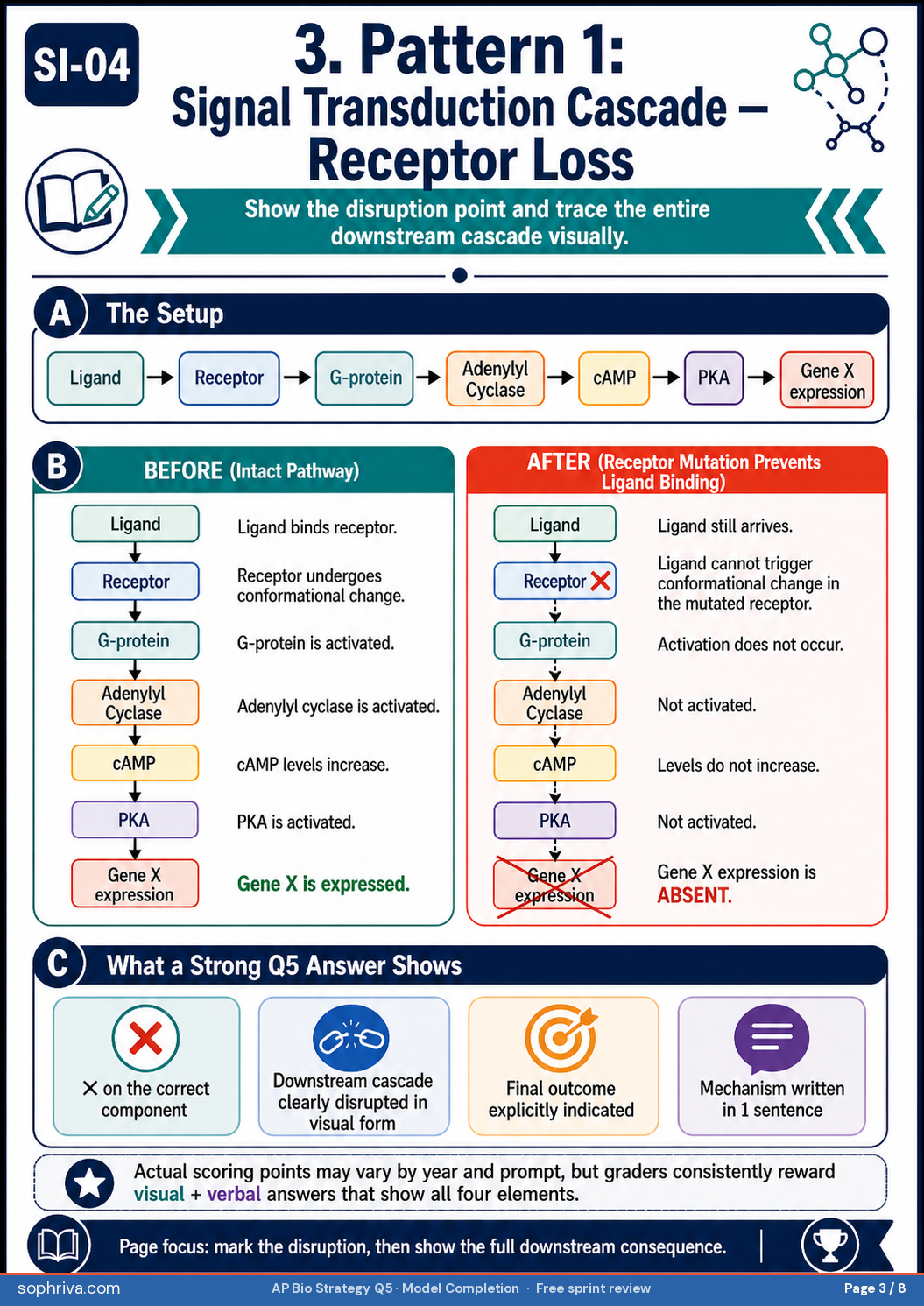
| P2 Pattern 1 — Signal Transduction | ★★★ | Q5 | Receptor loss: ligand still binds nothing; cascade does not propagate. |
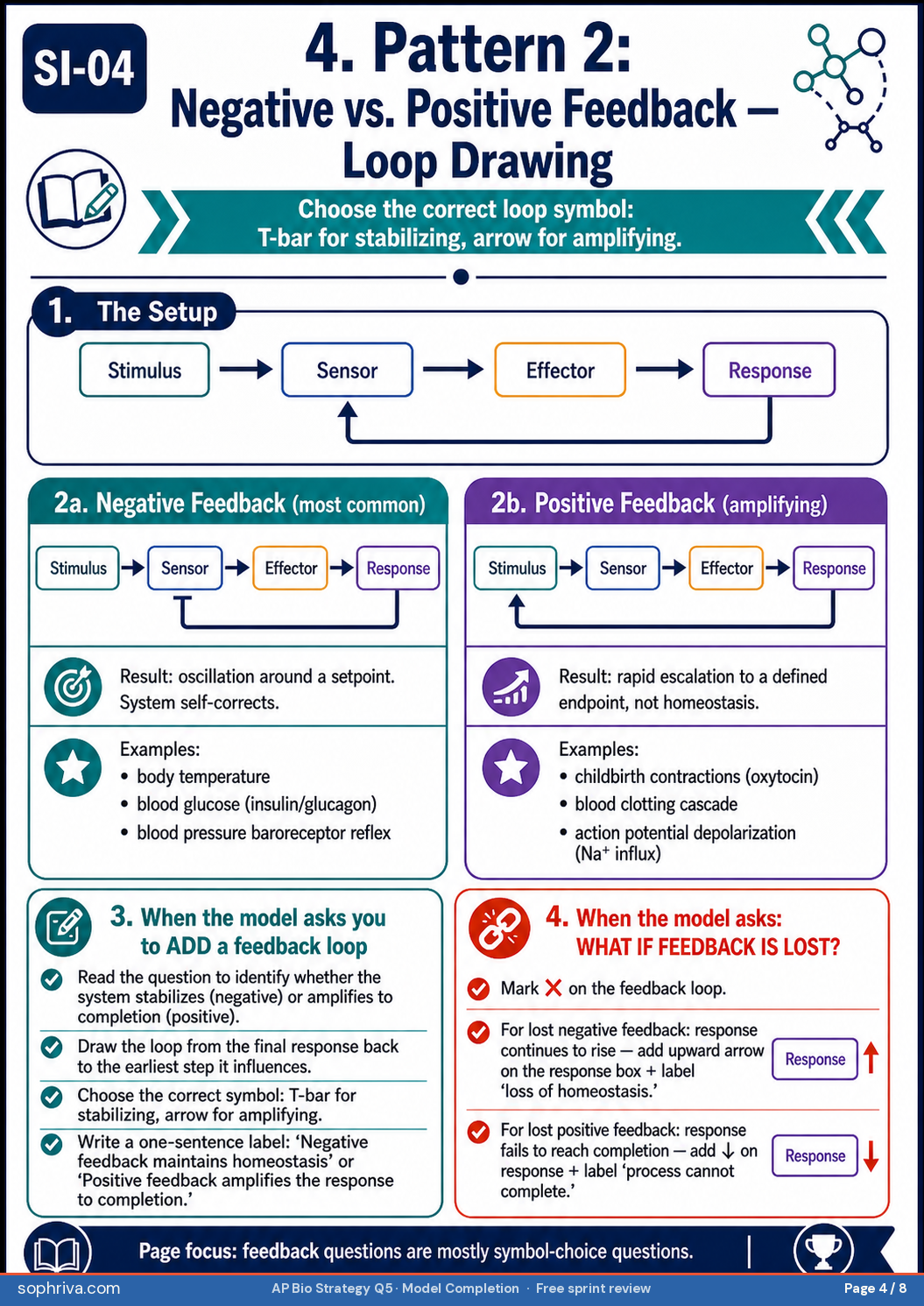
| P3 Pattern 2 — Feedback Loops | ★★★ | Q5 | Negative loops dampen, positive amplify; loss of feedback = system runaway. |
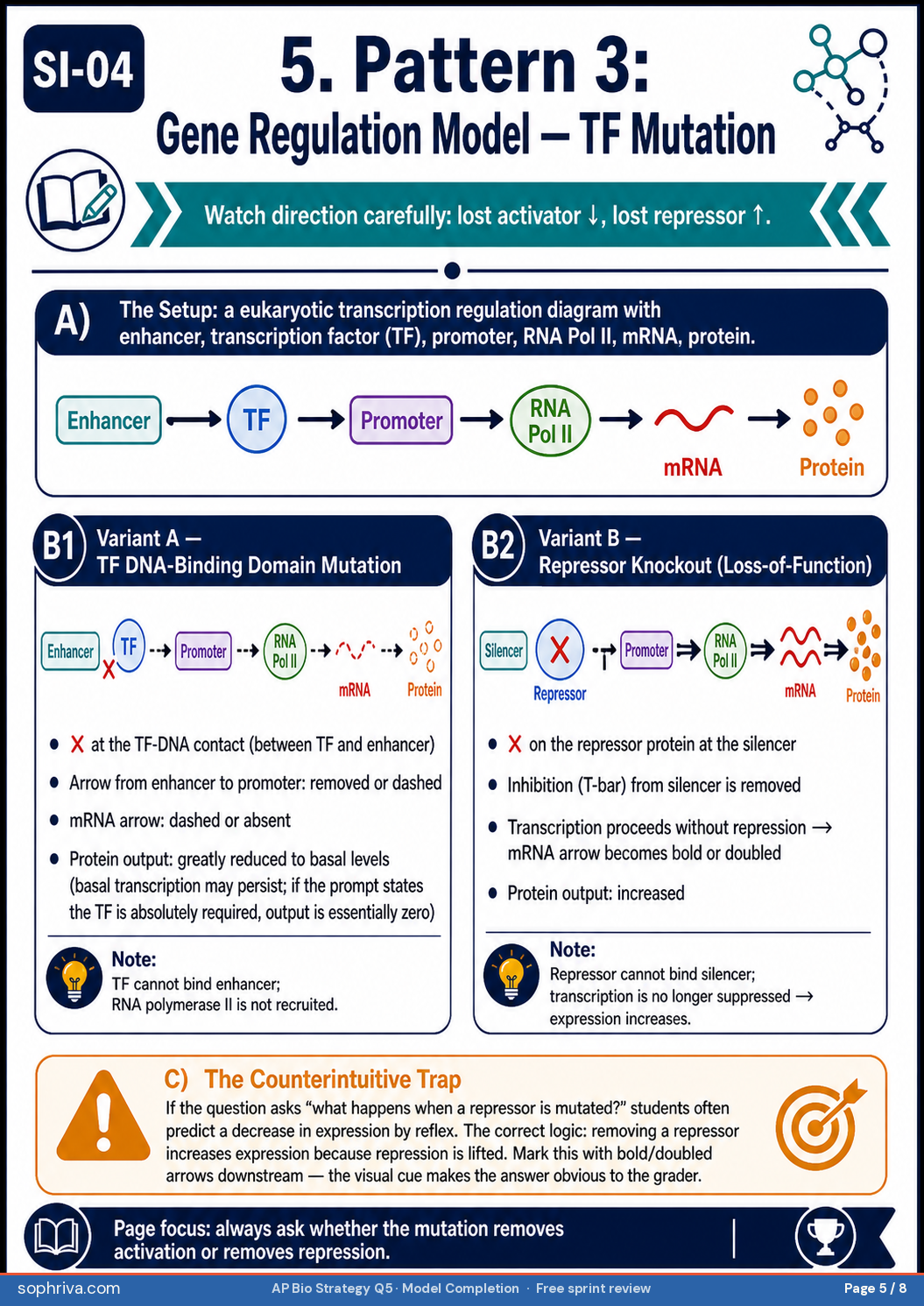
| P4 Pattern 3 — Gene Regulation | ★★★ | Q5 | TF DNA-binding mutation vs. repressor knockout — opposite outcomes. |
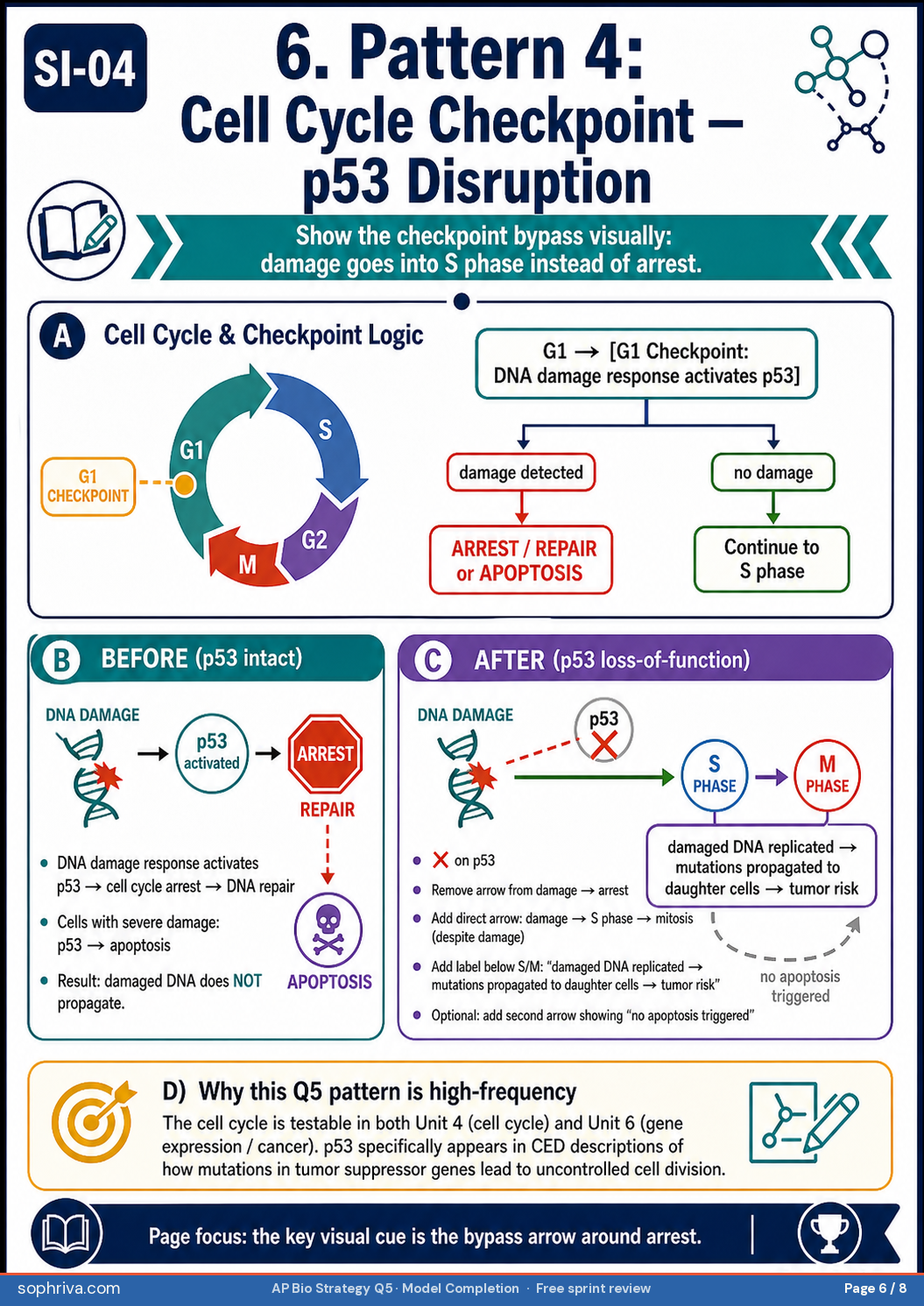
| P5 Pattern 4 — Cell Cycle (p53) | ★★★ | Q5 | p53 intact = G1 arrest on damage. p53 loss = damaged cells proceed. |
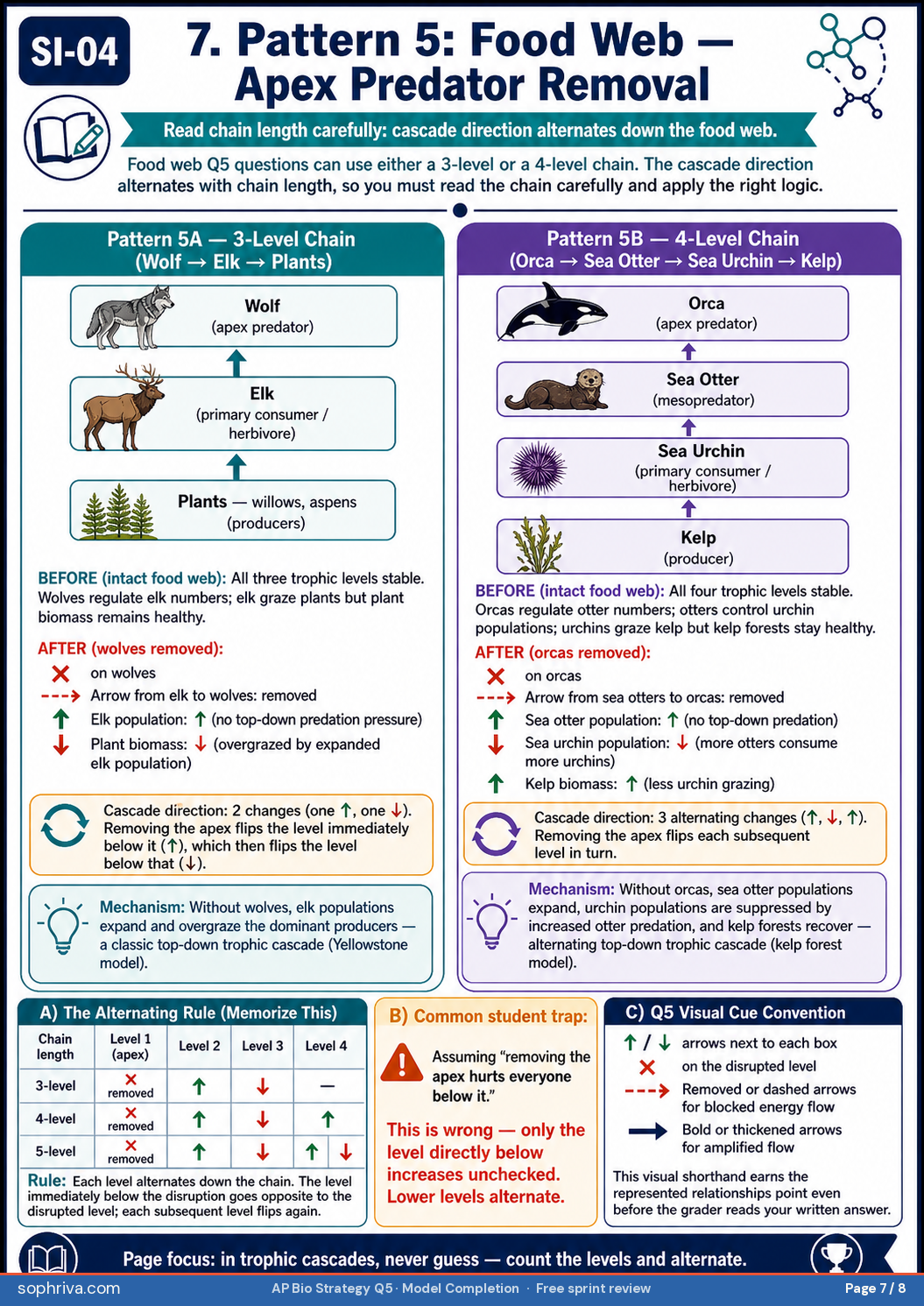
| P6 Pattern 5 + Universal Conventions | ★★★ | Q5 | Arrows for promotion, blocked arrows for inhibition, dashed for lost connections. |
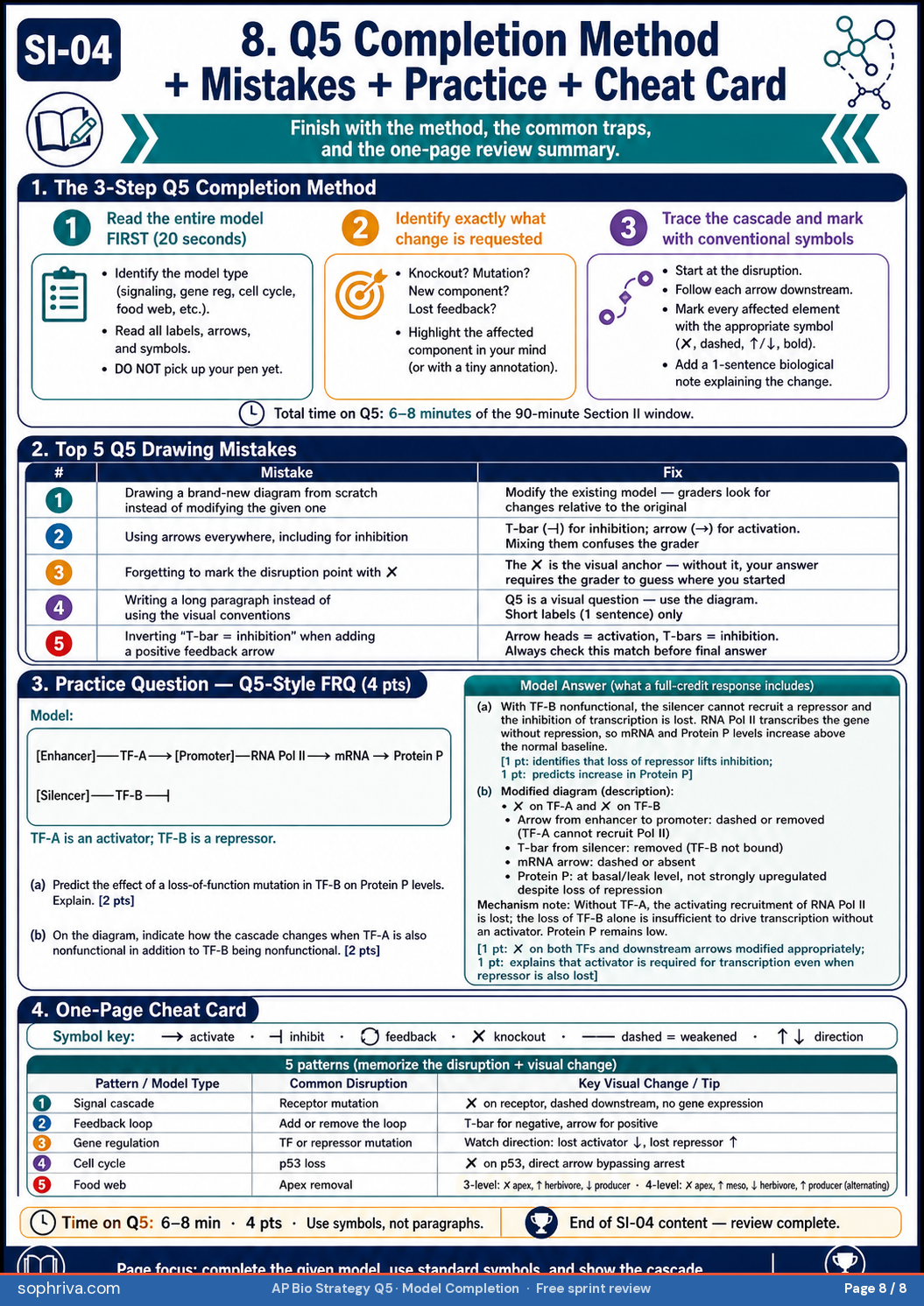
| P7 Practice + Common Q5 Errors | ★★ | Q5 | Drawing without labeling, omitting cascade arrows, ignoring 'before/after' framing. |
| P8 One-Page Cheat Card | ★★ | Q5 | Side-by-side of all five patterns with rubric-language captions. |
Topic-by-topic visual review
Nine pages, one topic each. Open the PDF for print quality, or scroll to study on screen.
Done with the sheet? Now get marked.
Upload your own AP Bio FRQ and we score it like an AP Reader — point by point — and show you exactly which rubric points you missed.
Get your first FRQ marked free →